When subjected to identical queen-rearing protocols, F1 Italian honeybees demonstrate superior productivity compared to F1 Carniolan bees. Research indicates that despite receiving the same thermal insulation and supplemental feeding, the Italian breed yields better results across critical performance metrics such as cell quantity and queen weight.
Core Takeaway: For commercial operations utilizing standardized equipment, breed selection is a critical variable for efficiency. F1 Italian bees offer a higher conversion efficiency of resources, resulting in superior quality and quantity of breeding queens compared to their Carniolan counterparts.
Performance Under Standardized Conditions
The Baseline for Comparison
To accurately assess breed performance, management variables must be strictly controlled. The data assumes a level playing field where both breeds are managed with identical thermal insulation strategies.
Furthermore, both breeds are provided with consistent supplemental feeding schedules. This isolation of variables ensures that differences in output are attributed to genetics rather than environment.
Metrics of Superiority
The F1 Italian breed consistently outperforms the F1 Carniolan breed in tangible output. Specifically, Italian bees produce a higher quantity of queen cells per rearing batch.
Quality metrics follow a similar trend. The queen cells produced by Italian colonies are generally longer, suggesting better larval development conditions.
Crucially, the fresh weight of the resulting queens—a vital indicator of reproductive potential—is higher in the Italian breed.
ROI and Resource Efficiency
Maximizing Equipment Utilization
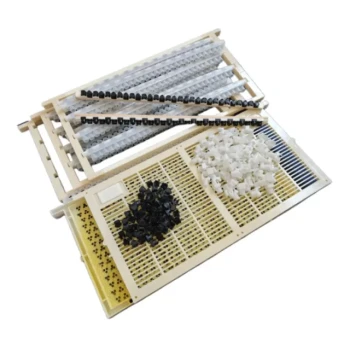
High-productivity breeds act as a multiplier for your infrastructure. Using F1 Italian bees ensures that your investment in standardized rearing equipment generates the maximum possible output.
Feed Conversion Efficiency
Since feeding protocols are identical in this comparison, the difference lies in biological efficiency.
F1 Italian bees demonstrate a higher conversion efficiency. They utilize the provided nutritional inputs to produce high-quality queens more effectively than Carniolans.
Understanding the Trade-offs
The Cost of Breed Mismatch
While equipment and protocols can be standardized, biological response cannot be forced.
Sticking with F1 Carniolan bees for intensive queen rearing under these specific parameters results in suboptimal yields.
You risk creating an "efficiency gap" where the exact same investment in labor, feed, and hardware produces fewer, smaller, and lighter queens compared to what could be achieved with Italian stock.
Making the Right Choice for Your Operation
Selecting the appropriate biological stock is just as important as selecting your hardware. Based on productivity data:
- If your primary focus is maximum commercial output: Prioritize F1 Italian bees to maximize cell quantity, cell length, and fresh queen weight.
- If your primary focus is return on investment: Utilize Italian bees to ensure the highest conversion rate for your standardized feed and equipment costs.
Aligning your genetic stock with high-output goals is the most effective way to leverage standardized rearing protocols.
Summary Table:
| Performance Metric | F1 Italian Honeybees | F1 Carniolan Honeybees | Impact on Operation |
|---|---|---|---|
| Queen Cell Quantity | Higher Yield | Lower Yield | Commercial Volume |
| Queen Cell Length | Longer / Superior | Shorter | Larval Development |
| Fresh Queen Weight | Heavier | Lighter | Reproductive Potential |
| Resource Conversion | High Efficiency | Suboptimal | Feed & Labor ROI |
| Equipment Utilization | Maximum Output | Lower Efficiency | Hardware ROI |
Maximize Your Apiary's Output with HONESTBEE
Choosing the right breed is only half the battle; equipping your operation with professional-grade tools is the other. HONESTBEE supports commercial apiaries and distributors worldwide by providing a comprehensive range of beekeeping solutions designed for maximum efficiency.
Whether you are looking for high-performance honey-filling machines, precision hive-making hardware, or essential wholesale consumables, our portfolio is built to enhance your resource conversion rates. Let us help you bridge the efficiency gap and scale your production.
Ready to upgrade your commercial beekeeping infrastructure?
Contact HONESTBEE Today for Custom Wholesale Solutions
References
- Rabeea F. Omar, H Salam. Effect of thermal insulation and feeding treatments on early spring honey bee queen rearing. DOI: 10.21608/assjm.2016.104126
This article is also based on technical information from HonestBee Knowledge Base .
Related Products
- Retractable Chinese Queen Rearing Grafting Tools Equipment
- No Grafting Queen Rearing Kit: System for Royal Jelly Production and Queen Rearing
- Premium Nicot Style Queen Rearing Kit with Hair Roller Bee Cages
- Nicot Queen Rearing Kit for Beekeeping and Grafting in Nicot System
- Stainless Steel Queen Grafting Tool for Beekeeping and Bee Queen Grafting
People Also Ask
- Which specialized tools are necessary for implementing standardized queen rearing? Scale Your High-Yield Apiary
- Why are specialized queen rearing tools necessary to mitigate winter hive losses? Boost Apiary Survival and Recovery
- How do queen-rearing tools facilitate the sustainability and expansion of a commercial apiary? Drive Scalable Growth
- In what ways do modern queen rearing equipment and grafting tools improve competitiveness? Boost Breeding Success Rate
- What role do specialized queen rearing tools and consumables play in modern large-scale apiculture? Drive Production & Scale