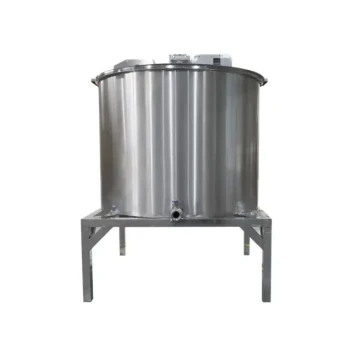
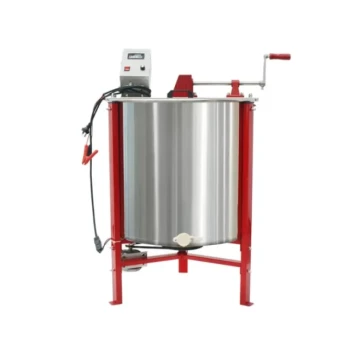
High-efficiency honey extraction and packaging machinery acts as a critical economic stabilizer for commercial apiaries by decoupling financial viability from the volatility of raw honey production. By automating the transition from harvest to retail-ready product, these systems maximize yield recovery and purity, effectively offsetting the rising operational costs associated with maintaining honey bee colonies in a stagnant production environment.
Core Insight: In an era of declining colony health and slow production growth, industrial automation is no longer just a productivity tool—it is a survival mechanism. It secures cash flow by transforming the apiary from a raw material supplier into a high-value manufacturing entity, allowing the business to fund essential colony replenishment and management.
Mitigating Economic Pressure
Commercial apiaries face a dual challenge: rising costs due to colony losses and stagnant honey yields. High-efficiency machinery addresses this imbalance directly.
Securing Cash Flow
Modern extraction equipment provides the industrial-scale processing power necessary to maintain economic sustainability. By maximizing the speed and thoroughness of the harvest, apiaries can generate the consistent cash flow needed to cover high overheads, specifically the costs of colony replenishment and general management.
Offsetting Colony Losses
When honey production growth is slow, every ounce of product becomes more valuable. Automated systems ensure that the limited raw material available is processed with maximum efficiency, preventing the financial losses that occur with inefficient manual extraction methods.
Elevating Product Value through Precision
To survive stagnant production volumes, apiaries must increase the value of the product they do produce. Automation facilitates the shift from bulk raw sales to high-value retail branding.
Precision Metering and Waste Reduction
High-precision filling machines utilize advanced metering systems to control filling volumes with exactitude. This eliminates the raw material loss common in manual filling, ensuring that every drop of harvested honey contributes to revenue.
Ensuring Consistency and Compliance
Automated filling converts bulk honey into pre-packaged goods that meet strict market access standards. By ensuring every bottle has a consistent net weight, apiaries can meet the rigorous standardization requirements of the modern food industry, significantly enhancing market competitiveness.
Optimizing Biological Management
The value of automation extends beyond the processing floor; it fundamentally changes how labor is allocated within the apiary.
Liberating Primary Productivity
By integrating industrial harvesting and processing lines, apiaries drastically reduce the labor hours required for downstream processing. This allows beekeepers to redirect their focus toward core biological tasks.
Focusing on Colony Health
With processing handled by automation, skilled labor can be moved to critical areas such as selective breeding and resistance monitoring. This shift is essential for addressing the root causes of production stagnation: the health and genetics of the bee population.
Improving Quality and Hygiene
Market value is heavily dependent on product purity. Automated systems provide a level of hygiene that manual processing cannot match.
Closed-Loop Sanitation
Automated machinery utilizes sterile, closed filling processes that prevent secondary contamination from external impurities. This preserves the natural physical and chemical characteristics of the honey.
Reducing Human Contact
By minimizing human interaction with the product, these machines significantly reduce hygiene risks. This capability is critical for apiaries aiming to transition from selling low-margin bulk honey to high-margin, safety-certified retail brands.
Understanding the Operational Shift
While the benefits are clear, implementing high-efficiency machinery requires a fundamental shift in operations.
The Requirement for Standardization
The move to automation demands strict adherence to process standardization. Unlike manual methods which allow for ad-hoc adjustments, industrial machinery requires consistent inputs to function correctly. Apiaries must be prepared to align their harvesting workflows to feed these high-speed systems efficiently.
Managing the Downstream Workflow
Automation accelerates the rate at which finished product is created. This creates a new operational pressure: the need for equally efficient logistics and distribution channels to handle the increased output speed, ensuring the "factory" side of the apiary does not become a bottleneck.
Making the Right Choice for Your Goal
To leverage this technology effectively, align your equipment choice with your specific business objective:
- If your primary focus is Financial Sustainability: Prioritize high-speed extraction tools that maximize throughput to generate immediate cash flow for colony maintenance.
- If your primary focus is Brand Building: Invest in high-precision, sterile filling machines that guarantee weight consistency and hygiene compliance for retail markets.
- If your primary focus is Colony Health: Implement automated processing lines to reduce labor demands, freeing up your team to focus on breeding and resistance monitoring.
Ultimately, high-efficiency machinery empowers apiaries to convert honeybee population advantages into sustainable commercial output, regardless of broader production trends.
Summary Table:
| Feature | Strategic Benefit for Apiaries | Industrial Value Impact |
|---|---|---|
| High-Speed Extraction | Maximizes yield recovery from limited harvests | Sustains cash flow for colony maintenance |
| Precision Filling | Eliminates product waste and ensures weight accuracy | Enhances retail margins and market compliance |
| Automated Packaging | Reduces human contact and secondary contamination | Ensures high-purity, safety-certified branding |
| Labor Reallocation | Shifts focus from manual labor to biological management | Improves colony health and genetic breeding |
Scale Your Apiary Operations with HONESTBEE
Are stagnant yields affecting your bottom line? HONESTBEE empowers commercial apiaries and distributors to transition from raw material suppliers to high-value manufacturing leaders. Our comprehensive wholesale portfolio includes everything from heavy-duty hive-making and honey-filling machines to a full spectrum of specialized beekeeping tools and essential consumables.
By integrating our industrial-grade automation, you can maximize every drop of honey, ensure rigorous hygiene compliance, and free your skilled labor to focus on colony health. Let us help you convert your biological assets into sustainable commercial success.
Contact HONESTBEE Today for a Professional Consultation
References
- Fabrice Réquier, Lucas A. Garibaldi. Trends in beekeeping and honey bee colony losses in Latin America. DOI: 10.1080/00218839.2018.1494919
This article is also based on technical information from HonestBee Knowledge Base .
Related Products
- Automatic Single-Dose Snap & Squeeze Honey Sachets Packing Machine
- Fully Automatic Honey Filling Packaging Machine for Processing Line
- Honey Stick Filler Vertical Paste Sachet Packing Machine for Honey Sachets
- Double Nozzle Small Honey Filling Machine Honey Sachet Packing Packaging Equipment
- Small Honey Filling Machine Sachet Packing Equipment Single Nozzle
People Also Ask
- What are the advantages of honey sachet packing machines? Boost Efficiency & Unlock New Markets
- What are the main functions of a honey sachet packing machine? Boost Efficiency with Automated Precision
- How does an industrial-grade honey sachet packaging machine assist beekeepers in accessing public institution markets?
- Why is automated packaging machinery essential for scaling industrial honey production? Drive Commercial Scalability
- How does the viscosity of honey influence packaging choices? Selecting the Best Containers & Machinery