High-precision monitoring devices act as a critical diagnostic tool for ecosystem management by quantifying the specific thermal limits of nectar secretion. These instruments do not merely record weather; they pinpoint the exact temperature thresholds at which different vegetation types cease to be productive resources. By distinguishing between the heat sensitivity of crops and the resilience of wild flora, this technology transforms nectar sourcing from a guessing game into a precise science.
By capturing temperature thresholds, these devices reveal that while crops typically stop secreting nectar between 24°C and 30°C, certain wild plants sustain production up to 35°C–38°C. This insight allows beekeepers to scientifically assess a location’s foraging potential based on thermal performance.
Mapping Thermal Limits of Nectar Production
Identifying Crop Sensitivity
Standard agricultural crops generally have a lower tolerance for heat regarding nectar secretion.
High-precision data reveals that these plants typically shut down nectar production when temperatures range between 24 degrees and 30 degrees Celsius.
Understanding this "cutoff" point is vital for commercial operations that rely heavily on monocultures, as productivity can plummet unexpectedly on warm days.
The Resilience of Wild Flora
In contrast to cultivated crops, wild vegetation often exhibits significantly higher thermal durability.
Monitoring confirms that certain wild species continue to secrete nectar at temperatures ranging from 35 degrees to 38 degrees Celsius.
This data highlights the importance of wild ecosystems as reliable "buffer zones" during heatwaves that would otherwise halt honey production.
Strategic Colony Management
Evaluating Foraging Potential
The primary utility of this data is the ability to scientifically grade the heat-resistant potential of different geographic locations.
Beekeepers can now look beyond visual blooms and analyze sites based on their thermal profiles.
This ensures that colonies are placed in environments where the local flora matches the expected temperature conditions.
Optimizing Migration Layouts
With precise meteorological data, the migration of commercial honeybee colonies becomes a calculated logistical decision rather than a reactive one.
Operators can plan layout strategies that move hives from heat-sensitive crop areas to heat-resistant wild zones as temperatures rise.
This targeted mobility maximizes the efficiency of the colony and ensures consistent nutrition throughout the season.
Understanding the Constraints
The Data Interpretation Gap
While monitoring devices provide accurate temperature readings, raw data alone does not guarantee success.
Operators must correctly correlate specific temperature spikes with the specific plant species present in that immediate ecosystem.
Misinterpreting the dominant flora types—confusing a heat-sensitive crop zone for a heat-resistant wild zone—can lead to resource starvation despite favorable weather readings.
Limitations of Generalization
The temperature ranges (24–30°C for crops, 35–38°C for wild plants) are robust guidelines, but outliers exist.
Relying exclusively on these general bands without local verification can result in missed opportunities or unexpected dearths.
Continuous local monitoring is required to validate that the specific vegetation in a new area adheres to these established patterns.
Strategies for Ecosystem Utilization
To maximize nectar collection using high-precision monitoring, align your strategy with your environmental targets:
- If your primary focus is Commercial Agriculture: Monitor for the 24–30°C threshold to anticipate productivity drops and plan immediate colony relocation before nectar flow ceases.
- If your primary focus is High-Heat Environments: Prioritize geographic locations rich in wild flora to exploit their ability to secrete nectar at 35–38°C, ensuring production during peak summer heat.
Leveraging thermal data allows you to synchronize your operations with the natural biological rhythms of the landscape.
Summary Table:
| Vegetation Type | Nectar Secretion Threshold | Thermal Resilience | Strategic Use Case |
|---|---|---|---|
| Agricultural Crops | 24°C – 30°C | Low | Monitor for production drops & early relocation |
| Wild Flora | 35°C – 38°C | High | Reliable buffer zones during extreme heatwaves |
| Mixed Ecosystems | Variable | Moderate | Balanced foraging potential for long-term health |
Maximize Your Apiary Productivity with HONESTBEE
At HONESTBEE, we understand that commercial success in beekeeping requires precision tools and data-driven strategies. Whether you are managing vast commercial apiaries or supplying the industry as a distributor, our comprehensive range of specialized hardware—from hive-making machinery and honey-filling systems to a full spectrum of beekeeping tools and consumables—is designed to help you leverage environmental insights for maximum efficiency.
Don't let temperature thresholds limit your production. Partner with HONESTBEE to equip your operation with the professional machinery and high-quality supplies needed to thrive in any ecosystem.
Ready to scale your beekeeping business?
Contact our expert team today to explore our wholesale solutions!
References
- Валерій Дмитрович Броварський, О.С. Величко. Високi температури навколишнього середовища i етологiя бджiл. DOI: 10.18372/2306-6407.1.16145
This article is also based on technical information from HonestBee Knowledge Base .
Related Products
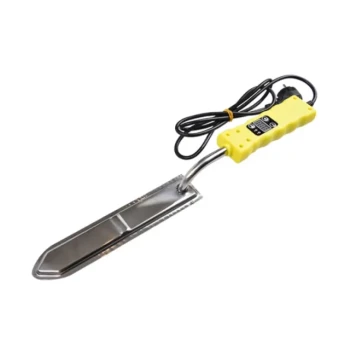
- Professional Electric Honey Uncapping Knife with Heated Digital Temperature Control for Beekeeping
- Professional Thermostatic Conical Honey Melter
- HONESTBEE AC Powered Wire Embedder with Alligator Clips
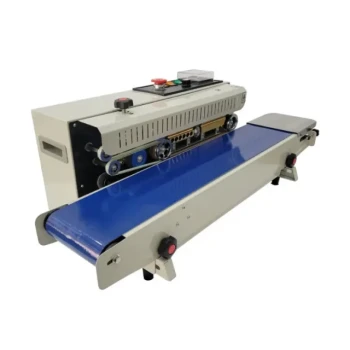
- Automatic Continuous Heat Sealing Machine
- Digital Honey Refractometer for Precision Measurement of Optimal Honey Quality
People Also Ask
- Why are electric honey uncapping knives essential? Boost Efficiency & Preserve Comb for Professional Honey Extraction
- What is an electric uncapping knife and how is it used? Master Faster Honey Extraction with Heat
- What are the advantages and disadvantages of using an electric knife for uncapping honey frames? Boost Extraction Speed
- What are the drawbacks of using an electric knife for uncapping honey frames? Cost and Power Constraints Explained
- How should an electric uncapping knife be utilized? Master Efficient Honey Extraction with Heated Precision