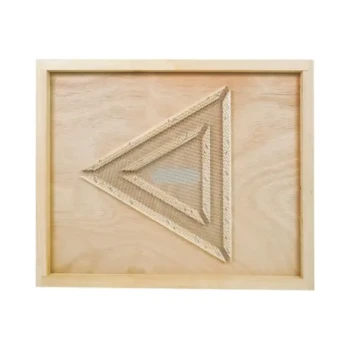
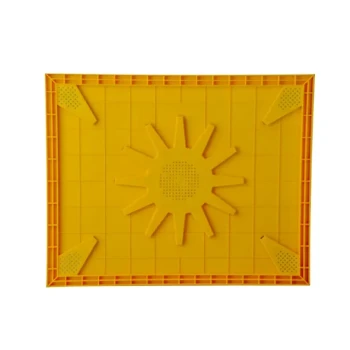
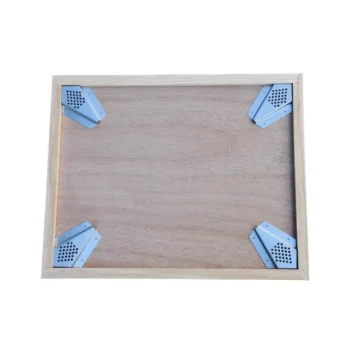
Hive floor inserts, typically known as sticky boards, function as a non-invasive diagnostic tool designed to capture and quantify parasitic Varroa mites within a beehive. These boards utilize a combination of gravity, physical barriers, and adhesive surfaces to collect mites that fall naturally from the colony or are dislodged by chemical treatments, providing the raw data necessary for assessing colony health.
Core Takeaway Sticky boards serve as a passive, quantitative gauge for hive infestation levels. by securing fallen mites on an adhesive surface, they convert natural mite mortality into actionable metrics, allowing beekeepers to calculate total colony infestation and verify the effectiveness of pest control treatments without disturbing the bees.
The Mechanics of Capture
To understand how sticky boards monitor Varroa, it is essential to understand the physical setup that separates the parasite from the host.
Passive Collection via Gravity
Varroa mites naturally fall off honey bees due to grooming behavior, natural mortality, or the effects of miticide treatments.
Sticky boards are placed at the bottom of the hive to intercept this debris.
The Role of Screened Barriers
Most monitoring setups pair the sticky board with a screened bottom board or a wooden Varroa screen.
This mesh is crucial: it is large enough to allow mites to fall through but small enough to prevent bees from accessing the board. This prevents worker bees from "cleaning" the board and removing the mites before they can be counted.
Ensuring Data Integrity
The effectiveness of a sticky board relies on its ability to hold the sample in place against the dynamic environment of a beehive.
Securing Mites Against Airflow
Beehives are ventilated environments with constant air currents generated by bee activity.
The adhesive coating on the board ensures that dislodged mites remain fixed in place. Without this sticky layer, wind or vibration could scatter the mites, leading to inaccurate counts.
High-Contrast Visualization
Sticky boards are typically manufactured with a white background.
This provides necessary visual contrast against the reddish-brown Varroa mites. This design feature simplifies the manual counting process for laboratory personnel or beekeepers, reducing the margin of error.
From Raw Counts to Colony Insights
The physical collection of mites is only the first step; the function of the board extends to data interpretation.
Establishing a Monitoring Window
Standard monitoring protocols involve leaving the board in place for a specific duration, typically 24 to 72 hours.
This timeframe provides a statistically significant "snapshot" of mite activity without requiring long-term equipment placement.
Calculating Total Infestation
Beekeepers use the "natural mite drop" count to estimate the total population of mites in the hive.
Specific coefficients are applied to the daily drop count—often multiplying the daily drop by 20 to 40—to approximate the infestation level of the entire colony.
Verifying Treatment Efficacy
Beyond natural monitoring, these boards are essential for measuring "drug-induced kill rates."
By placing a board immediately after applying a chemical treatment, beekeepers can quantify how many mites were killed, providing direct evidence of whether the control measure was successful.
Understanding the Limitations
While sticky boards are indispensable, they rely on estimation rather than direct observation of every mite.
Inference vs. Exact Count
The sticky board measures fallen mites, not the mites currently attached to bees or inside capped brood cells.
Therefore, the data derived is an estimate based on correlation. High drop rates correlate with high infestation, but low drop rates can sometimes be misleading if mites are reproducing inside sealed brood cells.
Variable Drop Rates
The calculation coefficients (multiplying by 20-40) are general guidelines.
Factors such as the season, the strength of the colony, and the amount of brood present can alter how many mites fall naturally, potentially affecting the accuracy of the total population estimate.
Making the Right Choice for Your Goal
To maximize the value of hive floor inserts, align your usage with your specific management objective.
- If your primary focus is Routine Health Assessment: Deploy sticky boards for 72 hours monthly to establish a baseline "natural drop" trend, alerting you to spikes in infestation before they become critical.
- If your primary focus is Treatment Verification: Insert the board immediately upon applying miticides to confirm the chemical is actively dislodging mites and to determine if resistance is building.
By consistently applying this non-destructive monitoring method, you transition from reactive pest control to a data-driven strategy that preserves colony vitality.
Summary Table:
| Feature | Functionality | Key Benefit |
|---|---|---|
| Adhesive Surface | Secures fallen mites against hive airflow | Prevents data loss and ensures accurate counts |
| Screened Barrier | Separates bees from the collection board | Prevents bees from removing mites during cleaning |
| White Background | Provides high visual contrast | Simplifies manual counting and reduces human error |
| Monitoring Window | Standard 24–72 hour data collection | Provides a statistically significant health snapshot |
| Estimation Tool | Translates daily drop to total colony load | Enables non-invasive calculation of infestation levels |
Maximize Your Apiary Productivity with HONESTBEE
Effective Varroa monitoring is the foundation of a healthy apiary, but professional success requires the right tools. HONESTBEE empowers commercial apiaries and distributors with a comprehensive wholesale portfolio of premium beekeeping solutions.
From precision-engineered hive-making and honey-filling machinery to high-durability monitoring equipment and essential industry consumables, we provide everything needed to scale your operations and protect your colonies. Our expertise ensures you receive specialized hardware and honey-themed cultural merchandise that meet the highest industry standards.
Ready to elevate your wholesale supply chain?
Contact HONESTBEE Today to discuss our bulk pricing and tailored equipment solutions for your business.
References
- Jennifer A. Berry, Keith S. Delaplane. Field-Level Sublethal Effects of Approved Bee Hive Chemicals on Honey Bees (Apis mellifera L). DOI: 10.1371/journal.pone.0076536
This article is also based on technical information from HonestBee Knowledge Base .
Related Products
- HONESTBEE Wooden Bee Escape Board with Triangle Mesh Design for Beekeeping
- HONESTBEE Multi Exit Plastic Bee Escape Board for Efficient Honey Harvesting
- Langstroth Solid Bottom Board for Beekeeping
- Solid Bottom Board Australian Pine Wood Langstroth Bottom Board for Wholesale
- HONESTBEE 4-Way Metal Corner Wooden Bee Escape Board
People Also Ask
- How is a bee escape board used to clear a hive body for honey harvesting? Optimize Your Chemical-Free Harvest
- What is a bee escape board and what problem does it solve? Simplify Your Honey Harvest with Passive Clearing
- How is a bee escape board used and how does it function? Master This Gentle Honey Harvesting Tool
- What are the proper steps for using a bee escape board for honey harvesting? Master the Passive Clearing Technique
- What tools and methods are used to clear honey bees from honey supers? Efficient Harvesting for Commercial Beekeepers