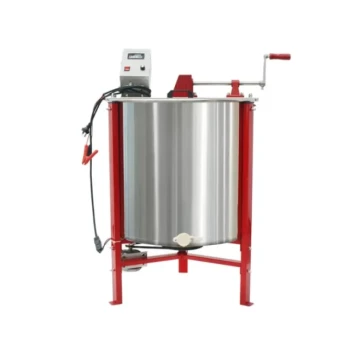
Honey harvesting and processing machines function as the critical bridge between ecological stewardship and economic viability. By upgrading production from manual extraction to industrial-grade processing, these technologies elevate raw honey into a high-value, shelf-stable commercial product. This increase in market value creates a sustainable revenue stream that financially incentivizes beekeepers to protect, rather than exploit or neglect, indigenous bee populations.
The core mechanism of sustainable conservation is the "economic loop": when processing technology maximizes the revenue generated per hive, the bee colony becomes a valuable asset worth protecting long-term.
The Transformation of Value
Elevating Hygiene and Purity
Raw honey extracted manually often contains impurities that affect quality and safety. Filtration units and centrifuges allow for sterile extraction and fine purification.
By removing particulate matter and controlling moisture content, these machines significantly extend the shelf life of the product. This transformation is essential for moving honey beyond local barter systems and into professional distribution networks where hygiene standards are non-negotiable.
Ensuring Market Consistency
To compete in high-value retail markets, products must be consistent. Automated honey-filling machines utilize high-precision fluid control to ensure every jar contains an exact net weight.
This consistency eliminates the errors and aesthetic variances associated with manual filling. It allows indigenous honey to be packaged as a standardized, premium brand, significantly increasing the price it commands compared to bulk raw material sales.
The Economic Conservation Loop
Incentivizing Long-Term Guardianship
Conservation efforts fail when they rely solely on charity; they succeed when they make economic sense. High-efficiency machinery turns the byproduct of pollination—honey—into a high-margin commercial good.
This revenue creates a tangible economic incentive for farmers and beekeepers to invest resources in protecting honeybees and their environments. The bees are no longer just pollinators; they are the engines of a profitable enterprise, ensuring their protection is prioritized.
Expanding Market Access
Advanced processing equipment enables the production of "value-added" goods. By enabling professional packaging and sealing, machines allow producers to bypass low-cost bulk markets and enter high-end retail sectors.
This shift increases the comprehensive income of beekeepers without necessarily requiring them to over-harvest. They can earn more from the same amount of honey by improving its presentation and longevity, reducing the pressure to stress the hives for volume.
Understanding the Trade-offs
The Cost of Entry
While machinery drives sustainability, it requires significant upfront capital. Industrial-scale equipment creates a barrier to entry for small, individual conservationists.
To mitigate this, successful programs often centralize processing capabilities, allowing multiple small-scale beekeepers to share access to high-end filtration and filling technology without bearing the full cost individually.
Balancing Artificial Support
Supplementary references highlight the use of industrial mixing and pumping equipment to feed bees carbohydrate substitutes (like sucrose or HFCS) when natural nectar is scarce.
While this technology prevents colony losses during starvation periods (autumn/early spring), reliance on it must be carefully managed. True conservation aims for natural ecosystem health, whereas artificial feeding is a defensive measure to prevent economic loss and colony collapse.
Making the Right Choice for Your Goal
To leverage technology for conservation, you must align your equipment choices with your economic targets.
- If your primary focus is entering high-end retail markets: Prioritize automated filling and fine filtration systems to ensure the shelf stability and aesthetic consistency required by premium retailers.
- If your primary focus is colony survival and stability: Invest in mixing and pumping infrastructure to efficiently manage supplemental feeding during nectar dearths, ensuring zero colony loss due to starvation.
Technology turns the abstract goal of conservation into a practical, profitable reality by giving indigenous resources the commercial value they deserve.
Summary Table:
| Feature | Impact on Conservation | Economic Benefit |
|---|---|---|
| Centrifuges & Filtration | Ensures purity without destroying hives | Higher market value & longer shelf life |
| Automated Filling | Enables standardized, branded packaging | Access to premium high-end retail markets |
| Mixing & Pumping | Prevents colony collapse during nectar dearth | Stabilized year-over-year production volume |
| Shared Infrastructure | Lowers barrier to entry for small-scale groups | Scalable community-based conservation models |
Scale Your Beekeeping Impact with HONESTBEE
At HONESTBEE, we understand that true conservation is built on economic viability. We support commercial apiaries and distributors with a full spectrum of professional tools designed to turn raw honey into a premium asset. From industrial honey-filling machines and precision filtration systems to specialized hive-making machinery, our wholesale solutions empower you to increase margins while protecting bee populations.
Ready to upgrade your processing efficiency and market reach? Contact us today to discuss your equipment needs and let us help you build a sustainable, profitable future for your beekeeping enterprise.
References
- Manuel Narjes, Christian Lippert. Regional differences in farmers’ preferences for a native bee conservation policy: The case of farming communities in Northern and Eastern Thailand. DOI: 10.1371/journal.pone.0251206
This article is also based on technical information from HonestBee Knowledge Base .
Related Products
- Fully Automatic Honey Filling Packaging Machine for Processing Line
- Economy Honey Homogenizer Mixer and Melting Machine for Beekeeping
- Honey Concentrating and Filtering Dehumidifier Machine 2T Capacity for Honey
- Electric Double Wall Honey Filtering Machine Purifier Equipment for Honey Processing Plant
- Double Wall Honey Heating Stirring Homogenizer Mixing Machine with Various Capacity
People Also Ask
- Why are fully automatic honey filling and packaging lines essential? Boost Your Honey's Market Value and Quality
- What is a fully-automatic honey filler? Streamline Your Production with High-Precision Automation
- How do automated honey filling and packaging machines affect profitability? Boost Margins with HONESTBEE Technology
- How do automated honey filling and packaging machines contribute to the market value of honey products? Maximize Your ROI
- How do industrial-grade automated honey filling and packaging machines mitigate the risk of physical contamination?