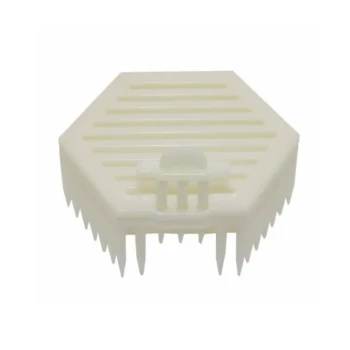
The combined use of specialized transport cages and mineral-free sugar candy serves as a vital purification step in honeybee sample collection. By keeping the bees alive on a strictly controlled diet during transport, this method allows the insects to metabolically purge their digestive systems of field-collected materials.
Core Takeaway This procedure guarantees data integrity by removing "exogenous noise"—specifically residual nectar and pollen—from the sample. It ensures that biological element analysis measures the actual composition of the honeybee's body tissues, rather than the transient contents of its gut.
The Challenge: Distinguishing Tissue from Diet
To understand the value of this method, one must first understand the inherent "contamination" of a foraging honeybee.
The Honeybee as a Carrier
In the field, a honeybee is essentially a biological transport vessel. At any given moment, a significant percentage of its total weight may consist of nectar and pollen stored in its crop (honey stomach) or digestive tract.
The Risk of Data Skewing
If a researcher analyzes a whole bee immediately after collection, the results will conflate two distinct data sets: the elemental composition of the bee itself and the composition of its recent meal.
Exogenous Interference
This creates a false signal. High levels of specific minerals or elements might be attributed to the bee's bio-accumulation, when in reality, they are merely present in the undigested food inside the bee.
The Mechanism: Purging via Transport
The transport cage and candy protocol solves this by utilizing the time spent in transit to biological advantage.
Survival is Key
The transport cages are designed to keep the bees alive and active during the journey to the laboratory. This is critical because digestive purging is an active metabolic process; dead bees cannot clear their systems.
The Neutral Diet
The mineral-free sugar candy provides the necessary energy to keep the bees alive without introducing new variables. It acts as a "blank" input.
The Displacement Effect
As the bees consume the mineral-free candy, it pushes the residual field nectar and pollen through the digestive tract. By the time the bees reach the lab, the mineral-laden field food has been excreted, leaving only the neutral candy in the gut.
Understanding the Trade-offs
While this method is the gold standard for tissue analysis, it relies on specific biological constraints.
Dependence on Transit Time
The process is not instantaneous. The duration of the transport must be sufficient for the bees to fully metabolize and excrete their field load. If the transit is too short, purging may be incomplete.
The Mortality Risk
If the transport conditions (temperature, ventilation) are poor and the bees die during transit, the purging process halts immediately. Data from bees that arrive dead may be compromised by retained gut content.
Making the Right Choice for Your Goal
This protocol is specific to researchers who need to isolate the organism from its immediate environment.
- If your primary focus is Bio-accumulation: This method is essential. It ensures that the heavy metals or minerals detected are actually integrated into the bee's tissues.
- If your primary focus is Environmental Forage mapping: This method is counter-productive. By purging the gut, you are discarding the specific nectar and pollen samples that indicate what the bees were eating in the field.
By strictly controlling the diet during the transition to the lab, you transform a variable field sample into a standardized biological subject ready for high-precision analysis.
Summary Table:
| Feature | Function in Sample Integrity | Benefit to Data Quality |
|---|---|---|
| Transport Cages | Keeps bees alive & metabolically active | Enables active excretion of field-collected nectar/pollen |
| Mineral-Free Candy | Provides neutral, "blank" energy source | Displaces gut contaminants without adding new elements |
| Transit Time | Allows for metabolic purging duration | Ensures analyzed elements are from tissue, not transient food |
| Biological Filter | Separates endogenous vs. exogenous signals | Removes "noise" from environmental forage for accurate analysis |
Optimize Your Research and Operations with HONESTBEE
Precision in the lab starts with the right equipment in the field. HONESTBEE is a premier partner for commercial apiaries and distributors, providing a comprehensive wholesale range of professional beekeeping tools, machinery, and essential consumables. Whether you require specialized hardware like hive-making and honey-filling machines for your production line, or high-quality transport solutions for honeybee research, our portfolio is designed to meet the rigorous demands of the industry.
From high-performance machinery to honey-themed cultural merchandise, we deliver the value and reliability your business needs to thrive. Contact HONESTBEE today to discuss our wholesale offerings and let us help you elevate your beekeeping standards.
References
- Jerzy Paleolog, Aneta Strachecka. Imidacloprid Pesticide Causes Unexpectedly Severe Bioelement Deficiencies and Imbalance in Honey Bees Even at Sublethal Doses. DOI: 10.3390/ani13040615
This article is also based on technical information from HonestBee Knowledge Base .
Related Products
- Professional Queen Bee Introduction and Transport Cage
- JZBZ Style Professional Battery Box with 20 Shipping Cages
- Professional Queen Cage with Sliding Gate and Feeder Plug
- Plastic Transporting Bee Packages and Nuc Boxes for Beekeeping
- Professional Multi-Compartment Queen Cage with Sliding Lid
People Also Ask
- Why are specialized queen bee cages used for the banking of mated queen bees? Maximize Commercial Apiary Storage Efficiency
- What is the mechanism of action for using temporary queen bee cages? Master Successful Queen Introduction
- How is a queen bee released from a queen cage? Ensure Safe Colony Integration & Hive Success
- What materials are required to install a queen bee's cage into a hive? Essential Tools for Successful Queen Integration
- How long should a queen bee stay in the cage before being released? Ensure a Successful Introduction