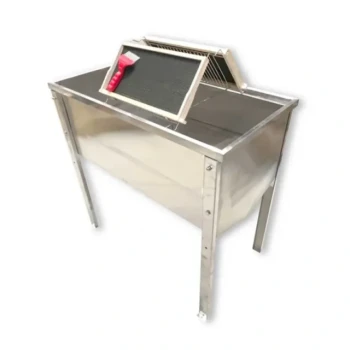
Industrial-grade constant temperature paraffin dipping tanks function by maintaining extreme heat to achieve sterilization levels that surface cleaning cannot match. By heating paraffin to approximately 160 degrees Celsius and ensuring the complete immersion of frames or hives, these systems utilize deep thermal penetration to eradicate fungal spores embedded within the wood grain. Furthermore, the resulting paraffin coating seals the wood's pores, creating a physical barrier that prevents future pathogen colonization.
Core Takeaway: Surface disinfection is often insufficient for porous materials like wood. Industrial paraffin dipping solves this by using high heat to sterilize the equipment's core and a wax seal to lock out future contaminants, effectively combining heavy-duty disinfection with long-term preservation.
The Mechanics of Deep Sterilization
Achieving Thermal Penetration
The primary advantage of these tanks is their ability to maintain paraffin at approximately 160 degrees Celsius.
Unlike standard cleaning methods that only treat the outer layer, this high temperature forces heat deep into the structural material of the hive.
Eradicating Embedded Fungal Spores
Wood is naturally porous, allowing fungal spores to hide deep within the fibers where chemical sprays cannot reach.
The complete immersion provided by these tanks ensures that the high heat reaches these internal reservoirs. This deep thermal treatment effectively kills spores that would otherwise survive to reinfect a colony.
Long-Term Pathogen Prevention
Sealing Microscopic Pores
Once the sterilization process is complete, the paraffin plays a secondary, prophylactic role.
As the wood absorbs the wax, the paraffin seals the pores of the timber. This eliminates the microscopic hiding spots that pathogens typically exploit for colonization.
Preservation as Bio-Security
This method moves beyond simple cleaning and acts as a form of equipment preservation.
By integrating disinfection, preservation, and colony health protection into a single step, the treated equipment becomes hostile to microbial growth, significantly reducing the risk of recurring epidemics.
Understanding the Operational Trade-offs
High-Temperature Management
Operating at 160 degrees Celsius places this method firmly in the industrial category.
Users must be aware that maintaining this specific temperature band is critical; too low, and the thermal penetration may fail to kill deep-seated spores.
Material Saturation
The process relies on complete immersion to be effective.
This requires equipment capable of handling the full volume of hives or frames, ensuring that no section of the wood is left untreated and vulnerable to re-infection.
Making the Right Choice for Your Goal
To determine if industrial paraffin dipping aligns with your maintenance strategy, consider your primary objectives:
- If your primary focus is eradicating persistent disease: Prioritize the 160°C thermal treatment to ensure deep-seated fungal spores are destroyed.
- If your primary focus is equipment longevity: Rely on the paraffin coating to seal wood pores, preventing rot and blocking future pathogen entry.
By sealing the past out and the future in, high-temperature paraffin dipping offers the most robust defense available for wooden beekeeping equipment.
Summary Table:
| Feature | Benefit for Epidemic Prevention | Impact on Equipment |
|---|---|---|
| 160°C High Heat | Eradicates deep-seated fungal spores | Deep thermal sterilization |
| Complete Immersion | Ensures no untreated internal reservoirs | Consistent pathogen removal |
| Paraffin Coating | Seals pores to block pathogen entry | Long-term wood preservation |
| Pore Saturation | Eliminates microbial hiding spots | Enhanced bio-security barrier |
Elevate Your Apiary’s Bio-Security with HONESTBEE
Protect your colonies and extend the lifespan of your equipment with professional-grade solutions. HONESTBEE specializes in supporting commercial apiaries and distributors with high-performance beekeeping machinery, including precision paraffin dipping tanks and hive-making equipment.
Whether you are looking to upgrade your sterilization process or source comprehensive beekeeping tools and consumables, we provide the industrial strength your business needs to thrive.
Ready to optimize your operations? Contact us today to discuss your wholesale requirements!
References
- Yasuko Hanafusa, Sota Kobayashi. Chalkbrood : the Mycosis in Honeybees and its Control Measures. DOI: 10.2743/jve.24.101
This article is also based on technical information from HonestBee Knowledge Base .
Related Products
- Plastic Honey Uncapping Tub Tank for Beekeeping
- Stainless Steel Uncapping Tank with Stand and Strainer
People Also Ask
- What is an uncapping tank used for in honey harvesting? Maximize Your Honey Yield and Minimize Waste
- What are the functional advantages of using a dedicated uncapping tank during honey processing? Maximize Your Honey Yield
- What size uncapping tank do I need? Find the Perfect Fit for Your Apiary
- Why is uncapping necessary in honey harvesting? Unlock Your Honey Yield & Preserve Comb
- What is the step-by-step guide for the uncapping process? Master the Art of Efficient Honey Extraction