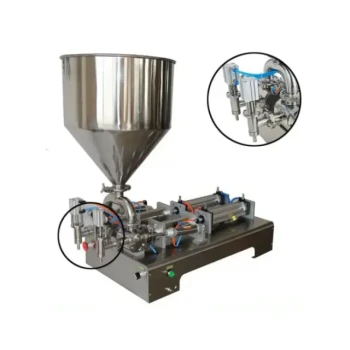
Industrial-grade honey-filling and packaging machines function as a central asset in apitourism by enabling the onsite bottling and sealing of raw honey in full view of visitors. This immediate processing capability serves a dual purpose: it guarantees high standards of hygiene and transparency while transforming raw agricultural produce into high-value, site-specific souvenirs that consumers trust.
The core value of this equipment lies in converting a "back-end" industrial process into a "front-end" consumer experience. By making the bottling process visible and professional, apitourism sites validate the authenticity of their product, justifying premium pricing for what becomes a tangible memory of the tour.
The Strategy of Visible Production
The presence of industrial machinery does more than just fill jars; it creates a narrative of professional integrity that visitors can watch unfold.
Transforming Process into "Theater"
In an apitourism context, the production line becomes an attraction in itself. Industrial-grade machines allow the site to bottle raw honey in full view of the public. This visibility proves the honey’s origin and freshness, effectively turning the manufacturing process into a spectator event that engages visitors.
Solidifying Authenticity
Modern consumers are often skeptical of food origins. By witnessing the immediate packaging of the honey they just learned about, visitors gain absolute confidence in the product's authenticity. This transparency eliminates doubts about dilution or mislabeling, directly strengthening the bond of trust between the apiary and the consumer.
Elevating Product Quality and Safety
While the visual aspect appeals to tourists, the technical capabilities of these machines ensure the product meets the rigorous demands of the modern retail market.
Ensuring Hygiene and Shelf Life
Manual handling carries a risk of secondary contamination. Automated packaging equipment utilizes sterile or high-hygiene environments to seal honey airtight. This significantly extends the product's shelf life and ensures that the souvenir remains safe and fresh long after the visitor returns home.
Professional Standardization
Tourists expect "farm-fresh" products, but they also demand professional packaging. Industrial machines provide precise quantitative measurement and uniform sealing. This consistency facilitates professional branding, ensuring that every jar sold looks like a high-end retail commodity rather than a haphazardly filled home project.
Driving Economic Growth
Investing in industrial packaging changes the economic model of an apitourism site from simple agriculture to vertical integration.
Creating High-Value Souvenirs
These machines allow apiaries to transform bulk agricultural output into branded retail products. A jar of honey filled onsite becomes a high-quality souvenir with added emotional value. This differentiation allows the site to charge a premium over standard supermarket honey.
Maximizing Margins
By processing bulk honey into retail-ready units onsite, apiaries can engage in direct sales. This bypasses intermediaries and distributors, keeping the full profit margin within the business. Furthermore, automated efficiency reduces product loss and labor costs, improving the overall return on investment.
Understanding the Trade-offs
While industrial machines offer significant value, they introduce specific operational considerations that must be weighed against the rustic nature of apitourism.
Balancing "Industrial" with "Artisanal"
There is a risk that heavy machinery may clash with the "hand-crafted" image of a small farm. Using industrial-grade solutions ensures safety, but the presentation must be carefully managed to retain the site's charm. The goal is to frame the machinery as a tool for quality assurance, not mass production.
Operational Rigidity
Automated machines are designed for standardized production (e.g., specific volumes like 330ml to 1500ml). Changing bottle shapes or sizes to suit a whimsical marketing idea can be difficult and costly compared to manual filling. Sites must commit to specific packaging formats to maximize the efficiency of the equipment.
Making the Right Choice for Your Goal
Selecting the right equipment depends on whether your primary goal is operational throughput or the visitor experience.
- If your primary focus is Brand Trust: Prioritize machines with transparent shielding and visible hoppers to maximize the "process transparency" for visitors viewing the production.
- If your primary focus is Retail Expansion: Select automated systems that support standardized specifications and airtight sealing to meet the entry requirements of supermarkets and formal retail channels.
Ultimately, the machine is not just a tool for filling jars; it is a vehicle for verifying authenticity and capturing the value of the visitor's experience.
Summary Table:
| Feature | Impact on Apitourism | Value Proposition |
|---|---|---|
| Visible Production | Creates a "Theater" experience | Builds absolute trust in product authenticity |
| Automated Filling | Ensures precise, uniform volume | Professional retail appearance for souvenirs |
| Hygienic Sealing | Prevents secondary contamination | Extends shelf life and ensures food safety |
| Vertical Integration | Enables direct-to-consumer sales | Maximizes profit margins by bypassing middlemen |
| Standardization | Consistent packaging formats | Facilitates entry into high-end retail channels |
Elevate Your Apiary’s Commercial Potential with HONESTBEE
Are you ready to transform your bulk honey into high-value retail products? At HONESTBEE, we specialize in empowering commercial apiaries and distributors with professional-grade solutions. From advanced honey-filling and hive-making machinery to a full spectrum of beekeeping tools and honey-themed cultural merchandise, we provide everything you need to scale your business.
Our equipment doesn't just process honey; it builds your brand's credibility and maximizes your margins. Contact us today to discover how our wholesale machinery and industry consumables can revolutionize your apitourism site or commercial operation!
References
- Zh. Aliyeva, Z. K. Kaliaskarova. PROBLEMS AND PROSPECTS OF DEVELOPMENT OF APITOURISM IN KAZAKHSTAN. DOI: 10.32014/2019.2518-1467.144
This article is also based on technical information from HonestBee Knowledge Base .
Related Products
- Precision Automated Packaging Turntable Honey Spoon Filling Sealing Packing Machine
- Fully Automatic Honey Filling Packaging Machine for Processing Line
- Double Nozzle Small Honey Filling Machine Honey Sachet Packing Packaging Equipment
- Automatic Single-Dose Snap & Squeeze Honey Sachets Packing Machine
- Small Honey Filling Machine Sachet Packing Equipment Single Nozzle
People Also Ask
- Why is the use of professional filling and sealing packaging machinery necessary for the production of high-value honey?
- What role do automated filling and packaging machines play in the honey supply chain? Scale Your Retail Distribution
- What are the benefits of automated honey filling and packaging? Scale Your Apiary with Industrial Precision
- What role do professional automated filling and packaging machines play in honey processing? Boost Efficiency & Value
- How do automated honey filling and packaging machines contribute to the market value of honey products? Maximize Your ROI