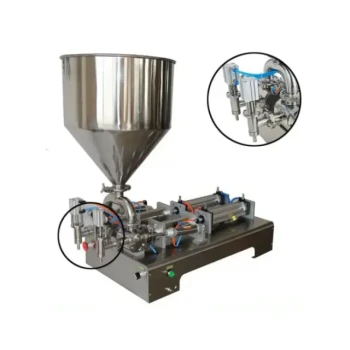
Automated industrial honey filling machines ensure compliance by establishing a closed, sterile processing environment that rigorously prevents secondary contamination during packaging. By eliminating human contact and isolating the product from external pathogens, these systems preserve the honey's natural structure and purity to meet the stringent requirements of the Food Codex and other international standards.
The core function of these machines is to act as a precision barrier; they standardize hygiene and measurement accuracy to ensure the final product remains chemically unaltered and physically safe for global consumption.
Mechanisms of Compliance
Establishing a Closed, Sterile Environment
The primary method for ensuring safety is the creation of a closed-loop system.
According to industry standards, these machines isolate the honey from the surrounding environment. This prevents the introduction of external substances or pathogens that could compromise the product's safety profile.
By maintaining a sterile atmosphere, the machinery ensures that the honey packaged is identical in purity to the honey processed, directly satisfying the "no addition of external substances" rule found in the Food Codex.
Preventing Material Contamination
Compliance extends beyond the honey itself to the machinery that touches it.
Industrial-grade equipment is constructed from food-grade stainless steel. This material selection is critical for preventing the migration of heavy metals or metal impurities into the product.
This ensures that chemical contaminants remain below legal safety limits throughout the filling process, a key requirement for entering markets with strict heavy metal regulations.
Preserving Chemical and Physical Integrity
Automation allows for the handling of high-viscosity fluids without damaging them.
Advanced machines utilize precision pneumatic or servo-controlled systems to fill containers without exerting excessive physical shear. Excessive agitation can alter the honey’s structure, leading to unwanted crystallization or color changes.
Furthermore, minimizing environmental exposure helps maintain critical chemical indicators, such as moisture and sucrose content, ensuring the product meets Non-Tariff Measures (NTMs).
Ensuring Trade Standard Accuracy
Food safety standards often overlap with fair trade regulations regarding net content.
High-precision metering control systems guarantee that the weight of every bottle complies with strict trade standards. This consistency eliminates the risk of under-filling or over-filling, which can be flagged as a compliance issue in export markets.
Additionally, automated labeling systems ensure that mandatory legal warnings—such as those regarding infant botulism risks—are applied consistently to every unit.
Understanding the Operational Trade-offs
Viscosity vs. Processing Speed
While automation increases speed, honey is a non-Newtonian fluid that reacts to stress.
Pushing a machine to run at maximum speed with high-viscosity varieties (like Acacia honey) can introduce shear stress. This may not spoil the honey, but it can degrade its quality classification by introducing air bubbles or accelerating crystallization, technically complying with safety rules while failing quality standards.
Sterility vs. Maintenance Complexity
The closed-loop systems required for Food Codex compliance are highly effective but complex to maintain.
These systems require rigorous Clean-in-Place (CIP) protocols to ensure the "sterile environment" remains sterile. Neglecting the maintenance of these automated cleaning cycles can lead to biofilm buildup, creating a food safety risk within the very machine designed to prevent it.
Making the Right Choice for Your Goal
To select the right automation for your facility, assess your specific market targets:
- If your primary focus is Global Export (EU/US): Prioritize machines featuring closed-loop stainless steel systems to guarantee heavy metal compliance and pathogen exclusion.
- If your primary focus is Retail Consistency: Look for equipment with servo-controlled metering and automated labeling to ensure strict adherence to net weight regulations and legal warning requirements.
Ultimately, the right machine protects your brand by transforming compliance from a manual variable into an automated guarantee.
Summary Table:
| Compliance Feature | Mechanism of Action | Industry Benefit |
|---|---|---|
| Closed-Loop System | Isolates product from pathogens | Prevents secondary contamination |
| Food-Grade Material | High-quality stainless steel construction | Prevents heavy metal migration |
| Servo-Control | Precision metering and gentle handling | Maintains physical integrity & weight accuracy |
| CIP Protocols | Automated Clean-in-Place cycles | Eliminates biofilm and bacterial growth |
| Auto-Labeling | Consistent application of legal warnings | Ensures regulatory and trade compliance |
Elevate Your Honey Production with HONESTBEE
Are you a commercial apiary or distributor looking to scale your operations while maintaining rigorous international food safety standards? HONESTBEE provides the expertise and equipment you need to succeed. From precision honey-filling machines to full-scale beekeeping machinery and essential industry consumables, we offer a comprehensive wholesale portfolio designed for global trade.
Our value to you:
- Technical Excellence: Equipment built to satisfy Food Codex and heavy metal regulations.
- End-to-End Solutions: Everything from hive-making hardware to honey-themed cultural merchandise.
- Global Export Readiness: Specialized tools that ensure your product meets EU/US retail and safety requirements.
Ready to automate your success?
Contact HONESTBEE today for a customized consultation!
References
- Gıyasettin Baydaş, Zümra Kul. BEE PRDUCTS AND THE POTENTIAL HEALTH ISSUES ARISING FROM THEIR UNCONTROLLED USE. DOI: 10.46810/tdfd.1429727
This article is also based on technical information from HonestBee Knowledge Base .
Related Products
- Fully Automatic Honey Filling Packaging Machine for Processing Line
- Automatic Honey Filling and Filtering Machine for Beekeeping Bottle Filling
- Precision Durable Efficient HONESTBEE Rotary Honey Filling Machine
- Precision Automated Packaging Turntable Honey Spoon Filling Sealing Packing Machine
- Semi Automatic Small Honey Bottle Filling Machine Honey Filler
People Also Ask
- Why are fully automatic honey filling and packaging lines essential? Boost Your Honey's Market Value and Quality
- What is a fully-automatic honey filler? Streamline Your Production with High-Precision Automation
- How do automated honey filling and packaging machines affect profitability? Boost Margins with HONESTBEE Technology
- How do automated honey filling and packaging machines contribute to the market value of honey products? Maximize Your ROI
- How do industrial-grade automated honey filling and packaging machines mitigate the risk of physical contamination?