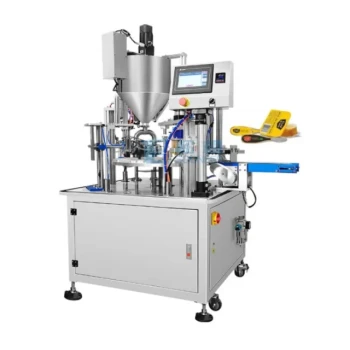
Automated precision and closed-loop hygiene are the primary mechanisms by which industrial honey machines ensure compliance. These systems utilize advanced flow metering and aseptic sealing to eliminate human error and environmental contamination, ensuring the final product meets strict legal and export standards.
Industrial-grade machinery serves as the hardware foundation for standardized mass production by integrating impurity filtration, precise weight control, and traceability systems. This technology transforms honey processing from a variable manual task into a compliant, data-driven operation suitable for international markets.
Ensuring Hygiene and Purity
Eliminating Secondary Contamination
Industrial machines often employ closed-loop and aseptic packaging technologies. By automating the transfer from bulk storage to retail packaging, these systems prevent the honey from being exposed to airborne contaminants or human handling. This is critical for meeting the rigorous sanitation standards required for organic certification.
Advanced Filtration Systems
To ensure clarity and sensory quality, these machines integrate sophisticated filtration units. Unlike manual squeezing, which damages combs and introduces debris, mechanical pressing and precision filtration separate impurities while maintaining the honey's natural structure. This results in a cleaner product that meets the physical stability requirements for high-end markets.
Vacuum Sealing for Stability
Automated sealing processes often utilize vacuum technology to ensure airtightness. This prevents the secondary absorption of moisture from the atmosphere, which can lead to fermentation or spoilage. Secure sealing is essential for maintaining product stability during long-haul export transportation.
Achieving Regulatory Compliance
Precision Metering and Weight Control
Compliance with international weights and measures regulations is non-negotiable. Industrial fillers use precise flow metering and weight control systems to guarantee the net content of every bottle. This eliminates the inconsistencies inherent in manual filling and ensures every unit meets legal labeling requirements.
Traceability and Anti-Counterfeiting
Modern processing equipment supports traceable batch management. These machines can integrate anti-counterfeiting labeling directly into the production line. This creates a verifiable audit trail, allowing producers to prove the origin and processing history of their honey for export authorities.
Preserving Biological Integrity
Constant Temperature Control
Honey contains sensitive active ingredients and enzymes that can be destroyed by heat. Industrial-grade processors utilize constant temperature control systems to maintain viscosity for filling without overheating the product. This preserves the essential nutrients and natural flavor profiles that define high-quality, raw honey.
Viscosity Adaptation
Honey consistency varies based on floral source and temperature. High-precision quantitative control systems are designed to adapt to these varying viscosities. This ensures consistent fill levels and processing speeds regardless of the honey’s physical thickness.
Understanding the Trade-offs
Complexity of Maintenance
While automation increases throughput, it introduces technical complexity. High-precision flow meters and aseptic systems require regular calibration and specialized maintenance to remain accurate. Neglecting this maintenance can lead to drift in fill weights or compromised hygiene seals.
The Cost of Standardization
Implementing this level of control requires significant capital investment compared to manual methods. The "hardware foundation" mentioned in the primary reference implies a shift toward industrial infrastructure. Producers must weigh this cost against the potential revenue from accessing high-value export or organic markets.
Making the Right Choice for Your Goal
To select the right machinery, align the technology with your specific compliance targets:
- If your primary focus is Export Compliance: Prioritize machines with traceable batch management and vacuum sealing to meet international shipping and labeling laws.
- If your primary focus is Organic Certification: Ensure the equipment features aseptic, closed-loop transfer systems to prevent any secondary contamination that could void organic status.
- If your primary focus is Product Quality/Flavor: Look for equipment with precise temperature controls and gentle filtration to preserve natural enzymes and active ingredients.
By leveraging these technologies, you convert compliance from a manual burden into an automated, scalable asset.
Summary Table:
| Compliance Feature | Mechanism | Benefit for Producers |
|---|---|---|
| Hygiene Control | Closed-loop & aseptic packaging | Eliminates secondary contamination & meets organic standards |
| Weight Accuracy | Precise flow metering systems | Ensures legal weight compliance & reduces product giveaway |
| Batch Traceability | Integrated batch management | Provides a verifiable audit trail for export authorities |
| Nutrient Preservation | Constant temperature control | Protects heat-sensitive enzymes and natural honey flavor |
| Product Stability | Vacuum sealing technology | Prevents moisture absorption and fermentation during transit |
Scale Your Apiary with Industrial-Grade Precision
Transitioning from manual processing to automated compliance is the key to unlocking international markets. HONESTBEE empowers commercial apiaries and global distributors with the hardware foundation needed for success.
Our comprehensive wholesale portfolio includes:
- Advanced Honey-Filling & Processing Machines for precise weight and hygiene control.
- Industrial Hive-Making Equipment to standardize your infrastructure.
- Complete Beekeeping Tools & Consumables to support every stage of production.
- Honey-Themed Cultural Merchandise to enhance your brand's market appeal.
Whether you are upgrading a processing facility or expanding a distribution network, our team delivers the technical expertise and equipment necessary to ensure your honey meets the highest global standards.
Contact HONESTBEE today for a customized equipment solution
References
- Giulia Mastromonaco, Marta Cianciabella. Challenges and opportunities of sustainability, certifications and traceability in the Italian beekeeping sector. DOI: 10.3934/agrfood.2025016
This article is also based on technical information from HonestBee Knowledge Base .
Related Products
- Fully Automatic Honey Filling Packaging Machine for Processing Line
- Precision Durable Efficient HONESTBEE Rotary Honey Filling Machine
- Commercial Rotary Honey Filling Machine for Production
- Automatic Honey Filling and Filtering Machine for Beekeeping Bottle Filling
- Economy Small Honey Filling Machine Honey Bottle Filler Packaging Machine
People Also Ask
- Why are fully automatic honey filling and packaging lines essential? Boost Your Honey's Market Value and Quality
- What is a fully-automatic honey filler? Streamline Your Production with High-Precision Automation
- How do automated honey filling and packaging machines affect profitability? Boost Margins with HONESTBEE Technology
- How do automated honey filling and packaging machines contribute to the market value of honey products? Maximize Your ROI
- How do industrial-grade automated honey filling and packaging machines mitigate the risk of physical contamination?