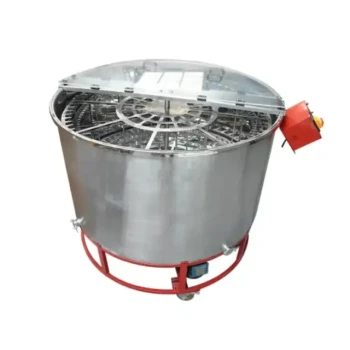
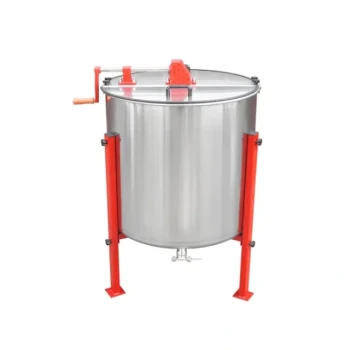
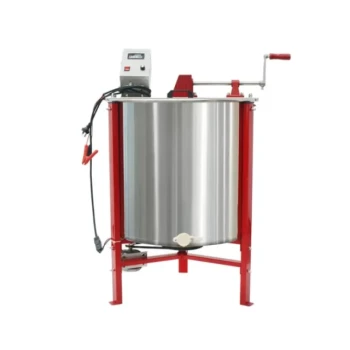
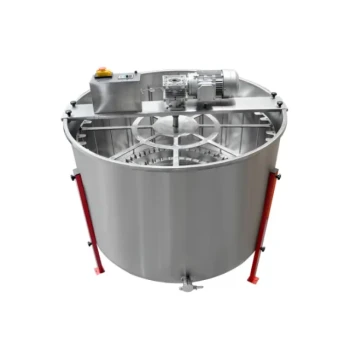
Industrial honey extraction facilities serve as the critical gateway between raw apiary production and the global marketplace. They utilize integrated centrifugal separation and fine filtration technologies to transform variable harvests into standardized export commodities. This mechanical precision ensures that honey meets the rigorous purity, composition, and sanitary mandates enforced by international bodies like the European Union.
By replacing manual harvesting with standardized, automated processes, industrial facilities establish a controlled hygienic environment. This not only maximizes harvest efficiency but ensures the traceability and physicochemical consistency required to bypass non-tariff trade barriers.
The Mechanics of Compliance
Precision Separation and Filtration
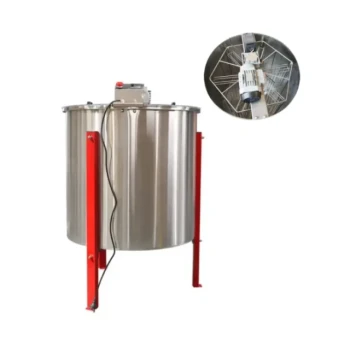
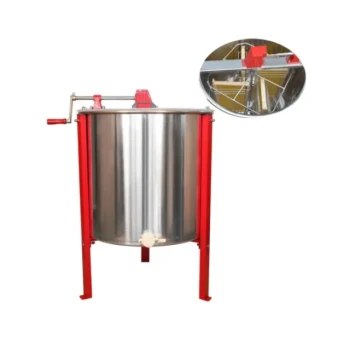
International standards strictly regulate the presence of foreign matter in honey. Industrial facilities employ integrated centrifugal separation to extract honey from combs using high-speed force.
This process allows for the efficient removal of honey without heating it to damaging levels or destroying the beeswax structure. Following extraction, fine filtration systems remove impurities such as wax debris and bee remains. Crucially, this is done without stripping the honey of its natural bio-active content, preserving the pollen profile necessary for origin verification.
Controlled Hygienic Environments
Export certifications, particularly for the EU, demand proof that the product was processed under sanitary conditions. Industrial facilities provide a controlled hygienic environment that traditional field harvesting cannot match.
These facilities inhibit microbial growth and preventing external contaminants from entering the supply chain. This containment is essential for meeting safety standards like NMX-F-036-NORMEX-2006 and maintaining the sensory characteristics expected by foreign buyers.
Meeting Regulatory Frameworks
Traceability and Registration
A major hurdle in international trade is proving the origin and safety of the product. Industrial facilities facilitate equipment registration and supply chain traceability.
By processing honey in registered facilities, exporters can generate the documentation required by customs authorities to prove regulatory adherence. This transparency allows inspectors to trace the product back through the processing chain, a non-negotiable requirement for many high-value markets.
Standardization of Chemical Parameters
Trade standards include strict limits on moisture content, sucrose levels, and net weight. Industrial facilities utilize advanced processing and filling machinery to control these variables precisely.
Automated systems provide preliminary moisture control to prevent fermentation and extend shelf life. Furthermore, industrial filling machines ensure precise metering, guaranteeing that the net weight of every unit complies with labeling laws and reduces waste.
Common Pitfalls to Avoid
Balancing Efficiency with Bio-Activity
While industrialization increases volume, over-processing is a significant risk. Aggressive filtration or excessive heat generated during high-speed centrifugation can degrade enzymes and reduce the honey's bio-active quality.
If the biological activity drops below international thresholds, the honey may be downgraded from "table honey" to "industrial honey," significantly reducing its market value. Facilities must calibrate equipment to remove impurities without sterilizing the product's natural benefits.
Capital Intensity vs. Production Volume
Industrial-grade centrifugal technology and automated controls offer lower production costs per unit, but they require substantial upfront investment. This equipment is designed for large-scale processing.
Small-scale producers attempting to adopt full industrialization without sufficient honey volume may find the return on investment negative. The efficiency gains regarding price competitiveness are only realized when the facility operates near its designed capacity.
Making the Right Choice for Your Goal
To align your processing capabilities with your export objectives, consider the following:
- If your primary focus is EU Market Access: Prioritize facilities with registered equipment and robust traceability systems to satisfy strict sanitary and origin documentation requirements.
- If your primary focus is Price Competitiveness: Leverage high-efficiency centrifugal automation to lower the cost per unit and ensure precise weight control for mass-market distribution.
Ultimately, the value of an industrial facility lies not just in speed, but in its ability to turn a variable natural product into a consistent, compliant, and traceable export asset.
Summary Table:
| Key Feature | Role in Export Compliance | Impact on Quality |
|---|---|---|
| Centrifugal Separation | High-speed extraction without thermal damage | Preserves bio-activity and enzyme levels |
| Fine Filtration | Removes wax and debris per international norms | Ensures purity while keeping pollen profiles |
| Automated Filling | Precise net weight and moisture control | Prevents fermentation and ensures label accuracy |
| Hygienic Control | Provides sanitized processing environment | Minimizes microbial risk and meets EU standards |
| Traceability Systems | Equipment registration and supply chain logs | Simplifies origin verification for customs |
Elevate Your Beekeeping Operation with HONESTBEE
Transitioning to international export requires more than just honey—it requires precision, compliance, and industrial-grade reliability. HONESTBEE specializes in empowering commercial apiaries and distributors with the high-performance tools needed to conquer global markets.
We provide a comprehensive wholesale range, including:
- Advanced Machinery: From high-speed centrifugal extractors to precision honey-filling and hive-making machines.
- Full Spectrum Hardware: Durable beekeeping tools and equipment designed for large-scale efficiency.
- Industry Consumables: A wide array of essentials to keep your production line seamless.
- Retail Value-Add: Honey-themed cultural merchandise to diversify your brand.
Whether you are scaling your extraction facility or looking to supply the highest quality beekeeping hardware to your region, HONESTBEE is your strategic partner.
Contact us today to explore our wholesale solutions and transform your honey production into a world-class export asset.
References
- Arttu Malkamäki, Markku Kanninen. Impacts of land use and land use changes on the resilience of beekeeping in Uruguay. DOI: 10.1016/j.forpol.2016.06.002
This article is also based on technical information from HonestBee Knowledge Base .
Related Products
- HONESTBEE 72 Frame Industrial Electric Honey Extractor for Beekeeping
- 32 Frame Commercial Electric Honey Extractor for Beekeeping and Honey Production
- Commercial 48-Frame Stainless Steel Honey Extractor
- HONESTBEE 3-Frame Manual Acrylic Honey Extractor
- Stainless Steel Manual 8 Frame Radial Honey Extractor Machine for Beehives
People Also Ask
- What is the importance of balancing honeycomb frames within a honey extractor? Ensure Stability and Protect Machinery
- How is honey separated from the frames after they are uncapped? Efficient Extraction Methods for High Yields
- What are the main benefits of using a honey extractor? Maximize Yields and Protect Your Honeycomb
- What are the recommended methods for removing honey from the honeycomb? Top Extraction Techniques for Maximum Efficiency
- How do manual honey extractors compare to electric honey extractors? Choosing the Right Tool for Your Apiary Growth