Linen covers and insulation boards function as a critical dual-layer defense system by simultaneously retaining heat and actively managing humidity within the hive. Placed directly over the frames, the linen provides a breathable barrier that allows moisture to escape, while the insulation board creates a thermal buffer to maintain the internal temperature required for the colony's survival.
Survival in extreme cold is not merely about maintaining warmth; it is fundamentally about moisture management. This specific combination of materials prevents the lethal accumulation of condensation while reducing the metabolic energy bees must expend to generate heat.
Managing the Internal Micro-climate
The Danger of Condensation
In freezing temperatures, the greatest threat to a honeybee colony is often not the cold itself, but wetness. As bees consume honey to generate heat, they release moisture through respiration.
If this moisture hits a cold hive ceiling, it condenses into ice or water. When this water drips back onto the clustering bees, it can freeze them, leading to rapid colony collapse.
The Function of Linen
Linen serves as a breathable membrane. Unlike non-porous materials like plastic, natural linen fabrics allow water vapor to pass through the top of the hive.
This prevents moisture from trapping effectively "venting" the humidity generated by the bee cluster. It keeps the environment dry without creating a draft that would suck out vital heat.
Preserving Metabolic Energy
Creating a Thermal Buffer
Insulation boards act as a heat shield. Placed over the linen, these boards reduce the rate of heat loss from the top of the hive, which is where the most significant heat loss typically occurs.
By adding this layer of thermal resistance, the internal temperature is stabilized against sharp fluctuations in the outside weather.
Reducing Energy Consumption
Bees maintain a core cluster temperature of approximately 95 degrees Fahrenheit by shivering their wing muscles. This requires significant energy, derived from their stored honey reserves.
Effective insulation reduces the "workload" required to maintain this temperature. This conserves the colony's food stores, ensuring they do not starve before spring arrives.
Completing the Defense System
The Role of External Wraps
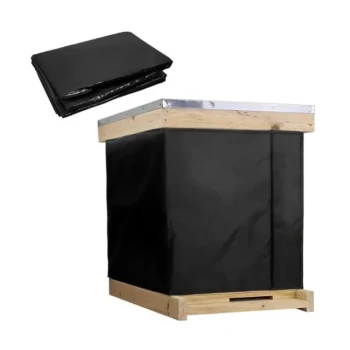
While internal boards handle vertical heat loss, specialized external hive wraps address horizontal exposure. These wraps reduce the penetration of cold winds that can strip heat away from the colony.
Dark-colored wraps can also absorb solar heat on sunny days. This external layer stabilizes the micro-climate further, complementing the internal work of the linen and insulation boards.
Understanding the Trade-offs
The Balance of Ventilation vs. Insulation
A common pitfall is prioritizing insulation to the point of sealing the hive completely. If the setup is too airtight, even linen cannot wick away moisture fast enough.
Conversely, excessive ventilation to remove moisture can render the insulation board useless, forcing bees to consume excess honey to stay warm. The goal is a permeable thermal barrier, not a hermetically sealed box.
Making the Right Choice for Your Goal
To maximize colony survival, you must tailor your approach to your specific climate conditions.
- If your primary focus is preventing colony collapse due to moisture: Prioritize the quality and placement of the linen cover to ensure maximum breathability above the cluster.
- If your primary focus is conserving food stores in extreme cold: Increase the R-value (thickness) of the insulation board and utilize external wraps to minimize the bees' metabolic burn rate.
Success depends on creating a dry, stable environment where the colony can conserve energy rather than fighting the elements.
Summary Table:
| Component | Primary Function | Impact on Colony Health |
|---|---|---|
| Linen Cover | Breathable Moisture Management | Prevents lethal condensation & ice buildup on the cluster. |
| Insulation Board | Thermal Buffer (High R-Value) | Reduces heat loss and stabilizes internal hive temperatures. |
| External Wraps | Wind Protection & Solar Gain | Minimizes metabolic energy burn by shielding against cold winds. |
| Bee Cluster | Metabolic Heat Generation | Shivers to maintain core temperature using honey reserves. |
Maximize Your Winter Survival Rates with HONESTBEE
Protecting commercial apiaries from extreme climates requires more than just basic supplies—it requires high-performance equipment. HONESTBEE provides distributors and large-scale beekeeping operations with a complete spectrum of wholesale solutions, from specialized linen membranes and insulation components to heavy-duty hive-making machinery and honey-filling systems.
Our mission is to help you reduce colony losses and improve operational efficiency. Whether you are looking for essential industry consumables or honey-themed cultural merchandise to expand your portfolio, we offer the quality and scale you need.
Ready to fortify your apiary for the next season? Contact us today to discuss your wholesale requirements!
References
- Aliakbar Salehizadeh, Amir Gandomkar. Temperature Conditions for Determination of Beekeeping Regions in the Light of Climate Change. Case study: Fars Province. DOI: 10.2478/rtuect-2020-0006
This article is also based on technical information from HonestBee Knowledge Base .
Related Products
- Australian Pine Wood Langstroth Screen Bottom Board for Wholesale
- Professional Insulated Plastic Bee Hives
- Professional Insulated Winter Hive Wrap for Beekeeping
- Langstroth Screen Bottom Board for Beekeeping Wholesale
- Inner Beehive Cover for Beekeeping Bee Hive Inner Cover
People Also Ask
- How are screen bottom boards and sticky boards utilized to detect Varroa mites? Master Passive Apiary Monitoring
- What is the primary function of a screen bottom board? Achieve Accurate Varroa Mite Assessment in Your Apiary
- Why is the combination of a screen bottom board and a sticky trap board essential for monitoring Varroa mite? Guide
- What is the primary function of a standard screen bottom board when assessing honeybee grooming behavior? - Key Mite Data
- What role do screen bottom boards and monitoring inserts play in assessing Varroa mite mortality and maintaining hive hygiene in Langstroth hives?