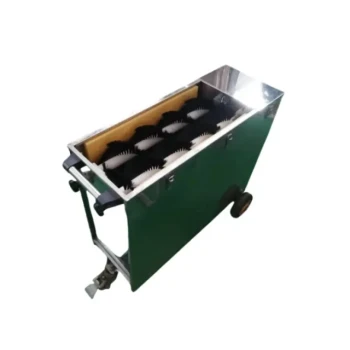
Pesticide risk directly shapes both hive hardware and operating procedures. Carbaryl and neonicotinoids can kill bees through spray contact, drift, contaminated forage, dust, water, or residues brought back by foragers. Commercial beekeepers therefore prioritize rapid hive closure, relocation, monitoring, clean supplemental feed, and durable migratory equipment—but no equipment replaces advance coordination with growers and pesticide applicators.
The best protection strategy is layered: identify spraying risk early, prevent exposure where legally and biologically practical, move colonies when necessary, and maintain ventilation, food, and colony monitoring during any temporary isolation.
How Carbaryl and Neonicotinoids Threaten Commercial Colonies
Carbaryl creates acute exposure risks
Carbaryl can cause serious bee mortality when bees contact treated flowers, spray droplets, drift, contaminated vegetation, or residues carried into the hive. Its use in orchards and other crop systems makes application timing especially important for apiaries positioned near bloom.
The risk is not limited to visible spray contact. Bees may also encounter contaminated pollen, nectar, water, or dust and transport residues back to the colony.
Neonicotinoids create both acute and sublethal risks
Neonicotinoids can impair navigation, feeding, motor function, memory, learning, and homing behavior. Affected foragers may fail to return, weakening the colony even when immediate mass mortality is not visible.
Repeated or low-level exposure can also undermine immune function and colony development. Combined exposure with fungicides or in-hive miticides may increase overall chemical stress, so managers should evaluate the entire chemical environment rather than one product in isolation.
Toxicity classifications are useful but incomplete
Acute contact LD50 values help compare short-term toxicity. The supplementary reference identifies pesticides at or below 2 micrograms per bee as highly toxic, those between 2 and 11 micrograms per bee as toxic, and those above 11 micrograms per bee as relatively less toxic under that classification.
However, LD50 does not fully describe field risk. Residue duration, application method, drift, crop bloom, weather, repeated exposure, and sublethal effects can be equally important in commercial operations.
How Risk Changes Equipment Selection
Choose hives that can be moved quickly
Commercial colonies near treated farmland should be housed in durable, modular, transport-ready equipment. Standardized boxes, secure lids, compatible pallets, hive straps, lifting devices, and transport frames reduce the time required to move large numbers of colonies.
Rapid relocation is often more reliable than prolonged confinement when spraying is extensive, residues persist, or forage remains contaminated after application.
Use entrance-control hardware carefully
Quick-closing entrances, entrance reducers, and closure accessories can restrict foraging during short, known spraying windows. They should be selected for secure closure, easy operation, and adequate airflow.
A closure system that traps bees without ventilation can create overheating, suffocation, or severe stress. Equipment should therefore support controlled isolation rather than simply sealing colonies indefinitely.
Prioritize ventilation and heat management
Temporary hive closure increases the importance of screened ventilation, shade, water management, and secure transport design. In hot conditions, poorly ventilated colonies can be damaged by heat even when pesticide exposure is reduced.
For distributors and resellers, ventilation components should be offered alongside closure hardware rather than treated as optional accessories.
Select transport systems for speed and stability
Hive-moving tools, pallets, straps, loaders, and mobile units should match the operator’s colony scale and route conditions. The objective is fast, low-vibration movement that minimizes disruption to brood, comb, and queen performance.
Equipment compatibility matters. Standardized dimensions and modular components simplify replacement, consolidation, and emergency deployment across multiple apiary sites.
Use pollen traps only as a secondary measure
Pollen traps may help remove some incoming pollen, but they do not prevent exposure to contaminated nectar, water, dust, or direct spray. They can also reduce the colony’s nutritional intake if used too aggressively.
They should be considered a supplemental risk-management tool, not a substitute for relocation, application coordination, or clean feed.
Stock clean-feeding equipment
Internal division-board feeders, rapid top feeders, and protected syrup or pollen-supplement systems allow colonies to receive nutrition while foraging is restricted.
Feeding hardware should be easy to refill, resistant to leakage, and compatible with temporary isolation. Clean feed can reduce dependence on contaminated fields, but it does not eliminate the need to manage ventilation, colony temperature, and sanitation.
How Hive Protection Strategies Should Operate
Build an application-warning system
Beekeepers need timely information on what will be sprayed, where, when, how it will be applied, and how long residues may remain hazardous. Direct communication with growers, applicators, land managers, and local agricultural authorities is essential.
Monitoring devices and warning systems can add useful information about weather, temperature, drought, and other conditions that influence application and exposure risk. They should support—not replace—human coordination.
Schedule protection around bee activity
Where the pesticide label and local regulations permit, applications should be coordinated for periods when bees are less active, commonly after daily foraging has ended. This approach is not universally sufficient because residues may persist and bees may encounter treated surfaces later.
The application label, regional rules, crop bloom status, and applicator instructions must control the final decision.
Relocate colonies when exposure cannot be controlled
Moving colonies is generally the strongest option when spraying is prolonged, highly toxic, widespread, or likely to contaminate forage and water sources. Mobile apiary units and transport-ready hive systems allow operators to create distance from active treatment zones.
Relocation planning should include an alternative site with suitable forage, water, access, security, and acceptable pesticide exposure. Moving colonies without evaluating the destination can simply transfer the risk.
Isolate colonies for short, defined periods
Temporary isolation can be appropriate for a brief, predictable application window. It works best when the closure period, ventilation plan, weather conditions, and reopening criteria are clearly defined.
Operators should inspect colonies after reopening for abnormal mortality, reduced activity, disorientation, weakened populations, and contaminated equipment or forage.
Supply uncontaminated nutrition
Clean sugar syrup and pollen supplements can help sustain colonies when nearby forage is temporarily unsafe or when foraging is restricted. Feeders should be positioned inside protected hive spaces and managed to prevent robbing and leakage.
Supplemental feeding supports colony continuity, but it cannot fully replace diverse natural forage over extended periods.
Monitor colony condition after exposure
Post-application checks should assess dead bees, brood condition, queen performance, adult bee behavior, food stores, and signs of abnormal navigation or reduced foraging. Sublethal neonicotinoid effects may appear as declining colony performance rather than immediate mortality.
Records should connect colony observations with pesticide names, application dates, weather, location, and protection measures. This improves future decisions and supports communication with growers or authorities if losses occur.
Understanding the Trade-offs
Closure reduces exposure but increases internal stress
Restricting entrances can prevent bees from contacting treated fields, but it also limits flight, ventilation, and natural feeding. Confinement is therefore a short-term control measure, not a universal solution.
Heat, humidity, and colony population should determine whether closure is practical. When those conditions cannot be controlled, relocation is safer.
Relocation offers stronger protection but costs more
Moving colonies requires labor, equipment, transport capacity, suitable sites, and careful timing. It can also disrupt production and increase mechanical stress on colonies.
Despite these costs, relocation may be economically preferable when the alternative is large-scale mortality, loss of pollination contracts, or prolonged colony recovery.
Protective hardware cannot remove all chemical risk
Entrance reducers, hive covers, pollen traps, and feeding systems mainly control access or support colony management. They do not neutralize pesticide residues already present on plants, soil, water, comb, pollen, or bees.
A product portfolio should therefore be presented as an integrated protection system rather than as a single “pesticide-proof” device.
Product claims must remain precise
Distributors and B2B resellers should avoid implying that any hive component guarantees protection from carbaryl or neonicotinoids. Product information should clearly state the intended use, operating limits, ventilation requirements, transport compatibility, and need for coordinated pesticide management.
Reliable technical guidance is part of the product’s value, especially when customers must respond quickly to changing spray schedules.
Making the Right Choice for Your Goal
Equipment decisions should follow the exposure scenario, colony scale, climate, and time available before spraying.
- If your primary focus is rapid emergency response: Prioritize standardized, durable hives, secure closures, pallets, straps, lifting equipment, and transport capacity that enable fast relocation or temporary isolation.
- If your primary focus is short-term hive confinement: Select closure accessories with reliable ventilation, shade compatibility, easy reopening, and clear operating limits for temperature and duration.
- If your primary focus is colony nutrition during restricted foraging: Stock internal division-board feeders, top feeders, clean syrup supplies, and protected pollen supplements that can be deployed without opening colonies excessively.
- If your primary focus is long-term commercial resilience: Combine monitoring and warning systems with grower coordination, documented pesticide-risk plans, mobile apiary capability, and post-exposure colony inspections.
- If your primary focus is distribution and fulfillment: Offer a coordinated portfolio of hive components, transport hardware, feeding supplies, and monitoring tools with rapid response, technical support, and dependable delivery.
The strongest commercial beekeeping strategy treats pesticide protection as a coordinated system of information, equipment, timing, relocation, nutrition, and monitoring.
Summary Table:
| Factor | Impact on Equipment Selection | Protection Strategy |
|---|---|---|
| Acute toxicity (e.g., carbaryl) | Durable, modular hives; secure closures | Rapid relocation or short-term isolation |
| Sublethal effects (e.g., neonicotinoids) | Monitoring tools; ventilation | Post-exposure health checks |
| Drift and residues | Pollen traps (secondary); clean feeding equipment | Coordination with applicators |
| Heat stress during closure | Ventilated covers, shade, water systems | Define closure windows |
| Transport needs | Pallets, straps, lifting gear | Planned relocation routes |
| Nutrition during isolation | Division-board and top feeders | Clean syrup and supplements |
Protect your commercial apiary with HONESTBEE's full-spectrum beekeeping equipment. From rapid-move hives and ventilation systems to feeding stations and monitoring tools, we support B2B distributors and beekeepers with one-stop sourcing, fast response, and reliable delivery. Need a tailored solution? Contact us today for expert guidance and competitive wholesale pricing.
Related Products
- Stainless Steel J Hook Hive Tool for Beekeeping
- Ergonomic Plastic Frame Spacer Tool for Rapid Hive Management Beekeeping
- HONESTBEE Professional Mini J-Hook Hive Tool for Beekeeping
- Professional Bee Smoker with Elongated Spout and Durable Bellows for Beekeeping
- Stainless Steel Queen Grafting Tool for Beekeeping and Bee Queen Grafting
People Also Ask
- What specific challenges do beekeeping hive tools address during hive maintenance? Essential Solutions for Apiaries
- What is a J-hook hive tool and why is it favored by some beekeepers? Master Gentle Frame Handling
- What are the features of a J-hook hive tool? Effortlessly Lift Frames with Superior Leverage
- What is the purpose of the J-hook hive tool? Effortlessly Lift Frames with Superior Leverage
- How is a J-hook hive tool designed and what is its primary use? Master Effortless Hive Inspections