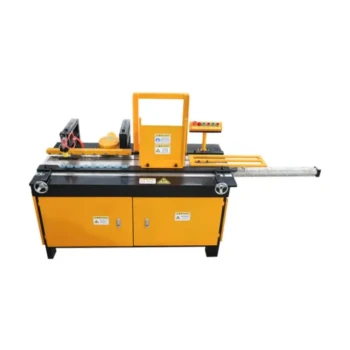
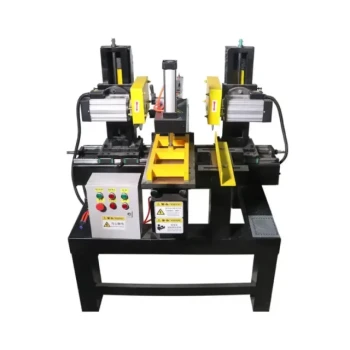
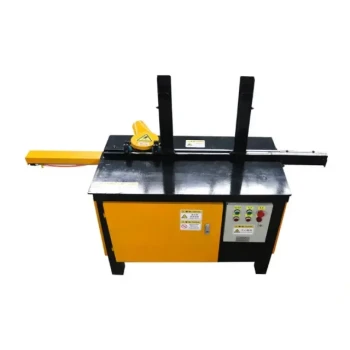
Professional hive-making machines revolutionize apiary efficiency by automating the production of standardized, high-precision wooden components. By replacing manual carpentry with industrial-grade processing, these machines allow commercial operations to rapidly scale up, drastically reduce per-unit construction costs, and ensure every piece of equipment is universally interchangeable across different sites.
The Core Insight Mechanization is not merely about construction speed; it is about creating a predictable infrastructure. The primary efficiency gain comes from dimensional consistency, which eliminates workflow friction, ensures compatibility with automated processing lines, and stabilizes the biological environment for the colony.
The Foundation of Efficiency: Standardization
Universal Interchangeability
The most significant bottleneck in manual hive construction is variance. Professional machines ensure that every box body and frame is manufactured to exact specifications.
This guarantees that equipment is universally interchangeable across different colonies and apiary sites. Beekeepers can swap frames or replace boxes without "fitting" issues, streamlining routine management.
Streamlined Maintenance Workflows
Standardized components simplify the repair and maintenance process. When every part is identical, spare parts management becomes effortless.
This reduces the labor time required per unit for maintenance, allowing apiary staff to focus on colony health rather than hardware repairs.
Compatibility with Downstream Automation
Efficiency in the field must match efficiency in the honey house. Hives produced with high dimensional precision ensure technical compatibility with subsequent automated equipment.
Standardized frames fit perfectly into centrifugal extractors and uncapping machines, preventing jams and equipment damage during harvest.
Scalability and Operational Speed
Rapid Expansion Capabilities
To reach a commercial scale, apiaries must produce infrastructure faster than colonies reproduce. Mechanized production allows for the rapid mass production of hive components.
This speed enables businesses to scale operations aggressively without being held back by a shortage of housing for new splits or captured swarms.
Facilitating Migratory Beekeeping
Commercial operations often rely on migratory practices to chase seasonal blooms. Machine-made hives offer the structural stability and uniformity required for frequent transport.
Uniform stacking and loading maximize truck space and stability, making the logistics of moving thousands of hives safer and more efficient.
Biological and Structural Precision
Maintaining "Bee Space"
In beekeeping, precision is biological, not just mechanical. Machines ensure the preservation of precise "bee space" (the specific gap bees leave between combs).
When dimensions are accurate, bees build proper comb rather than "burr comb" or propolis bridges. This reduces the manual scraping required during inspections and improves colony management.
Reduced Health Risks
High-precision processing creates a more stable environment for the colony. Tighter joints and accurate construction minimize gaps where pests or parasites can harbor.
By reducing these risks structurally, the apiary lowers the burden of chemical treatments and manual interventions required for pest management.
Understanding the Trade-offs
Initial Capital vs. Long-term Gain
Implementing industrial-grade machinery requires a significant upfront capital investment compared to manual construction or purchasing pre-made lower-quality hives.
This approach shifts the cost structure from variable labor costs to fixed asset costs. It is an efficiency play that pays off only when the volume of production is high enough to amortize the machine cost.
Rigidity of Design
Once a machine is tooled for a specific standard (e.g., Langstroth), changing hive styles or dimensions becomes difficult.
Commercial apiaries must commit to a specific standard for the long term. This rigidity is beneficial for uniformity but limits flexibility if operational philosophies change.
Making the Right Choice for Your Goal
To leverage these machines effectively, align your equipment choice with your specific operational bottlenecks.
- If your primary focus is Rapid Scaling: Prioritize machines with high-volume automated assembly features to prevent infrastructure shortages during the swarm season.
- If your primary focus is Labor Reduction: Focus on machines that guarantee high-precision "bee space" dimensions to minimize field maintenance and cleaning time.
True efficiency in a commercial apiary is achieved when hardware standardization renders the physical hive invisible to the workflow, allowing the beekeeper to focus entirely on the bees.
Summary Table:
| Efficiency Driver | Key Benefit | Impact on Commercial Operations |
|---|---|---|
| Standardization | Universal Interchangeability | Eliminates fitting issues; simplifies spare parts management. |
| Mass Production | Rapid Scalability | Allows for aggressive expansion without infrastructure bottlenecks. |
| Dimensional Precision | Biological 'Bee Space' | Reduces burr comb and propolis, cutting down on manual cleaning. |
| Structural Uniformity | Logistic Optimization | Ensures stable stacking for safe, high-volume migratory transport. |
| Automation Readiness | Downstream Compatibility | Frames fit perfectly into extractors, preventing harvest-time jams. |
Revolutionize Your Beekeeping Infrastructure with HONESTBEE
At HONESTBEE, we empower commercial apiaries and distributors to achieve unparalleled operational scale. As a premier provider of professional beekeeping machinery, we supply everything from automated hive-making and honey-filling machines to a full spectrum of precision tools and essential consumables.
Whether you are looking to eliminate production bottlenecks or expand your wholesale portfolio with high-standard equipment, our team is ready to deliver the hardware and industry expertise you need.
Ready to scale your production? Contact us today to explore our wholesale solutions.
References
- Francisco J. Güemes-Ricalde, Juan Manuel Pat–Fernández. Production Costs Of Conventional And Organic Honey In The Yucatán Peninsula Of Mexico. DOI: 10.1080/00218839.2006.11101327
This article is also based on technical information from HonestBee Knowledge Base .
Related Products
- High-Efficiency Pneumatic Bee Hive Making Machine for Rapid Box Assembly
- Mini Desktop Bee Hive Frame Forming Making Machine
- Beehive Handle and Frame Rest Cutting Machine: Your Specialized Hive Machine
- Beehive Machine Double End Saw for Precision Hive Component Manufacturing
- Automatic High-Speed Bee Hive Box Stapling Machine
People Also Ask
- How does the introduction of professional beehive-making machinery benefit sustainable beekeeping? Scale Your Apiary
- Why is specialized beehive-making machinery critical for low-defense breeding? Enhance Selection with Precision Tools
- How does the introduction of specialized beehive making machinery contribute to increasing the scale of regional beekeeping industries?
- What is the importance of specialized beehive making machinery in a circular bio-economy? Build Local Sustainability
- Why is specialized beehive-making machinery essential? Scale Your Apiary with Precision Industrial Standards