Professional honey sampling tools contribute to accuracy by ensuring the specimen extracted is a statistically representative mix of the entire batch, rather than a superficial surface sample. By utilizing food-grade inert materials and designs capable of reaching the bottom of large storage containers, these tools eliminate sampling bias and prevent chemical contamination before laboratory testing even begins.
Core Takeaway The most sophisticated laboratory analysis is rendered useless if the initial sample is flawed. Professional sampling tools are the physical gateway to accuracy, bridging the gap between a heterogeneous batch of honey and the strict data requirements of HACCP compliance.
The Science of Representative Sampling
To understand the value of these tools, one must understand the nature of honey in storage. Honey is rarely a uniform liquid; it stratifies based on moisture, sugar crystallization, and mineral content.
Eliminating Stratification Bias
Honey stored in large drums often separates into layers. The top may have higher moisture content due to absorption from the air, while heavier minerals or crystals settle at the bottom.
Reaching the True Depth
Professional tools are specifically designed to reach the very bottom of these large containers. This capability allows technicians to obtain a representative mixed sample that accounts for the full vertical profile of the batch.
Ensuring Homogeneity
By collecting material from multiple depths, the tool creates a sample that reflects the average composition of the entire container. This is the only way to ensure the physicochemical analysis truly represents the product being sold.
Preventing Chemical Interference
The accuracy of physicochemical analysis relies on the purity of the sample. Introduction of foreign substances or reactions with the sampling equipment can skew results immediately.
Inert Material Construction
Professional sampling tools are manufactured from food-grade inert materials. Unlike makeshift tools, these materials do not react chemically with the honey's acidic environment.
Preserving pH Accuracy
Honey typically has an acidic pH. If a sampling tool reacts with the acids, it can alter the free acidity readings measured later by pH meters. Inert tools ensure the acidity profile remains unchanged from the drum to the lab.
Maintaining Enzyme Stability
While incubators control temperature during testing, the sampling tool itself must not introduce thermal shock or contaminants that could degrade sensitive enzymes like diastase. Professional grade materials ensure thermal and chemical neutrality.
Facilitating Precise Analytical Data
The sampling tool provides the raw material for high-precision instruments. The quality of the data output is directly dependent on the quality of the sample input.
Accuracy in Moisture Testing
Refractometers measure moisture to ensure it falls below the 20% international limit. A surface-only sample might test "safe" while the bottom of the drum contains fermented, high-moisture honey. A professional sampling tool captures the hidden risks deep in the container.
Reliable Mineral Profiling
Because minerals settle, a sample taken with an improper tool will show a lower mineral content than actually exists. Professional tools capture the sediment, ensuring the mineral distribution data is factual.
Supporting Regulatory Compliance
Beyond the chemistry, these tools play a pivotal role in the legal and operational framework of food safety.
Hardware Support for HACCP
The Hazard Analysis and Critical Control Points (HACCP) system requires rigorous control over potential contamination. Professional sampling tools provide the necessary hardware support to meet these certification standards.
Reducing Liability
By avoiding sampling bias, companies minimize the risk of shipping non-compliant products that passed a flawed test but fail a regulatory inspection later.
Understanding the Trade-offs
While professional sampling tools are essential for accuracy, they introduce specific operational challenges that must be managed.
Cleaning and Cross-Contamination
The complex design required to draw a core sample can make these tools difficult to clean. If not sanitized perfectly between batches, the tool itself becomes a vector for cross-contamination, ruining the accuracy it was meant to protect.
Viscosity Limitations
Some mechanical sampling tools struggle with highly viscous or crystallized honey. Using the wrong tool type for the honey's state can lead to incomplete sampling or damage to the equipment.
Operational Efficiency
Extracting a deep core sample is more time-consuming and physically demanding than a simple surface dip. There is a trade-off between the speed of the intake process and the statistical reliability of the data.
Making the Right Choice for Your Goal
Selecting the correct sampling methodology depends on your specific position in the quality assurance chain.
- If your primary focus is HACCP Compliance: Ensure your tools are explicitly certified as food-grade and inert to satisfy documentation requirements for critical control points.
- If your primary focus is Adulteration Detection: Prioritize tools that can extract samples from the absolute bottom of the container, where sugars and foreign syrups with different densities are most likely to settle.
- If your primary focus is Shelf-Life Stability: Use tools that capture a vertical cross-section to detect high-moisture pockets that could lead to fermentation.
Ultimately, a professional sampling tool is not just an accessory; it is the foundational instrument that validates every subsequent test in the laboratory.
Summary Table:
| Feature | Professional Sampling Tool | Makeshift/Surface Tool |
|---|---|---|
| Material | Food-grade inert materials (no chemical reaction) | Potentially reactive or non-food grade |
| Reach | Full vertical profile (bottom of drum) | Surface-only or limited depth |
| Sample Integrity | Statistically representative & homogeneous | Prone to stratification bias |
| Acidity/pH | Preserves natural profile | Risk of alteration via chemical reaction |
| Compliance | Supports HACCP & regulatory standards | High risk of non-compliance/liability |
Elevate Your Quality Assurance with HONESTBEE
Precise analysis begins with a perfect sample. As a dedicated partner to commercial apiaries and distributors, HONESTBEE understands that your reputation depends on the accuracy of your data. We provide a comprehensive wholesale range of professional beekeeping tools, specialized honey-processing machinery, and high-quality consumables designed to meet the strictest industry standards.
From honey-filling machines to food-grade sampling hardware, our portfolio is engineered to help you achieve full HACCP compliance and operational excellence.
Ready to upgrade your equipment? Contact HONESTBEE Today to discover how our wholesale solutions can optimize your honey production and quality control.
References
- Tatiana Mardari. QUALITY PARAMETERS OF BEE HONEY PRODUCED IN THE REPUBLIC OF MOLDOVA AND THE EUROPEAN UNION. DOI: 10.55505/sa.2023.2.15
This article is also based on technical information from HonestBee Knowledge Base .
Related Products
- Professional Stainless Steel Pry-Bar Hive Tool
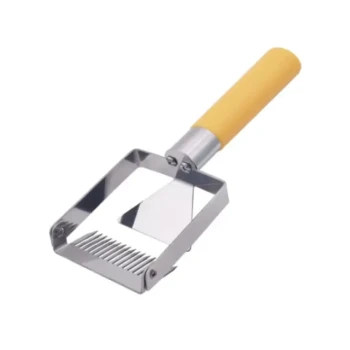
- Stainless Steel Pivoting Honey Uncapping Fork with Plastic Handle
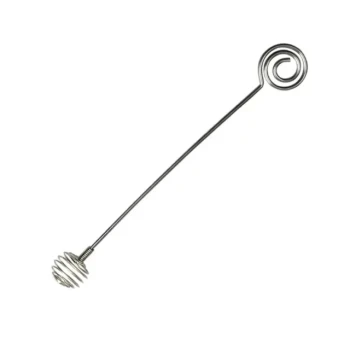
- Modern Stainless Steel Honey Dipper Stirrer
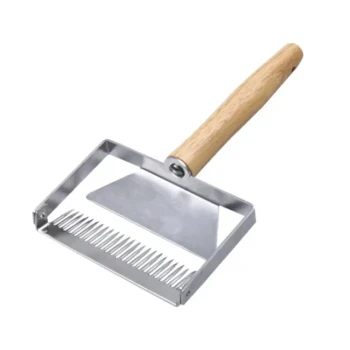
- Extra Wide Stainless Steel Honey Uncapping Fork with Scraper Beekeeping Tool
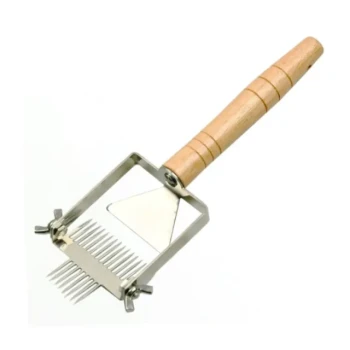
- All-Stainless Steel Pivoting Honey Uncapping Fork for Beekeeping
People Also Ask
- What is the function of a professional stainless steel hive tool in IFB? Optimize Your Colony Strength Assessment
- Which technical challenges in hive maintenance are addressed by using a professional stainless steel hive tool?
- What are the primary functions of a stainless steel hive tool? Essential Equipment for Professional Beekeeping
- What are the primary functions of a stainless steel hive tool? Essential Tips for Efficient Apiary Maintenance
- What is the role of professional hive tools in routine apiary maintenance? Expert Tips for Hive Health and Longevity