Professional morphological analysis systems serve as a statistical bridge between physical traits and genetic identity. By applying built-in discriminant equations to raw measurements—specifically wing and leg lengths—these tools automatically calculate the probability of a specimen being Africanized, European, or an intermediate hybrid. This process replaces manual estimation with a rapid, automated workflow that standardizes the evaluation of Africanization.
The core value of these systems lies in their ability to instantly convert raw physical data into actionable genetic probabilities, removing human bias from the identification process.
The Mechanics of Morphological Analysis
Utilizing Discriminant Equations
Professional systems do not merely store data; they actively process it using built-in discriminant equations.
These mathematical formulas are pre-configured to recognize the subtle statistical differences between honeybee subspecies.
By applying these equations, the system moves beyond simple visual inspection to a rigorous mathematical evaluation.
The Role of Weighting Coefficients
Crucially, these systems apply weighting coefficients to specific honeybee feature values.
This means the system understands that certain physical traits are more significant indicators of Africanization than others.
The software automatically adjusts the importance of each measurement to ensure the final calculation reflects biological reality.
From Raw Data to Genetic Identity
Inputting Key Measurements
The workflow begins with the input of specific morphological data, such as wing and leg lengths.
These physical parameters serve as the raw variables for the system's analysis.
Accuracy at this stage is vital, as these measurements form the baseline for all subsequent calculations.
Automated Probability Calculation
Once data is entered, the system automatically calculates the probability of the sample's lineage.
It classifies the specimen into one of three distinct categories: Africanized, European, or an intermediate type.
This allows for a rapid conversion from physical parameters to a confident identification of genetic identity.
Understanding the Trade-offs
Dependence on Input Precision
While the discriminant equations are robust, the system's output is entirely dependent on the accuracy of the raw measurement data.
If the wing or leg lengths are measured incorrectly, the weighting coefficients will amplify those errors, leading to a false classification.
Probability vs. Absolute Certainty
It is important to recognize that these systems calculate probability, not absolute certainty.
They identify samples based on statistical likelihoods derived from physical features, which is a strong proxy for genetics but distinct from direct DNA sequencing.
Making the Right Choice for Your Research
To effectively utilize morphological identification systems, align the tool with your specific objectives:
- If your primary focus is rapid population screening: rely on the automated probability outputs to quickly segregate large batches of samples into Africanized or European categories.
- If your primary focus is analyzing hybrid zones: pay close attention to the "intermediate" type classification to track the degree of genetic introgression in a specific area.
These systems transform morphological analysis from a subjective art into a quantifiable, repeatable scientific process.
Summary Table:
| Feature | Description | Role in Africanization Analysis |
|---|---|---|
| Input Parameters | Wing and leg lengths | Serves as the raw physical variables for statistical analysis. |
| Discriminant Equations | Pre-configured mathematical formulas | Categorizes specimens into Africanized, European, or Hybrid. |
| Weighting Coefficients | Variable importance scaling | Prioritizes key morphological traits to ensure biological accuracy. |
| Output Probability | Automated likelihood calculation | Provides rapid identification of genetic lineage without human bias. |
Elevate Your Commercial Apiary with Professional Tools from HONESTBEE
At HONESTBEE, we understand that maintaining pure genetics is vital for commercial success. We support commercial apiaries and global distributors by providing a comprehensive wholesale offering of professional beekeeping tools, machinery, and essential consumables.
Whether you need specialized hive-making machinery, high-efficiency honey-filling systems, or precision measurement tools for morphological analysis, our portfolio is designed to enhance your operational efficiency. Partner with HONESTBEE to access high-quality equipment and honey-themed cultural merchandise tailored to the needs of the modern bee industry.
Ready to scale your beekeeping business? Contact us today to explore our wholesale solutions!
References
- Ricardo Domínguez-Ayala, José Javier G. Quezada‐Euán. Stock composition of northern neotropical honey bees: mitotype and morphotype diversity in Mexico (Hymenoptera: Apidae). DOI: 10.1007/s13592-015-0414-6
This article is also based on technical information from HonestBee Knowledge Base .
Related Products
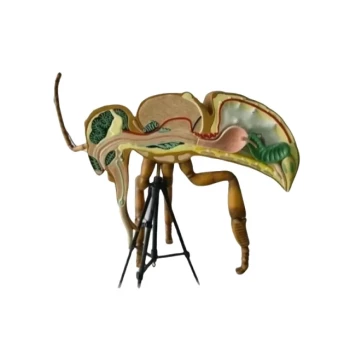
- HONESTBEE Anatomy Bee Model Detailed Anatomical Display for Education and Study
- Honey Bee Lifecycle Model: A Detailed Honeycomb Display of Bee Development
- Professional 500g Sectional Comb Honey Frame System for Beekeeping
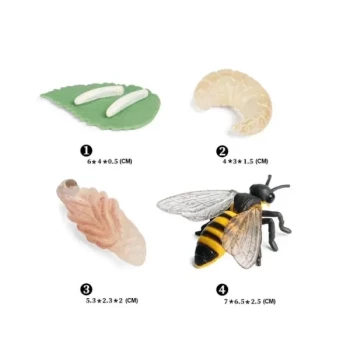
- Honey Bee Life Cycle Model 4 Stage Educational Set for Kids Learning
- Professional Sectional Comb Honey Frame with 250g Cassette System for Beekeeping
People Also Ask
- How do honey bees utilize water to regulate the internal temperature of the hive? Master Evaporative Cooling Methods
- Is it good to have honey bees in your yard? A Guide to Boosting Your Garden's Health
- What criteria should be considered in the selection process for honey bee breeding? Top Traits for Sustainable Apiaries
- What should be considered when learning the behavior of honey bees and their queens? Master Colony Management
- Why is maintaining specific relative humidity levels critical in caged honey bee experiments? Ensure Research Validity