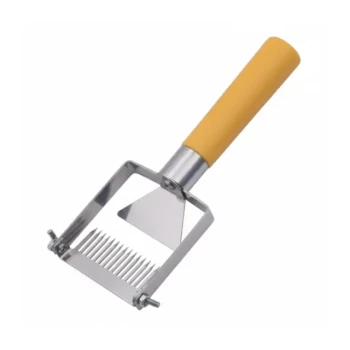
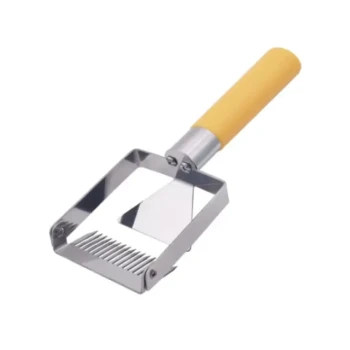
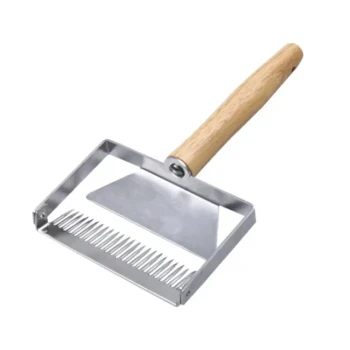
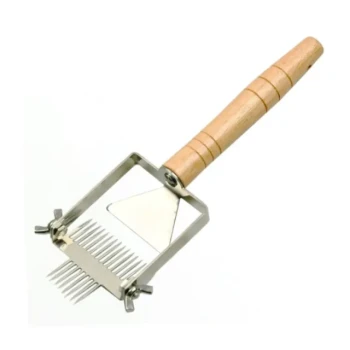
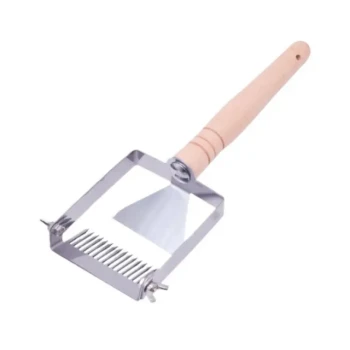
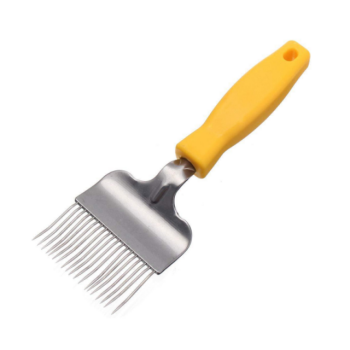
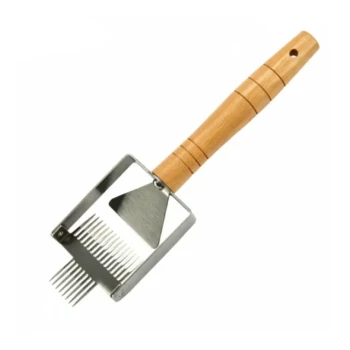
Professional non-destructive tools and protective gear prevent extinction by shifting the practice from whole-colony destruction to selective harvesting. Instead of burning nests or killing bees, specialized equipment allows harvesters to remove only the honey-bearing sections of the comb while leaving the brood (larvae and eggs) intact and the adult population alive.
Core Takeaway Traditional honey hunting often results in the total loss of a colony's future generation. By adopting protective suits and precision cutting tools, harvesters can secure a sustainable economic yield without depleting the bee population, ensuring the species can recover and reproduce for future seasons.
The Mechanics of Sustainable Harvesting
Preserving the Brood Area
The most critical factor in preventing extinction is the preservation of the brood.
Traditional methods often involve removing the entire nest, which destroys the eggs, larvae, and pupae. Modern techniques use specialized cutting tools to surgically remove only the upper honey-containing portion of the comb.
This leaves the lower brood area intact, ensuring the next generation of bees survives the harvest.
Ensuring Rapid Colony Recovery
Because the queen and the brood are left undisturbed, the colony does not need to start from scratch.
This selective approach allows the giant honey bee (Apis dorsata) to regenerate the honey stores and recover population numbers quickly. This supports the long-term biological viability of the species while still providing a harvest.
Preventing Habitat Destruction
Traditional harvesting often damages the nesting sites—such as tall trees or cliffs—making them unusable for future colonies.
Professional climbing equipment allows harvesters to access these difficult locations without destroying the physical habitat. By protecting the nesting site, the bees are encouraged to return to the same location, stabilizing the local population.
The Role of Safety Equipment
Eliminating Lethal Defense Measures
Without protective gear, harvesters historically relied on fire, smoke, or insecticides to kill or drive away aggressive bees to avoid injury.
High-quality protective bee suits render these lethal methods unnecessary. Because the harvester is impervious to stings, they can work calmly without needing to decimate the adult bee population for their own safety.
Enabling Surgical Precision
The psychological security provided by protective equipment allows for greater physical precision.
A harvester who is not afraid of being stung can take the time to cut the honeycomb accurately. This precision is what makes the separation of the honey stores from the brood area possible.
Understanding the Trade-offs: Competition Management
While harvesting tools protect individual colonies, broader equipment strategies are needed to protect the species' ecosystem.
The Threat of Introduced Species
Simply using non-destructive tools on Apis dorsata is not enough if they are starved out by competitors.
Commercial beekeeping often introduces the European honey bee (Apis mellifera), which can aggressively compete for limited nectar resources.
Strategic Equipment Deployment
To prevent Apis dorsata extinction, apiary management equipment must be used to control the density of commercial hives.
Scientific planning of apiary layouts ensures that introduced species do not over-occupy the natural habitat. This reduces survival competition, ensuring that the wild Apis dorsata retains access to the food sources required to sustain the colonies preserved by non-destructive harvesting.
Making the Right Choice for Your Goal
To ensure the survival of the giant honey bee while maintaining productivity, apply these principles:
- If your primary focus is Ecological Conservation: Prioritize the use of precision cutting tools that leave the lower brood section strictly untouched to protect the reproductive cycle.
- If your primary focus is Sustainable Economics: Invest in professional protective suits to eliminate the need for destructive harvesting methods, allowing for repeat harvests from the same recovering colonies.
By combining precision tools with protective gear, we transform honey harvesting from a destructive hunt into a repeatable, sustainable cycle.
Summary Table:
| Feature | Impact on Apis dorsata Preservation |
|---|---|
| Precision Cutting Tools | Removes only honey-bearing sections, leaving the brood and larvae intact for colony recovery. |
| Professional Bee Suits | Eliminates the need for lethal defense (fire/smoke), allowing harvesters to work safely without killing bees. |
| Climbing & Access Gear | Protects nesting sites and habitat integrity, ensuring bees return to the same location annually. |
| Resource Management | Balances competition between wild species and commercial hives to ensure nectar availability. |
Secure Your Apiary’s Future with HONESTBEE
Transitioning to sustainable, non-destructive beekeeping is both an ecological necessity and a smart business move. At HONESTBEE, we specialize in supporting commercial apiaries and distributors with high-performance tools and machinery designed for efficiency and conservation.
Our value to your business:
- Comprehensive Wholesale Range: From specialized hive-making and honey-filling machines to durable protective gear.
- Industry Expertise: We supply the full spectrum of beekeeping hardware and consumables tailored for large-scale operations.
- Sustainable Growth: Our equipment helps you achieve higher yields while protecting the biological viability of essential bee species.
Ready to upgrade your equipment or expand your distribution portfolio? Contact HONESTBEE today to explore our wholesale solutions and strengthen your position in the beekeeping industry.
References
- Saroj Pokhrel. Climeto-Cylic Immigrations with Declining Population of Wild Honeybee, Apis Dorsata F. In Chitwan Valley, Nepal. DOI: 10.3126/aej.v11i0.3652
This article is also based on technical information from HonestBee Knowledge Base .
Related Products
- Adjustable Stainless Steel Honey Uncapping Fork with Plastic Handle for Beekeeping
- All-Stainless Steel Pivoting Honey Uncapping Fork for Beekeeping
- Stainless Steel Pivoting Honey Uncapping Fork with Plastic Handle
- Professional Honey Uncapping Roller for Efficient Harvesting
- Professional Stainless Steel Pry-Bar Hive Tool
People Also Ask
- What is the design purpose of honey uncapping forks and honey uncapping tanks? Maximize Your Harvest Efficiency
- How does a honey uncapping fork supplement the use of an uncapping knife? Boost Your Honey Yield and Extraction Efficiency
- What are the essential tools for uncapping honey frames? Choose the Right Tool for Your Apiary
- What other tools are available for honey uncapping besides knives? Find the Right Tool for Your Apiary's Scale
- What tools are used for honey uncapping? Choose the Right Knife for Your Harvest