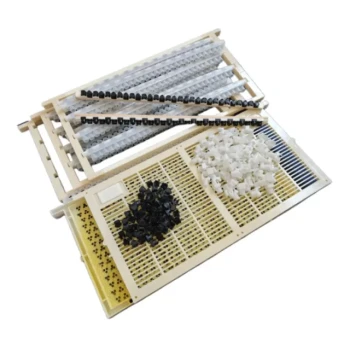
Professional queen rearing toolsets provide the critical hardware infrastructure necessary for the delicate management and breeding of native bee species. By utilizing standardized equipment such as grafting needles, artificial queen cell cups, and rearing frames, conservationists and apiarists can minimize physical damage to larvae while significantly increasing the success rate of virgin queen cultivation.
Professional tools are not merely about efficiency; they are safeguards for genetic integrity. By enabling precise, low-impact handling of larvae, these toolsets allow for the propagation of specific native strains without compromising the health or purity of the colony.
Precision Hardware and Genetic Integrity
Minimizing Physical Damage
The primary benefit of professional toolsets is the protection of vulnerable larvae. Standardized grafting needles are designed to lift and transfer larvae with extreme delicacy, reducing the risk of injury that often occurs with improvised tools. This reduction in physical trauma is essential for maintaining high survival rates during the artificial rearing process.
Ensuring Successful Queen Cultivation
Using artificial queen cell cups and specialized rearing frames creates a stable, optimized environment for queen development. These tools simulate natural conditions while allowing for human intervention, ensuring the larvae receive adequate nutrition and protection. This directly translates to a higher success rate in cultivating viable virgin queens, which is crucial for propagating rare or native species.
Preserving Lineage Purity
The precision offered by these tools supports the maintenance of strict genetic lines. By mechanically supporting the rearing process, breeders can ensure that only larvae from selected, purebred stock are developed into queens. This helps prevent the accidental dilution of native genetics that can occur in less controlled environments.
Directional Selection and Population Management
Targeting Desirable Traits
Professional equipment enables the implementation of directional selection. Breeders can systematically select for specific traits inherent to native species, such as local disease resistance or adaptation to specific climates. This ensures that the propagated colonies maintain the evolutionary advantages of their native subspecies.
Stabilizing Colony Vigor
A consistent supply of high-quality queens is necessary to replace aging queens and maintain high egg-laying rates. Professional toolsets facilitate this by ensuring a steady, controllable production of new queens. This allows apiary managers to maintain colony vigor and uniform productivity across the population.
Controlling Swarming Tendencies
Advanced management involves more than just breeding; it requires monitoring. Associated professional gear allows for frequent, deep inspections to identify newly built queen cells. This data allows researchers to predict swarming tendencies, ensuring the colony remains contained and safe within its habitat rather than splitting and potentially migrating to unsuitable areas.
Conservation of Native Subspecies
Preventing Genetic Erosion
Professional-grade beehives act as controlled environments that serve as physical barriers against external threats. In biodiversity conservation areas, these hives allow managers to perform real-time observation and genetic sampling. This infrastructure helps prevent genetic erosion by isolating native subspecies from non-native or invasive bee varieties.
In-Situ Protection
The use of standardized, durable hives supports in-situ protection efforts. By managing native bees, such as local Apis mellifera subspecies, within their natural habitats, conservationists can protect the population without removing them from their ecological context. This supports the broader ecosystem that relies on these specific native pollinators.
Understanding the Trade-offs
Skill Requirement vs. Tool Efficacy
While these tools offer precision, they are not autonomous solutions. The effective use of grafting needles and artificial cups requires a significant level of technical skill and manual dexterity. Improper use by untrained personnel can lead to higher larval mortality rates than natural methods.
Standardization vs. Natural Variability
Standardized frames and hives improve efficiency and interchangeability, but they impose a rigid structure on the colony. Beekeepers must ensure that the standardized dimensions of the equipment do not conflict with the specific nesting behaviors or comb-building preferences of the specific native bee species being managed.
Making the Right Choice for Your Goals
To effectively utilize these toolsets, you must align your equipment choice with your specific management objective:
- If your primary focus is Genetic Conservation: Prioritize professional-grade hives and isolation tools to prevent cross-breeding and ensure the security of native subspecies in their natural habitat.
- If your primary focus is Population Recovery: Focus on high-precision grafting needles and cell cups to maximize larval survival rates and rapidly increase the number of viable queens.
Professional toolsets transform bee breeding from a game of chance into a controlled science, providing the stability required to secure the future of native bee populations.
Summary Table:
| Tool Component | Primary Function in Native Breeding | Benefit to Genetic Integrity |
|---|---|---|
| Grafting Needles | High-precision larval transfer | Minimizes physical trauma and stress |
| Artificial Cell Cups | Optimized environment for development | High success rates for viable virgin queens |
| Rearing Frames | Standardized queen cultivation | Enables systematic directional selection |
| Professional Hives | In-situ controlled environment | Prevents genetic erosion and cross-breeding |
Secure Your Apiary’s Future with HONESTBEE
At HONESTBEE, we empower commercial apiaries and distributors with the precision hardware required to preserve native bee lineages and maximize productivity. From high-precision grafting toolsets and specialized queen rearing frames to industrial-grade hive-making and honey-filling machinery, we supply the full spectrum of equipment and consumables needed for professional-scale operations.
Our comprehensive wholesale offerings are designed to help you maintain genetic purity, stabilize colony vigor, and achieve superior breeding results.
Ready to elevate your beekeeping operations? Contact us today to explore our full range of professional solutions!
References
- Beekeeping In The Mediterranean, From Antiquity To The Present. DOI: 10.1080/0005772x.2014.11417596
This article is also based on technical information from HonestBee Knowledge Base .
Related Products
- Plastic Chinese Queen Grafting Tool for Bee Queen Rearing
- Stainless Steel Beekeeping Queen Grafting Tool for Honey Bee Rearing
- Retractable Chinese Queen Rearing Grafting Tools Equipment
- Stainless Steel Queen Grafting Tool for Beekeeping and Bee Queen Grafting
- Plastic Beekeeping Honey Bee Larvae Grafting Tools for Queen Rearing and Chinese Grafting
People Also Ask
- Why is it necessary for migratory beekeeping enterprises to utilize professional queen bee rearing tools? Boost Resilience
- What are the benefits of using a queen grafting tool for queen rearing? Master Precision for Superior Bee Genetics
- What is grafting in queen rearing? Take Control of Your Apiary's Genetics
- What are the steps involved in using a queen grafting tool? A Guide to Successful Queen Rearing
- What is the primary function of a queen grafting tool? Master Precise Larval Transfer for High Queen Acceptance