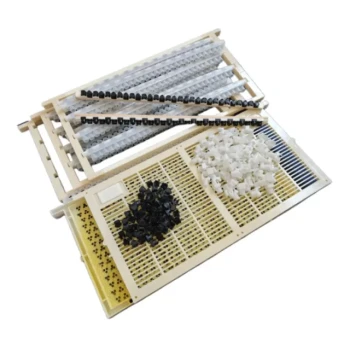
Queen rearing equipment provides the necessary technical infrastructure to transform colony reproduction from a passive natural event into a controlled, optimized process. By utilizing specialized tools like grafting needles, rearing frames, and mating boxes, you move beyond simple colony splitting to the precise selection and propagation of superior genetics.
By standardizing the production of queens through specialized hardware and human intervention, beekeepers can ensure consistent high egg-laying capacity and foraging motivation. This shift allows for the regular replacement of aging queens, directly elevating the apiary's efficiency at a fundamental genetic level.
The Mechanics of Genetic Optimization
Precision in Genetic Selection
The core of productivity lies in human intervention. Unlike natural swarming, which propagates genetics randomly, using specific tools allows you to select larvae from your best-performing colonies.
Grafting needles are the primary instrument for this transfer. They allow the beekeeper to physically move larvae with desirable traits into a controlled rearing environment.
This ensures that the next generation of queens inherits characteristics such as disease resistance or gentleness.
Scalable Production Infrastructure
Once larvae are selected, rearing frames facilitate mass production. These frames hold multiple queen cells, allowing a single colony to nurse dozens of potential queens simultaneously.
This equipment decouples queen production from the limitations of a single hive's natural cycle.
It transforms a biological biological limitation into a scalable production line, ensuring a steady supply of high-quality stock.
Controlled Mating and Establishment
Mating boxes (or mating nucs) provide a secure, resource-efficient environment for virgin queens to mate and begin laying.
This equipment isolates the young queen, allowing you to verify her mating success and egg-laying pattern before introducing her to a full production colony.
This step acts as a quality control filter, ensuring only viable, high-quality queens enter your main operation.
Operational Impact on Productivity
Sustaining High Egg-Laying Capacity
The primary reference highlights that regular replacement of older queens is critical. Older queens naturally decline in pheromone production and egg-laying speed.
By having a surplus of queens via rearing equipment, you can implement a systematic replacement schedule.
This guarantees that every production colony is headed by a vigorous queen operating at peak reproductive potential.
Enhancing Foraging Motivation
Productivity is not just about population numbers; it is about behavior. The genetics selected during the rearing process directly influence the colony's foraging motivation.
A colony headed by a queen selected for these traits will gather nectar and pollen more aggressively.
This leads to higher honey yields and better pollination services, directly impacting the apiary's bottom line.
Understanding the Trade-offs
The Requirement for Technical Skill
While equipment enables optimization, it does not automate it. Success relies heavily on the skill of the beekeeper, particularly in grafting.
Poor technique with a grafting needle can damage larvae, leading to low acceptance rates regardless of the equipment quality.
Resource Allocation
Dedicating resources to rearing requires a shift in apiary management. Mating boxes and rearing colonies require bees and brood that could otherwise be used for honey production.
You must balance the short-term cost of bee resources against the long-term gain of genetic superiority.
Making the Right Choice for Your Goal
To effectively utilize queen rearing equipment, you must align your tool usage with your specific operational targets.
- If your primary focus is rapid apiary expansion: Prioritize rearing frames and grafting tools to maximize the number of queens produced from your single best breeder mother.
- If your primary focus is stability and yield maintenance: Focus on mating boxes and systematic replacement, ensuring you always have a "bank" of proven queens to replace failing stock immediately.
Mastering these tools allows you to dictate the genetic future of your apiary, ensuring production is a matter of design rather than luck.
Summary Table:
| Equipment Category | Primary Function | Impact on Productivity |
|---|---|---|
| Grafting Needles | Precise larval transfer | Enables selection of superior genetic traits |
| Rearing Frames | Mass queen cell housing | Allows scalable production of high-quality queens |
| Mating Boxes | Controlled queen mating | Acts as a quality control filter for egg-laying viability |
| Queen Consumables | Larval protection & support | Increases acceptance rates and ensures colony health |
Maximize Your Apiary’s Genetic Potential with HONESTBEE
At HONESTBEE, we understand that the backbone of a successful commercial operation is the quality of its queens. We empower commercial apiaries and distributors by providing a comprehensive wholesale range of high-precision beekeeping tools, specialized queen rearing hardware, and honey-filling machinery.
Our portfolio is designed to help you scale efficiently—from the finest grafting needles to advanced hive-making equipment and essential industry consumables. Partner with us to ensure your stock remains vigorous, productive, and profitable.
Ready to elevate your beekeeping production?
Contact us today to explore our wholesale solutions
References
- Meral Kekeçoğlu, Pınar Göç Rasgele. Düzce İli Yığılca İlçesindeki Arıcılık Faaliyetleri Üzerine Bir Çalışma. DOI: 10.31467/uluaricilik.162298
This article is also based on technical information from HonestBee Knowledge Base .
Related Products
- Retractable Chinese Queen Rearing Grafting Tools Equipment
- No Grafting Queen Rearing Kit: System for Royal Jelly Production and Queen Rearing
- Nicot Queen Rearing Kit for Beekeeping and Grafting in Nicot System
- Premium Nicot Style Queen Rearing Kit with Hair Roller Bee Cages
- Stainless Steel Queen Grafting Tool for Beekeeping and Bee Queen Grafting
People Also Ask
- Which specialized tools are necessary for implementing standardized queen rearing? Scale Your High-Yield Apiary
- Why are specialized queen rearing tools necessary to mitigate winter hive losses? Boost Apiary Survival and Recovery
- How do queen-rearing tools facilitate the sustainability and expansion of a commercial apiary? Drive Scalable Growth
- In what ways do modern queen rearing equipment and grafting tools improve competitiveness? Boost Breeding Success Rate
- What role do specialized queen rearing tools and consumables play in modern large-scale apiculture? Drive Production & Scale