For small apiaries, solar wax extractors offer low-cost, energy-free processing; for commercial operations, steam extractors provide higher recovery, greater consistency, and substantially faster throughput. Solar units are best suited to cappings, light-colored wax, occasional rendering, and frame sterilization. Steam equipment is the stronger choice when processing old brood comb, slumgum, or the output of roughly 100 or more hives.
The decisive factor is not only equipment price—it is the type and volume of comb being processed. Solar extractors are economical for clean cappings and small batches, while steam extractors justify their higher investment by recovering more wax from difficult comb and operating regardless of weather.
Match the Extractor to the Operation
Solar extractors suit small-scale processing
A solar wax extractor uses sunlight captured beneath a glass lid to melt comb into a collection tray. Its simple design requires no electricity or fuel and generally needs limited operator supervision.
For hobbyists, sideline beekeepers, and smaller apiaries, this can be an efficient way to reclaim wax without adding significant operating costs.
Steam extractors suit commercial throughput
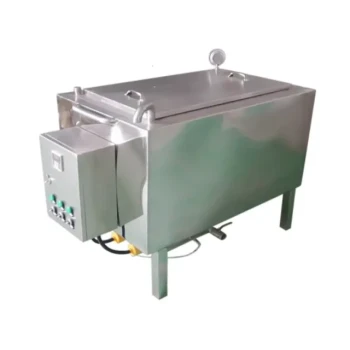
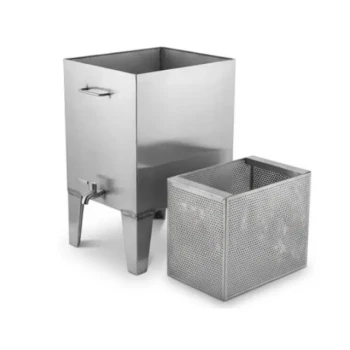
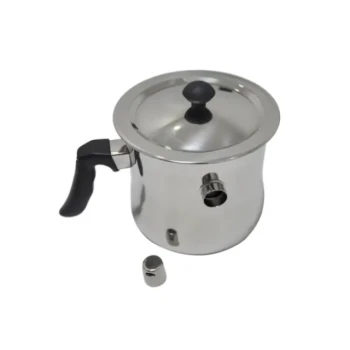
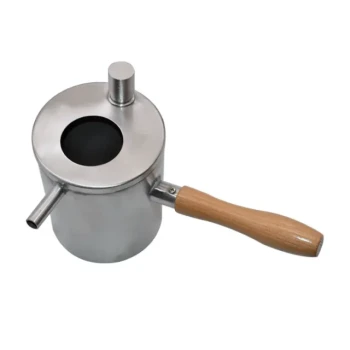
A steam extractor heats water with an electric element or gas burner, producing steam inside a processing chamber. Frames or comb are loaded into a basket, and the resulting molten wax drains through an outlet into collection containers.
This design is better suited to commercial apiaries because it processes larger quantities of comb more consistently and does not depend on sunshine.
The approximately 100-hive threshold is a planning guide
For operations managing around 100 hives or more, steam extraction is generally the more practical choice. The exact break-even point depends on comb production, labor costs, weather, batch size, and whether the operation processes cappings or old brood comb.
The threshold should therefore be treated as a purchasing guideline rather than a universal rule.
Compare Wax Recovery and Quality
Solar extraction produces clean wax from cappings
Solar extractors are particularly effective for hive cappings, which contain relatively little cocoon material and debris. The resulting wax is typically light-colored and high grade.
Using a fine cloth, such as cheesecloth, can help strain out impurities before the wax reaches the collection tray.
Solar units leave more wax in old comb
Dark brood comb contains cocoons and other material that can retain wax. Solar heat melts the easily released wax but may leave a substantial amount bound inside the remaining comb cake or slumgum.
Reported solar recovery is commonly around 50% to 60%, with approximately 30% of the wax potentially remaining in the comb residue, depending on the material and process conditions.
Steam extractors recover more from difficult material
Steam penetrates and melts wax embedded in old, dark comb more effectively than solar heat alone. This allows commercial operators to recover more value from material that would otherwise be discarded or require additional processing.
For maximum recovery from high volumes of slumgum, a steam extractor—and, where appropriate, a mechanical or steam-jacketed press—can be more suitable than a basic solar melter.
Compare Operating Requirements
Solar equipment has minimal energy costs
Solar extractors rely on sunlight rather than purchased fuel or electricity. On suitable sunny days, internal temperatures can reach approximately 71°C to 88°C, above beeswax’s melting point of roughly 62°C.
This makes solar equipment inexpensive to operate, but its output varies with sunlight, season, location, and loading conditions.
Steam equipment provides controlled, repeatable processing
Steam extractors require an energy source and regular handling of water, heat, wax, and residual waste. Their operating cost is therefore higher than that of a solar unit.
In return, they provide more dependable processing across changing weather conditions and are better suited to planned production schedules.
Labor requirements differ by scale
Solar extractors can reduce manual work because the unit performs the melting and drainage process with limited supervision. This is valuable when the operator wants a low-intervention solution for occasional batches.
Steam systems require more active loading, heating, unloading, and cleaning, but their higher throughput can reduce the labor required per kilogram of wax when processing commercial volumes.
Consider Sanitation and Frame Handling
Solar units can support frame sterilization
The high internal temperature of a solar extractor can help sterilize frames by destroying wax-moth eggs and nosema spores, according to the supplied references.
However, sanitation performance depends on achieving and maintaining suitable temperatures throughout the material. Equipment should not be treated as a substitute for an operation’s broader disease-control procedures.
Steam provides stronger penetration of old comb
Steam is more effective when the goal is to melt wax throughout dense, dark, or cocoon-heavy comb. It also avoids dependence on clear skies when frames need to be processed on a fixed schedule.
For commercial apiaries, this consistency can be more important than the energy savings of solar processing.
Understanding the Trade-offs
Solar extractors offer lower investment but lower recovery
The main advantages of solar equipment are low operating cost, simple construction, limited maintenance, and clean wax recovery from cappings.
Its limitations are slower or inconsistent processing, dependence on sunlight, smaller practical batch capacity, and incomplete recovery from old brood comb.
Steam extractors require more infrastructure
Steam systems need heating equipment, fuel or electricity, water management, ventilation, and safe handling of hot surfaces and molten wax. They also typically involve a higher purchase price and greater maintenance requirements.
These disadvantages are justified when the operation has enough comb volume to benefit from faster cycles and improved recovery.
Avoid using one machine for every material
Using a solar extractor for large quantities of dark brood comb can leave valuable wax in the slumgum and create unnecessary reprocessing work. Conversely, using a commercial steam system for a few batches of clean cappings may add cost and complexity without a proportional benefit.
The most efficient setup may be a combination: solar equipment for cappings and small batches, with steam equipment reserved for old comb and high-volume processing.
Product specifications matter to distributors and resellers
A product portfolio should distinguish between solar melters, steam extractors, and steam-jacketed presses, rather than presenting them as interchangeable products.
Buyers will usually need guidance on capacity, power or fuel requirements, basket dimensions, drainage design, filtration, cleaning access, replacement parts, and expected use with cappings versus brood comb.
How to Apply This to Your Project
Select equipment according to both the buyer’s current workload and likely growth. For distributors and B2B resellers, offering clear scale-based recommendations is more useful than promoting a single universal model.
- If your primary focus is small apiaries or sideline beekeepers: Recommend solar extractors for cappings, light-colored wax, occasional batches, low operating costs, and basic frame sterilization.
- If your primary focus is commercial apiaries processing around 100 or more hives: Recommend steam extractors for dependable high-volume processing, old comb, slumgum, and improved wax recovery.
- If your primary focus is maximum wax yield: Prioritize steam extraction, and consider a mechanical or steam-jacketed press when the operation must release wax from dense comb residue.
- If your primary focus is a broad B2B product portfolio: Stock solar units for entry-level and low-volume users alongside steam systems, accessories, replacement components, and responsive technical support.
- If your primary focus is reliable order fulfillment: Match each quotation to the customer’s scale, energy availability, capacity requirements, delivery schedule, and after-sales service needs.
The right extractor is the one that matches the operation’s comb type, processing volume, recovery target, and available infrastructure.
Summary Table:
| Aspect | Solar Wax Extractor | Steam Wax Extractor |
|---|---|---|
| Best for | Small apiaries, cappings, occasional batches | Commercial operations, old comb, high volume |
| Energy source | Sunlight | Electricity or gas |
| Wax recovery | ~50-60%, less from old comb | Higher, especially from difficult material |
| Dependence on weather | High | Low |
| Operating cost | Low | Higher (energy+water) |
| Throughput | Low | High |
| Investment | Low | High |
| Labor required | Low supervision | More active handling |
| Frame sterilization | Possible | Not primary function |
| Recommended for | Up to ~100 hives | 100+ hives or slumgum processing |
Ready to optimize your beeswax rendering? At HONESTBEE, we supply the full spectrum of beekeeping tools and machinery, including solar melters, steam extractors, and steam-jacketed presses. Whether you're a distributor seeking OEM/ODM support and certifications, or a commercial beekeeper needing ultra-fast delivery and dedicated service, our one-stop sourcing ensures you get the right equipment for your scale. Contact us today to discuss your requirements and boost your efficiency and profits!
Related Products
- Beeswax Machine Press Embosser Wax Foundation Mold Printer Bee Hive Equipment Making Sheet
- Fully Automatic Beeswax Embossing Machine Foundation Mill
- Electric Flatting and Embossing Machine with Tray for Beekeeping
- Manual Beeswax Flat Sheet Machine for Beeswax Processing
- Electric Beeswax Flat Sheet Machine with Operating Tray for Wax Processing
People Also Ask
- What equipment is needed to make beeswax foundation? A Guide to DIY Wax Sheet Production
- What miscellaneous equipment is needed for making foundation? A Guide to the Essential Tools
- What miscellaneous equipment is useful when making beeswax foundation? Essential Support Tools for Beekeepers
- What specific equipment is required for making beeswax foundation? Essential Tools for High-Quality Production
- What is the recommended temperature for melting beeswax to make foundation sheets? Master the 70°C-80°C Ideal Range