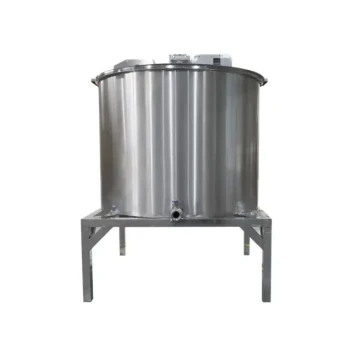
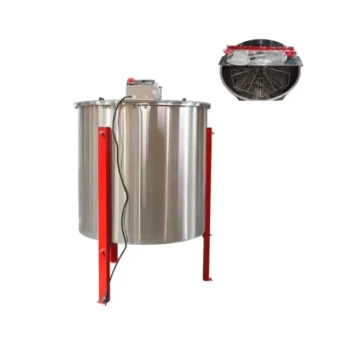
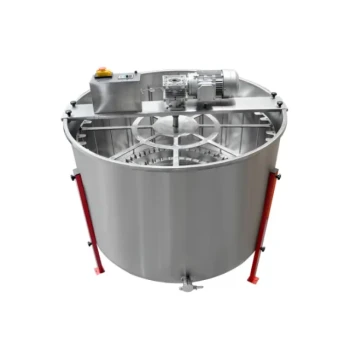
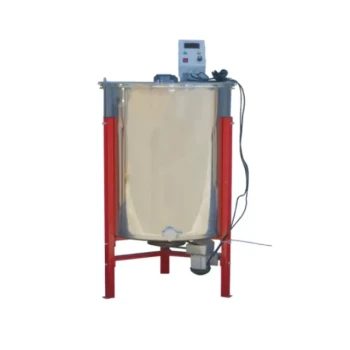
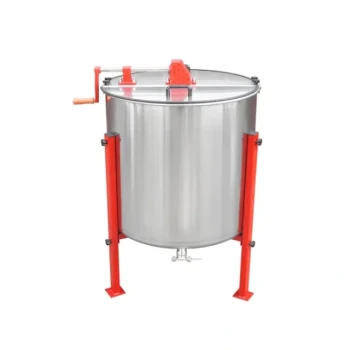
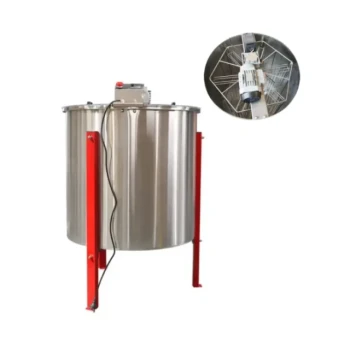
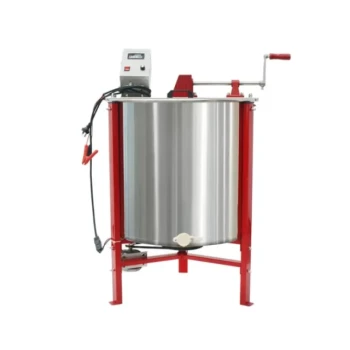
Specialized beekeeping equipment and industrial extractors fundamentally transform harvesting by replacing labor-intensive manual methods with high-speed mechanics. By utilizing centrifugal force, these systems allow apiaries to process honey in large batches while preserving the delicate structure of the honeycomb, drastically reducing the time required to bring the final product to market.
The core efficiency of industrial extraction lies in the preservation of the wax comb. By separating honey without destroying the structure, apiaries avoid the "rebuilding phase," allowing bee colonies to immediately focus their energy on foraging rather than wax production.
The Mechanics of Industrial Extraction
Utilizing Centrifugal Force
The primary mechanism for efficiency is centrifugal force. Unlike traditional squeezing methods that crush the comb, industrial extractors spin the frames at high speeds.
This physical force pulls the honey out of the cells effectively. It separates the liquid from the solids without direct physical contact that would otherwise damage the frame.
Batch Processing Capabilities
Industrial extractors are designed to handle significant volume, with capacities ranging from 2 to 30 frames or more simultaneously.
This allows for the rapid processing of "supers" (hive boxes). By automating the spinning process, these machines can improve extraction efficiency by up to 50% compared to manual methods.
Standardization of Production
Industrial-grade equipment introduces consistency to the harvesting workflow. It ensures that every frame is treated with the same force and duration.
This leads to production standardization. The result is a consistent harvest that meets high hygienic quality standards necessary for commercial distribution.
Biological Efficiency: The Cycle of Comb Reuse
Preserving Structural Integrity
The most critical advantage of centrifugal extraction is that it leaves the wax comb intact. Manual harvesting often destroys the comb, forcing the beekeeper to melt it down.
Centrifugal extractors are specifically designed to empty the cells while maintaining the structural integrity of the honeycomb.
Energy Conservation for the Colony
Bees consume a significant amount of honey and energy to secrete wax and build combs. When an intact comb is returned to the hive, the colony does not need to expend resources rebuilding.
This energy conservation is vital. It eliminates the biological "downtime" associated with nest reconstruction.
Increasing Annual Yield
Because the bees are relieved of reconstruction duties, they can immediately resume foraging.
This enables the colony to maximize the nectar flow season. Consequently, the reuse of combs significantly increases the annual honey yield per hive.
Hygiene and Specialty Tools
Enhancing Hygienic Quality
Automated and semi-mechanical extractors minimize human contact with the product. This reduces the risk of physical or chemical contamination.
By using food-grade materials and enclosed spinning cycles, the equipment ensures the final product remains pure and safe for consumption.
Specialized Royal Jelly Tools
Efficiency extends beyond honey to high-value byproducts like Royal Jelly. Specialized scrapers and retrieval tools are designed to remove jelly from artificial queen cells thoroughly.
These tools reduce waste and prevent contamination, ensuring the maximum harvest of this valuable commodity.
Understanding the Trade-offs
Capital Investment vs. Long-Term Value
Industrial extractors represent a significant financial investment. They are substantial pieces of machinery meant for long-term service.
For small hobbyists, the cost may outweigh the efficiency gains. However, for commercial operations, the durability and speed justify the upfront expense.
Maintenance and Scale
These machines require maintenance to ensure the motors and spinning mechanisms remain balanced.
Furthermore, the efficiency gains are most visible in large-scale apiaries. If you are processing only a few frames, the setup and cleaning time of a large machine may negate the speed of extraction.
Making the Right Choice for Your Operation
To select the right equipment, you must identify the primary bottleneck in your current workflow.
- If your primary focus is Volume and Speed: Prioritize automated centrifugal extractors to capitalize on the 50% efficiency gain and reduced labor costs.
- If your primary focus is Colony Health: Choose equipment that guarantees the highest structural integrity of the comb to minimize bee energy expenditure.
- If your primary focus is High-Value Byproducts: Invest in specialized retrieval tools for Royal Jelly to minimize waste and contamination.
Correctly implemented, specialized equipment transitions an apiary from a labor-heavy operation to a sustainable, high-yield production cycle.
Summary Table:
| Feature | Manual Extraction | Industrial Extraction | Efficiency Benefit |
|---|---|---|---|
| Mechanism | Crushing/Squeezing | Centrifugal Force | Preserves wax comb structure for reuse |
| Capacity | Single Frame | 2 - 30+ Frames | High-speed batch processing capabilities |
| Colony Impact | Rebuild Phase Required | Immediate Foraging | Eliminates energy loss from comb reconstruction |
| Hygiene | High Human Contact | Enclosed/Food-grade | Minimal contamination and standardized quality |
| Yield | Low/Variable | High/Consistent | Maximizes nectar flow during peak seasons |
Scale Your Apiary Efficiency with HONESTBEE
Transition from labor-intensive harvesting to a high-yield production cycle with professional-grade solutions. HONESTBEE provides commercial apiaries and distributors with a comprehensive wholesale range, including high-capacity honey-filling machines, specialized hive-making equipment, and precision centrifugal extractors.
Our portfolio also includes specialized tools for high-value byproducts like Royal Jelly and a wide array of honey-themed cultural merchandise to diversify your brand. Let us help you reduce labor costs and maximize your annual yield—contact us today to explore our full equipment catalog!
References
- Luís Antonio Saavedra-Jiménez, Vicente Homero González Álvarez. Características y necesidades tecnológicas de los apicultores de la región centro-sur de Jalisco. DOI: 10.15174/au.2022.3493
This article is also based on technical information from HonestBee Knowledge Base .
Related Products
- HONESTBEE 72 Frame Industrial Electric Honey Extractor for Beekeeping
- Commercial Electric 12 Frame Honey Extractor Spinner Motorized Honey Extractor
- 32 Frame Commercial Electric Honey Extractor for Beekeeping and Honey Production
- 8-Frame Electric Self-Reversing Honey Extractor Spinner for Commercial Honey Extraction Equipment
- electric honey extractor honey centrifuge 3 frame honey extractor stainless steel honey frame extractor
People Also Ask
- What is the importance of balancing honeycomb frames within a honey extractor? Ensure Stability and Protect Machinery
- How is honey separated from the frames after they are uncapped? Efficient Extraction Methods for High Yields
- What are the main benefits of using a honey extractor? Maximize Yields and Protect Your Honeycomb
- What are the recommended methods for removing honey from the honeycomb? Top Extraction Techniques for Maximum Efficiency
- How do manual honey extractors compare to electric honey extractors? Choosing the Right Tool for Your Apiary Growth