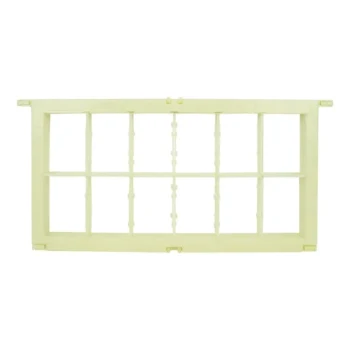
Specialized brood frames function as physical radiators within the hive, playing a critical role in the thermoregulation of small honeybee subspecies. By specifically engineering the frame's porosity and spacing, these tools significantly enhance air circulation and actively reduce the risk of dangerous overheating.
The core mechanism relies on maximizing airflow and utilizing insulating materials to prevent heat accumulation. This design ensures that even during extreme external temperatures, the brood area remains stable enough for larval survival and development.
The Mechanics of Hive Cooling
Acting as Physical Radiators
In hot climates, a standard frame can trap heat, acting as a thermal block. Specialized brood frames for small subspecies are designed to behave differently.
They function as physical radiators, facilitating the exchange of heat away from the sensitive brood center. This turns the frame from a passive structure into an active tool for environmental control.
Enhancing Porosity for Airflow
The primary driver of this cooling effect is the specific design of the frame's porosity.
When small honeybees are working on these frames, the structure maintains a higher level of permeability. This allows air to flow through the comb and the cluster of bees, rather than stagnating around them.
Strategic Spacing
Proper spacing is critical to leverage the natural movement of air.
These frames utilize specifically calculated gaps that prevent the formation of heat pockets. By optimizing the distance between combs, the design ensures that hot air can escape rapidly before it affects the colony’s core temperature.
Material Properties and Insulation
Preventing Heat Accumulation
Beyond geometry, the materials used in these specialized frames contribute to thermal stability.
The frames possess inherent insulation properties that resist the absorption of ambient heat. This prevents the physical structure of the hive from retaining solar heat and radiating it back onto the developing brood.
Ensuring Larval Development
The ultimate goal of this thermoregulation is biological preservation.
Larvae require a highly specific temperature range to develop normally. By mitigating heat stress through design and material choice, these frames ensure the colony maintains its expansion rhythms without interruption.
Understanding the Trade-offs
Subspecies Specificity
These frames are engineered specifically for small honeybee subspecies.
The porosity and spacing are calibrated to the body size and behavior of smaller bees. Using these frames for larger subspecies could lead to incorrect comb construction or ineffective thermoregulation, as the "radiator" effect relies on the specific interaction between the bee and the frame structure.
Material Dependencies
Reliance on specialized materials for insulation introduces a variable in hive management.
Unlike standard wooden frames, these specialized components may function differently during cold snaps. While excellent for heat, their high porosity requires careful monitoring if the temperature drops significantly, to ensure the colony retains necessary warmth.
Making the Right Choice for Your Goal
To determine if these specialized frames are the right solution for your apiary, consider your specific environmental and biological constraints.
- If your primary focus is reducing heat stress: Prioritize these frames to utilize their radiator-like function and porosity, which actively dissipates heat in high-temperature zones.
- If your primary focus is managing small subspecies: Adopt these frames to ensure the spacing and structure align with the natural behavior and physical size of your bees, promoting normal brood development.
Success in hot climates depends not just on the bees you keep, but on providing the structural architecture that allows them to breathe.
Summary Table:
| Feature | Mechanism | Benefit for Small Subspecies |
|---|---|---|
| Radiator Function | Facilitates active heat exchange | Prevents heat accumulation in the brood center |
| Enhanced Porosity | Maximizes air permeability | Allows airflow through the comb and bee cluster |
| Strategic Spacing | Optimized gaps between combs | Eliminates heat pockets and allows rapid air escape |
| Insulating Materials | Resists solar/ambient heat | Maintains stable temperatures for larval development |
Scale Your Apiary Success with HONESTBEE
Protecting your colonies in challenging climates requires professional-grade equipment. HONESTBEE caters specifically to commercial apiaries and distributors, providing a comprehensive wholesale catalog designed for efficiency and growth.
Our portfolio includes:
- Specialized Hardware: Hive-making machines, honey-filling lines, and engineered brood frames.
- Full Spectrum Equipment: High-performance beekeeping tools and essential industry consumables.
- Cultural Merchandise: Unique honey-themed products to expand your market reach.
Whether you are managing small subspecies in heat-prone regions or scaling a large-scale commercial operation, we deliver the tools and machinery you need to thrive.
Contact HONESTBEE Today to Secure Wholesale Pricing
References
- Yehya Alattal. Adaptation of Apis mellifera jemenitica (Hymenoptera: Apidae) to high temperatures: Morphological, behavioural, and physiological aspects. DOI: 10.14411/eje.2024.018
This article is also based on technical information from HonestBee Knowledge Base .
Related Products
- Assembled Wooden Bee Frames with Plastic Foundation for Durability and Convenience by HONESTBEE
- Automatic Heat Preservation 6 Frame Pro Nuc Box for Honey Bee Queen Mating
- Assembled Wooden Bee Frames with Beeswax Foundation Ready to Use by HONESTBEE
- Langstroth Honey Bee Box Hive Boxes for Different Depths
- Professional Sectional Comb Honey Frame with 250g Cassette System for Beekeeping
People Also Ask
- When should frames with new foundation be given to colonies? Master Timing for a Thriving Hive
- Do you have to wire bee frames? Essential Guide to Frame Strength & Honey Harvesting
- How do you re-wax bee frames? A Simple Guide to Faster Comb Building
- Can beekeepers switch between wooden and plastic frames? Optimize Your Hive's Performance
- What types of bee frames can be cleaned and returned to service? A Guide to Safe Apiary Refurbishment