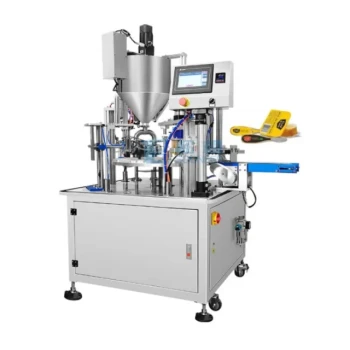
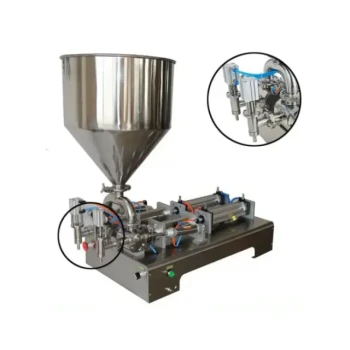
Specialized honey-filling machines serve as the critical bridge between raw agricultural production and professional commercialization. By enabling high-precision, consistent volumetric dispensing, these machines significantly increase packaging efficiency. Most importantly, they replace manual processes to virtually eliminate the risk of secondary contamination, ensuring the product meets the rigorous safety standards required for the modern marketplace.
Core Takeaway: The primary role of these machines is not merely speed, but standardization and hygiene. They transform honey from a bulk commodity into a shelf-ready consumer product by ensuring precise volume control, preventing cross-contamination, and establishing the professional brand uniformity required for high-end retail entry.
The Critical Role in Quality and Hygiene
Eliminating Secondary Contamination
The most significant contribution of specialized filling machines is the protection of product purity. Manual filling introduces variable human contact, which significantly increases the risk of cross-contamination.
Industrial machines utilize automated, often closed-loop processes that isolate the honey during dispensing. When combined with automated hygienic sealing, this creates a sterile filling environment that effectively negates biological and physical contamination risks.
Preserving Physicochemical Properties
Honey is a sensitive product; its flavor and chemical composition can be altered by improper handling. Specialized equipment is designed to handle the viscosity and flow of honey without degrading its quality.
By using precise metering and maintaining a hygienic environment, these machines maximize the preservation of natural flavors and physicochemical properties. This is particularly vital for specialty products, such as Yellow Box honey, where maintaining the unique profile is essential for value.
Operational Efficiency and Volume Control
High-Precision Volumetric Dispensing
In a commercial setting, "approximately full" is not acceptable. Specialized machines provide exact quantitative filling control.
This precision ensures that every unit sold contains the exact volume advertised, which is a legal necessity for retail compliance. It removes the inconsistency inherent in manual labor, ensuring a uniform product lineup.
Minimizing Product Waste
Manual filling often leads to overfilling or spillage, which represents a direct loss of revenue. Automated metering minimizes this waste.
By strictly controlling the dispensed volume, producers can optimize their yield from bulk storage, ensuring that more of the raw product makes it into revenue-generating packages.
Unlocking Commercial Viability
From Bulk to Brand
The shift from wholesale bulk selling to differentiated retail is where the highest value lies. Filling machines are the enabling technology for this transition.
They allow producers to move away from low-margin bulk sales and enter the high-margin consumer market. The machines facilitate the creation of retail-ready units that can support labeling, branding, and organic certification requirements.
Standardization and Brand Image
Retailers and consumers equate packaging consistency with quality. A professional brand image is impossible to maintain with irregular fill levels or messy sealing.
Standardized packaging produced by these machines creates the aesthetic appeal and structural integrity necessary to compete on the shelf. This uniformity is often a strict prerequisite for entry into high-end commercial distribution channels and global export markets.
Understanding the Trade-offs
The Risk of Manual Processing
While manual filling may seem viable for small-scale operations, it acts as a "glass ceiling" for growth. Without the automated precision of these machines, producers face distinct barriers to market entry.
Compliance vs. Flexibility
The primary trade-off in avoiding automation is compliance risk. Manual processes struggle to meet the strict market access standards required for large-scale distribution.
If a producer aims for commercial retail chains, the inability to guarantee sterile sealing and precise volumes becomes a disqualifying factor. The "trade-off" is therefore between the low capital cost of manual labor and the inability to access premium market tiers.
Making the Right Choice for Your Goals
To determine how these machines fit into your specific processing needs, consider your primary objective:
- If your primary focus is Brand Building: Prioritize machines that offer high-consistency volumetric control to ensure the professional, uniform shelf appearance required for high-end retail.
- If your primary focus is Market Compliance: Focus on the hygienic and sealing capabilities of the equipment to meet strict organic or food safety standards for commercial distribution.
- If your primary focus is Profit Margin: Leverage the machine’s precision metering to eliminate overfilling and spillage, thereby maximizing the yield from your bulk supply.
Ultimately, specialized honey-filling machines are not just production tools; they are the fundamental mechanism for adding value and securing market access for honey products.
Summary Table:
| Feature | Manual Filling | Specialized Filling Machines |
|---|---|---|
| Precision | Low (Inconsistent volumes) | High (Precise volumetric control) |
| Hygiene | High risk of contamination | Sterile, closed-loop automation |
| Market Access | Limited to local/small scale | Ready for high-end retail & export |
| Product Waste | Significant (Spillage/Overfill) | Minimal (Optimized yield) |
| Brand Image | Irregular and unprofessional | Uniform and shelf-ready |
Scale Your Honey Business with HONESTBEE
At HONESTBEE, we understand that transitioning from bulk production to a premium retail brand requires the right technology. We provide commercial apiaries and distributors with high-precision honey-filling machines and specialized hardware designed to maximize your margins and ensure strict market compliance. From hive-making to professional packaging equipment, our comprehensive wholesale portfolio is built to support your growth.
Ready to professionalize your honey production? Contact our experts today to find the perfect equipment solution.
References
- Emmanuel Bintaayi Jeil, Michael Adjaloo. Livelihood security along beekeeping value chain: lessons from Ghana’s beekeeping experience. DOI: 10.1007/s10708-019-09982-4
This article is also based on technical information from HonestBee Knowledge Base .
Related Products
- Precision Durable Efficient HONESTBEE Rotary Honey Filling Machine
- Economy Small Honey Filling Machine Honey Bottle Filler Packaging Machine
- Fully Automatic Honey Filling Packaging Machine for Processing Line
- Commercial Rotary Honey Filling Machine for Production
- Semi Automatic Small Honey Bottle Filling Machine Honey Filler
People Also Ask
- What quality control role does professional honey filling equipment perform? Ensure Consistency and Product Stability
- What is a key feature of the new generation of the honey filling machine? The Advanced Electronic Control Unit
- How do honey filling and processing machines aid native bee product conservation? Boost Value with HONESTBEE Technology
- What are the common types of bottling machines used for honey? Choosing the Right Solution for Your Apiary
- How do honey filling machines work? Achieve Precision & Speed for Your Apiary