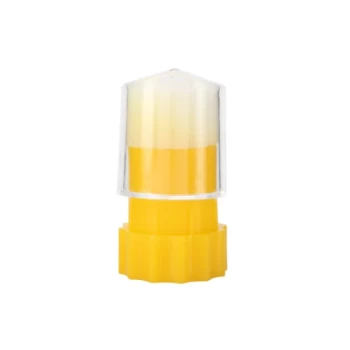
Specialized queen cups act as the biological trigger and the physical vessel for royal jelly production. They function by simulating the precise geometry of a natural queen cell, which tricks worker bees into treating a transferred larva as a potential queen. This induces the bees to fill the cup with massive quantities of royal jelly, which is then contained within the cup for efficient extraction.
The core function of a specialized queen cup is to standardize a biological process. By providing a uniform, artificial environment that mimics nature, these cups convert the erratic instinct of queen rearing into a predictable, scalable manufacturing process compatible with mechanical harvesting.
Simulating the Biological Trigger
Mimicking the Natural Environment
The primary role of the cup is biological deception. It is engineered to simulate the exact physical environment of a natural queen bee larval cell.
When a worker larva is transferred (grafted) into this cup, the colony—often a queenless one—perceives it as a future queen.
Inducing Glandular Secretion
This simulation triggers the nurse bees' biological imperative. They activate their hypopharyngeal and mandibular glands to secrete royal jelly.
Because the cup is recognized as a queen cell, the bees do not feed the larva standard food; they flood the cup with high-value royal jelly to support "royal" development.
The Role of Material and Dimensions
Ensuring Acceptance and Efficiency
The specific dimensions of the cup are critical. If the size deviates from the biological norm of a queen cell, the bees may reject the larva or secrete less jelly.
Correctly sized cups ensure high acceptance rates, directly influencing the total yield per colony.
Hygiene and Contamination Control
Modern cups are typically made from food-grade plastic. Unlike natural wax cells, which can be irregular and difficult to sanitize, plastic ensures the royal jelly remains free from contaminants.
This material choice also facilitates the cleaning of the larvae and residue after extraction, allowing the cups to be reused without compromising future yields.
Facilitating Industrial Collection
Acting as a Collection Pool
The cup serves a dual purpose: it is housing for the larva and a reservoir for the product. As bees deposit jelly, the cup acts as a distinct, contained pool.
This containment prevents the jelly from spreading into the comb or mixing with other hive substances.
Enabling Mechanical Harvesting
Standardization is the key to scalability. Because every specialized cup has identical dimensions, they fit perfectly into mechanical or semi-mechanical extraction systems.
This allows producers to harvest jelly from hundreds of cups simultaneously, a feat that would be impossible with irregular, natural wax cells.
Understanding the Trade-offs
The Risk of Rejection
While efficient, artificial cups are not foolproof. If the material quality is poor or retains chemical odors, the bees will detect the artifice and clean out (reject) the larva immediately.
Dependency on Grafting Precision
The cup is only as good as the grafting technique. Even the best cup cannot compensate for a damaged larva or improper placement. The system relies heavily on the precise transfer of larvae at the exact right age to trigger the secretion response.
Making the Right Choice for Your Goal
To maximize your royal jelly production, select queen cups based on your specific operational scale and quality standards.
- If your primary focus is maximum yield and scalability: Prioritize cups with standardized dimensions compatible with automated grafting and extraction machinery to reduce manual labor.
- If your primary focus is product purity: Ensure the cups are manufactured from certified food-grade plastics to eliminate the risk of chemical leaching or contamination.
Success in royal jelly production lies in using the cup not just as a container, but as a precision tool that aligns the biology of the bee with the efficiency of the machine.
Summary Table:
| Feature | Function in Royal Jelly Production | Impact on Yield & Quality |
|---|---|---|
| Biological Mimicry | Simulates queen cell geometry | Triggers nurse bees to flood cells with royal jelly |
| Food-Grade Material | Provides a hygienic, non-toxic vessel | Ensures product purity and high acceptance rates |
| Standardized Size | Uniformity across all frames | Enables rapid mechanical extraction and scalability |
| Containment Design | Acts as a reservoir for secretion | Prevents product loss and contamination from honeycomb |
Maximize Your Royal Jelly Output with HONESTBEE
At HONESTBEE, we understand that commercial success in beekeeping depends on the precision of your tools. We provide a comprehensive wholesale offering of specialized beekeeping equipment—from high-acceptance queen cups and precision grafting tools to industrial-grade honey-filling machines.
Whether you are a distributor or a large-scale commercial apiary, our products are designed to bridge the gap between biological instinct and mechanical efficiency. We supply everything from hive-making hardware to honey-themed cultural merchandise to help your business grow.
Ready to scale your production? Contact us today to discuss your wholesale needs and see how our premium equipment can transform your harvest.
References
- MAHMOUD E. ZAKARIA, E. Nafea. EFFECT OF HONEY BEE THERAPEUTIC TREATMENTS ON THE ROYAL JELLY SUGAR LEVELS. DOI: 10.21608/ejar.2012.161895
This article is also based on technical information from HonestBee Knowledge Base .
Related Products
- Brown Nicot Queen Cell Cups for Breeding Queen Bees Beekeeping
- JZBZ Type Wide Base Plastic Queen Cell Cups for Base Mounting and Queen Rearing
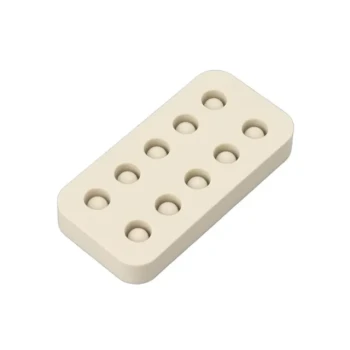
- 10-Cell Silicone Beeswax Bee Queen Cups Forming Mold
- Clear Black Plain Polystyrene Queen Bee Grafting Cell Cups No Lug for Bee Queen Cup
- JZBZ Push-In Queen Cell Cups for Beekeeping
People Also Ask
- What role do specialized queen rearing tools play in developing mite-resistant honeybee stock? Master Genetic Selection
- What materials are used to make artificial queen cell cups for grafting? Beeswax vs. Plastic Guide
- What roles do specialized queen cell cups play in royal jelly production? Optimize Your Hive's Secretion and Yield
- How does the standardized depth of queen cell cups affect larval acceptance? Boost Success with 6mm Precision
- Why is a diluted royal jelly solution applied to queen cell cups? Boost Acceptance in Artificial Grafting