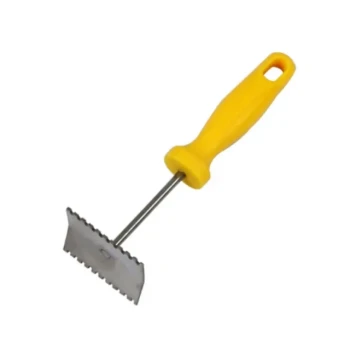
Specialized Royal Jelly retrieval tools significantly enhance harvesting efficiency by mechanically optimizing the removal of accumulated jelly from artificial queen cells. These instruments are engineered to maximize yield by thoroughly scraping cell walls, while simultaneously safeguarding the product against physical and chemical contamination through the use of food-grade materials.
Core Takeaway Harvesting Royal Jelly is a delicate balance between speed and hygiene. Specialized scrapers solve the primary bottleneck of manual extraction by ensuring complete removal of the product from artificial cells without compromising its high value through waste or contamination.
The Mechanics of Improved Efficiency
Precision Engineering for Artificial Cells
Standard tools often struggle to navigate the specific curvature of artificial queen cells. Specialized scrapers are designed with geometry that matches these cells perfectly.
This fit allows for the thorough removal of accumulated Royal Jelly in fewer motions. It eliminates the need for repeated scraping, which slows down the workflow and increases labor time.
Preventing Chemical Contamination
Efficiency is not just about speed; it is about usable yield. Tools made from certified food-grade materials prevent chemical leaching into the jelly.
Using improper materials can ruin a batch, rendering the harvest unusable. specialized tools ensure that the chemical integrity of the Royal Jelly is maintained throughout the extraction process.
Eliminating Physical Contaminants
Makeshift tools often degrade, leaving behind micro-plastics or metal shavings. Specialized retrieval tools are durable and designed to resist wear during repetitive scraping.
This prevents physical contamination, ensuring the final product does not require excessive filtration or processing to remove foreign debris.
Waste Reduction Strategies
Maximizing Yield per Cell
The primary reference highlights the reduction of waste as a key benefit. Specialized scrapers reach into the crevices of the artificial cups where jelly often accumulates and hardens.
By retrieving the material that general-purpose tools leave behind, producers increase their total volume per harvest without increasing the number of hives.
Understanding the Trade-offs
Initial Investment vs. Scale
While specialized tools improve efficiency, they represent an upfront cost compared to improvised solutions. For hobbyists with very few hives, the efficiency gains may not immediately offset the purchase price.
Maintenance Requirements
To maintain the benefit of "prevention of contamination," these tools require strict sanitation. Because they are often made of specific food-grade polymers or metals, they may require specific cleaning agents to avoid degrading the material over time.
Making the Right Choice for Your Operation
To select the right retrieval tools, you must assess the scale of your operation and your quality goals.
- If your primary focus is Volume: Prioritize ergonomic scrapers designed specifically for the dimensions of your artificial queen cups to maximize speed and yield.
- If your primary focus is Purity: Select tools with certified food-grade material specifications to ensure zero chemical interaction with the Royal Jelly.
Investing in the correct retrieval hardware turns a labor-intensive chore into a streamlined, high-yield process.
Summary Table:
| Feature | Specialized Scrapers | Improvised/General Tools |
|---|---|---|
| Design Fit | Matches queen cell curvature perfectly | Poor fit; requires multiple passes |
| Yield Rate | Maximizes volume; reaches crevices | Leaves significant residue (waste) |
| Purity Control | Certified food-grade materials | High risk of chemical/physical leaching |
| Efficiency | Fast, streamlined extraction | Labor-intensive and slow |
| Durability | High; resists wear from repetition | Low; prone to shedding micro-particles |
Elevate Your Royal Jelly Production with HONESTBEE
At HONESTBEE, we understand that in professional beekeeping, efficiency equals profitability. We specialize in supporting commercial apiaries and global distributors with a comprehensive wholesale portfolio of professional-grade beekeeping tools and machinery.
Our specialized Royal Jelly retrieval tools are engineered to eliminate waste and maintain the highest purity standards for your high-value harvests. Beyond manual tools, we supply a full spectrum of industry essentials, including:
- Advanced Machinery: From hive-making to honey-filling systems.
- Commercial Hardware: Durable beekeeping equipment built for scale.
- Industry Consumables: Everything your apiary needs for daily operations.
- Cultural Merchandise: Unique honey-themed products to expand your brand.
Ready to scale your operation or stock the best in beekeeping hardware? Contact our expert team today to discuss wholesale opportunities and see how HONESTBEE can streamline your business.
References
- Ratna Iffany Faradilla Besari, Lilik Eka Radiati. Benguk Tempeh Flour (<i>Mucuna pruriens</i> L.): Royal Jelly Production of <i>Apis mellifera</i> in the Dearth Period. DOI: 10.1051/bioconf/202519100030
This article is also based on technical information from HonestBee Knowledge Base .
Related Products
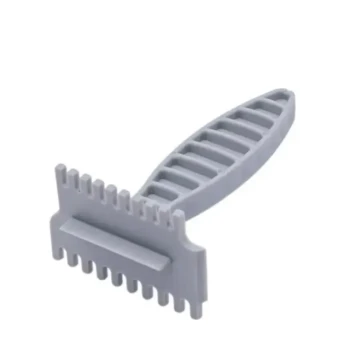
- Plastic Chinese Queen Grafting Tool for Bee Queen Rearing
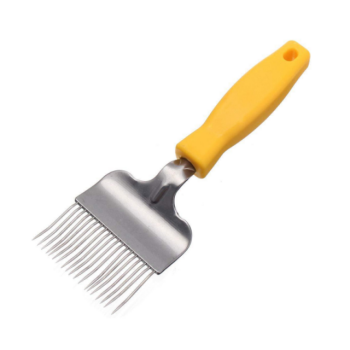
- Professional Honey Scraper for Efficient Apiary Maintenance
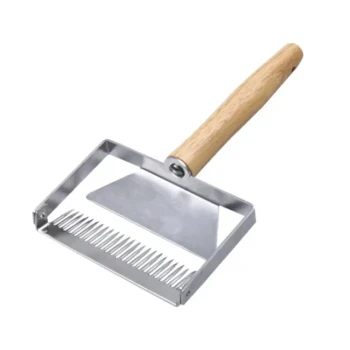
- Professional Wide Blade Honey Scraper for Beekeeping and Honey Processing
- Professional Long-Handled Silicone Honey Scraper for Beekeeping
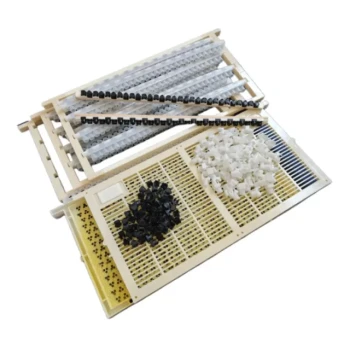
- No Grafting Queen Rearing Kit: System for Royal Jelly Production and Queen Rearing
People Also Ask
- Why is it necessary for migratory beekeeping enterprises to utilize professional queen bee rearing tools? Boost Resilience
- What are the benefits of using a queen grafting tool for queen rearing? Master Precision for Superior Bee Genetics
- What is grafting in queen rearing? Take Control of Your Apiary's Genetics
- What are the steps involved in using a queen grafting tool? A Guide to Successful Queen Rearing
- What is the primary function of a queen grafting tool? Master Precise Larval Transfer for High Queen Acceptance