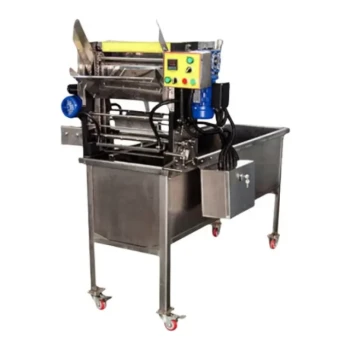
Standardized honey-filling and labeling machines are the bridge that transforms raw honey from a bulk agricultural commodity into a high-value consumer product. These systems enhance market value by enforcing precise weight consistency, ensuring rigorous hygiene, and providing the transparent labeling necessary to prove product authenticity. By automating these processes, producers can meet international safety standards and command premium pricing in competitive retail markets.
Core Takeaway Moving from manual processing to standardized automation is not just about speed; it is about guaranteeing the "commercial trust" required for modern retail. By securing the physical integrity of the product and verifying its origin through professional labeling, you convert raw material into a shelf-stable, trusted brand asset.
Building Market Trust Through Consistency
The primary driver of market value in the food industry is consumer confidence. Standardized machines replace the variability of manual labor with industrial precision.
Precision in Net Weight
Consumers and retailers demand exactness. Professional-grade machines utilize high-precision metering control to ensure every container holds the exact net content promised on the label. This consistency protects your brand reputation and complies with strict weights and measures regulations.
Guaranteeing Hygiene and Safety
Manual filling introduces significant risks of human contact and environmental contamination. Industrial-grade filling machines often operate as closed-loop systems, minimizing exposure to the open air. This sanitary design is essential for meeting food safety standards required by high-end grocers and export partners.
Proving Authenticity via Labeling
Value in the honey market is increasingly driven by origin (e.g., Manuka, Acacia, or local wildflower). Professional labeling equipment applies clear, transparent information regarding floral source, origin, and nutritional content. This transparency verifies authenticity, directly supporting a strategy of premium pricing.
Enhancing Product Quality and Shelf Life
Market value is lost the moment a product spoils or degrades. Automated packaging plays a critical role in preserving the physicochemical stability of honey.
Preventing Environmental Contamination
Honey is hygroscopic, meaning it absorbs moisture from the air, which can lead to fermentation and spoilage. Standardized machines utilize airtight, vacuum sealing processes to minimize air contact. This protection extends the shelf life of the product significantly.
Reducing Oxidation and Waste
High-speed filling and anti-drip technologies prevent the honey from lingering in the filling nozzles or on the bottle rim. This prevents oxidation at the seal point and ensures a clean, professional appearance. It also reduces raw material loss, directly improving unit profit margins.
Unlocking New Distribution Channels
To transition from selling bulk raw materials to finished consumer goods, packaging must be uniform and robust.
Meeting Export and Retail Standards
Modern retail channels and international export markets require standardized packaging specifications. You cannot enter these markets with manually filled, irregular containers. Automated equipment ensures your product meets the uniform physical requirements needed for mass distribution.
Optimizing Logistics
Uniform product units created by these machines are easier to stack, transport, and display. In logistics-intensive scenarios, such as retail distribution, this allows for efficient inventory management. It enables producers to reach diverse markets with products that maximize shelf-space utilization.
Understanding the Trade-offs
While the shift to automation drives value, it introduces new operational considerations that must be managed.
The Shift to Strict Protocols
Implementing industrial-grade machinery requires a commitment to strict hygiene controls that exceed manual processing habits. The machinery eliminates manual contamination risks, but only if the equipment itself is maintained according to sanitary design protocols.
Complexity of Transition
Moving from bulk sales to retail packaging changes the business model. You are no longer just managing volume; you are managing packaging inventory, label compliance, and retail specifications. The equipment solves the production hurdle, but the business must adapt to support a retail-focused strategy.
Making the Right Choice for Your Goal
To maximize the return on your equipment investment, align your choice with your specific market objective.
- If your primary focus is Premium Branding: Prioritize equipment with advanced labeling capabilities to highlight floral sources and nutritional transparency, as this drives consumer trust and price.
- If your primary focus is Export and Mass Retail: Focus on high-precision filling and vacuum sealing technologies to ensure the extended shelf life and standardization required by international logistics.
Standardized filling and labeling are not merely operational upgrades; they are the fundamental tools required to validate your product's quality and secure its place on the premium shelf.
Summary Table:
| Value Driver | Impact of Standardization | Key Benefit |
|---|---|---|
| Consistency | High-precision metering & weight control | Ensures regulatory compliance & brand trust |
| Hygiene | Closed-loop systems & sanitary design | Meets international food safety & export standards |
| Authenticity | Transparent, professional label application | Supports premium pricing based on floral origin |
| Shelf Life | Airtight vacuum sealing & anti-drip tech | Prevents fermentation, oxidation, and spoilage |
| Distribution | Uniform packaging specifications | Enables access to mass retail and global markets |
Scale Your Apiary Business with HONESTBEE Professional Solutions
Are you ready to transform your raw honey into a high-value, shelf-ready brand? HONESTBEE specializes in empowering commercial apiaries and distributors with the tools needed for industrial success. From high-precision honey-filling and labeling machines to professional hive-making equipment and essential consumables, we provide the complete technical infrastructure your business requires.
Why partner with HONESTBEE?
- Wholesale Expertise: We supply everything from heavy machinery to honey-themed cultural merchandise.
- Market Readiness: Our equipment ensures your products meet the strict standards of global retail and export markets.
- End-to-End Support: We cater specifically to the needs of large-scale beekeeping operations.
Take the next step in professionalizing your production. Contact our honey processing experts today to find the perfect equipment package for your operation!
References
- Recep Sıralı. ORDU ARICILIĞININ BAŞLICA SORUNLARI VE ÇÖZÜM YOLLARI. DOI: 10.31467/uluaricilik.373728
This article is also based on technical information from HonestBee Knowledge Base .
Related Products
- Fully Automatic Honey Filling Packaging Machine for Processing Line
- Precision Durable Efficient HONESTBEE Rotary Honey Filling Machine
- Automatic Honey Filling and Filtering Machine for Beekeeping Bottle Filling
- Precision Automated Packaging Turntable Honey Spoon Filling Sealing Packing Machine
- Economy Small Honey Filling Machine Honey Bottle Filler Packaging Machine
People Also Ask
- Why are fully automatic honey filling and packaging lines essential? Boost Your Honey's Market Value and Quality
- What is a fully-automatic honey filler? Streamline Your Production with High-Precision Automation
- How do automated honey filling and packaging machines affect profitability? Boost Margins with HONESTBEE Technology
- How do automated honey filling and packaging machines contribute to the market value of honey products? Maximize Your ROI
- How do industrial-grade automated honey filling and packaging machines mitigate the risk of physical contamination?