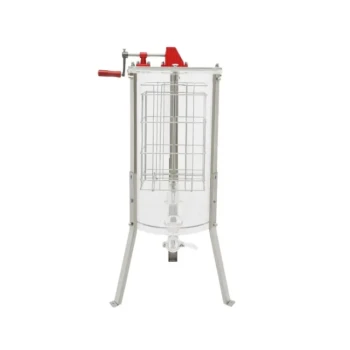
Standardized honey processing equipment combined with digital traceability systems forms a dual-layer defense for honey quality. The equipment physically secures the product's purity and nutritional profile through precision filtration and sterilization, while digital systems lock in the provenance data for every batch. This integration directly counters the industry's biggest threats—contamination, antibiotic residues, and adulteration—ensuring the product meets strict international standards for high-value trade.
Core Takeaway The combination of industrial-grade processing and digital tracking transforms honey from a variable raw commodity into a trusted, standardized asset. By stabilizing physical properties and verifying origin data, producers can command premium prices and safeguard against the global prevalence of counterfeit honey.
The Mechanics of Quality Assurance
Eliminating Physical Contaminants
Raw honey often contains wax debris, larval fragments, and other particulate matter introduced during harvesting. Specialized filtration devices and settling tanks remove these impurities through physical clarification.
This process significantly improves the transparency and sensory quality of the final product. By achieving high purity without stripping essential nutrients, the honey qualifies for higher grading evaluations, which directly dictates the final selling price.
Stabilizing Moisture and Consistency
Inconsistent moisture levels can lead to fermentation and spoilage, destroying trade value. Industrial dehydration and moisture control equipment standardize the water content of the honey.
This stabilization is critical for shelf life and transport. It ensures the product remains chemically stable from the processing facility to the retail shelf, meeting the consistency requirements of formal retail distribution.
Preserving Nutritional Integrity
A common failure in traditional processing is heat damage. Modern multi-stage precision filters and controlled temperature systems are designed to clean the honey while preserving its original nutritional content and flavor profile.
This technology replaces manual squeezing or uncontrolled heating methods that degrade quality. By maintaining the ratio of glucose to fructose and protecting enzymes, the equipment ensures the honey remains viable for high-end and even medical-grade markets.
The Role of Digital Traceability
Combating Adulteration and Fraud
The global honey market is plagued by "fake" honey mixed with syrups. Digital traceability systems record the source information of every batch, creating an immutable history from the hive to the bottle.
This data prevents adulteration by making the supply chain transparent. It provides the proof of origin required to differentiate authentic honey from counterfeit products in the global marketplace.
Managing Chemical Risks
International trade standards are zero-tolerance regarding prohibited substances. Integrated systems track data to prevent risks associated with antibiotic residues.
By linking testing results (such as hygiene standards and chemical indicators) to specific batches in the digital system, producers ensure that only compliant honey enters the supply chain. This lowers the risk of rejection at customs and protects the producer's reputation.
Building Consumer Trust via Labeling
The final step in value protection is the labeling system. Smart packaging frameworks communicate ingredient composition, certifications, and production dates clearly to the consumer.
This is not merely a legal compliance measure; it is a trust mechanism. Explicit communication of traceability data assures consumers they are purchasing a genuine, safe product, justifying a higher price point.
Understanding the Trade-offs
The Balance of "Raw" vs. "Processed"
While processing ensures safety and standardization, there is a risk of over-refining. Ultra-filtration can strip honey of all pollen, which acts as a botanical fingerprint.
If the filtration is too aggressive, the product may lose its identity as "natural honey" in the eyes of purist consumers. Producers must calibrate equipment to remove debris without removing the microscopic elements that prove botanical origin.
Capital Investment vs. Market Access
Implementing these systems requires significant upfront capital for machinery and software.
However, relying on fragmented or manual processing limits producers to local, lower-value markets due to hygiene risks and inconsistency. The cost of equipment is the price of entry for the international high-value market.
Making the Right Choice for Your Goal
To maximize value, align your processing strategy with your target market:
- If your primary focus is Global Export: Prioritize digital traceability and antibiotic screening integration to navigate strict international customs and anti-fraud regulations.
- If your primary focus is High-End Retail: Focus on precision low-temperature filtration to maximize clarity and shelf appeal while retaining the "raw" nutritional profile consumers demand.
- If your primary focus is Medical/Healthcare Use: Invest in sterilization and strict moisture control equipment to ensure the absolute biological stability required for health-related applications.
Standardization is not about making all honey the same; it is about making all honey provably safe and authentic.
Summary Table:
| System Component | Function | Trade Benefit |
|---|---|---|
| Precision Filtration | Removes wax and particulates | Increases purity grade and sensory appeal |
| Moisture Control | Standardizes water content | Prevents fermentation and extends shelf life |
| Digital Traceability | Records origin and batch data | Combats fraud and proves authenticity |
| Chemical Screening | Tracks antibiotic residues | Ensures compliance with international customs |
| Smart Labeling | Communicates certifications | Builds consumer trust and commands premium pricing |
Elevate Your Honey Trade with HONESTBEE
Maximize your market potential and protect your product's integrity with industry-leading solutions from HONESTBEE. As a premier partner for commercial apiaries and distributors, we provide more than just tools—we provide the foundation for a high-value honey business.
Our comprehensive wholesale portfolio includes:
- Advanced Machinery: From high-precision honey-filling machines to automated hive-making equipment.
- Processing Excellence: Industrial-grade filtration and dehydration systems designed for international standards.
- Supply Chain Essentials: A full spectrum of beekeeping tools and essential industry consumables.
Whether you are scaling a global export operation or supplying high-end retail, HONESTBEE delivers the specialized hardware and cultural merchandise you need to succeed.
Contact HONESTBEE Today to Optimize Your Production
References
- Stephan Kupsch, Amy P. Balcita. Apiculturists’ issues and challenges: a basis for invoking IT model in beekeeping industry. DOI: 10.1088/1757-899x/482/1/012031
This article is also based on technical information from HonestBee Knowledge Base .
Related Products
- Electric Double Wall Honey Filtering Machine Purifier Equipment for Honey Processing Plant
- 0.5T Capacity Honey Dehumidifier Dryer with Vacuum Heating and Thickening Filtering Machine
- Heavy Duty Stainless Steel Honey Processing Machine Decrystallizing Tank
- Double Wall Honey Heating Stirring Homogenizer Mixing Machine with Various Capacity
- Double Nozzle Small Honey Filling Machine Honey Sachet Packing Packaging Equipment
People Also Ask
- What types of equipment are used in honey filtering? Build an Efficient System for Pure, Marketable Honey
- What is the process of filtering honey? A Guide to Clean, Pure, and Market-Ready Honey
- What is the overall importance of using the right equipment in honey filtering? Boost Quality & Marketability
- How should honey filtering equipment be properly maintained? Extend Equipment Life & Protect Honey Purity
- What role do professional honey harvesting and filtering equipment play in meeting honey market quality standards? Boost ROI