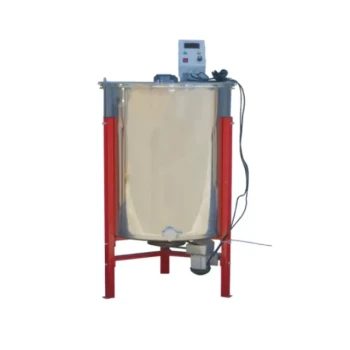
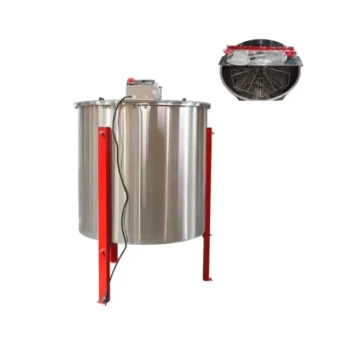
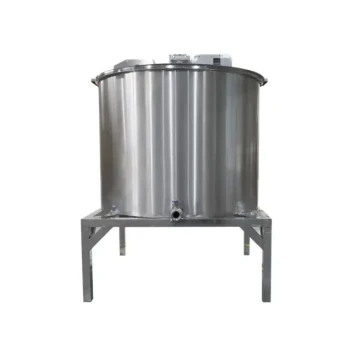
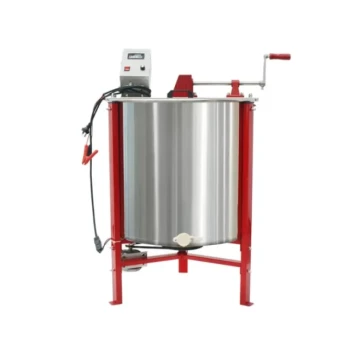
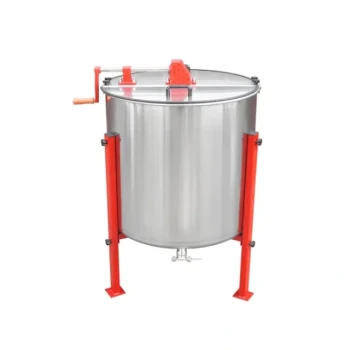
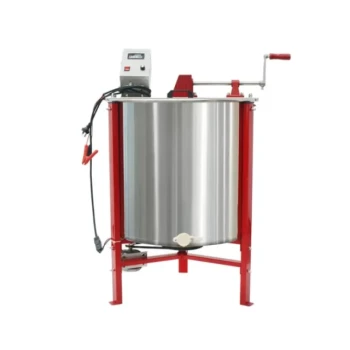
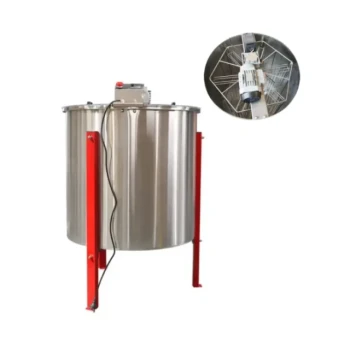
Industrial centrifugal honey extraction is essential because it utilizes high-speed rotation to separate mature honey from the frame without destroying the physical structure of the honeycomb. This non-destructive method is the only viable way to produce high-purity honey suitable for filtration while allowing beekeepers to return intact frames to the hive for immediate reuse.
By decoupling honey harvesting from comb destruction, centrifugal extraction preserves the hive's "infrastructure." This allows colonies to focus energy on foraging rather than rebuilding wax, significantly shortening production cycles and improving overall yield.
Preserving Hive Infrastructure
The primary advantage of centrifugal machinery lies in its ability to extract resources without destroying the vessel that holds them.
The Energy Cost of Wax
In traditional or manual methods like pressing, the honeycomb is often crushed to release the honey. This forces the bee colony to expend significant energy and time secreting new wax to rebuild the comb before they can store honey again.
Optimizing Bee Productivity
Centrifugal extractors spin the honey out, leaving the delicate wax cells intact. Because the infrastructure is preserved, frames can be returned to the hive immediately.
This allows the colony to bypass the rebuilding phase. Instead of consuming honey to produce wax, bees can immediately begin refilling the cells.
Aligning with Flowering Windows
This efficiency is critical for commercial apiaries. By eliminating the rebuilding time, beekeepers can align production more effectively with peak flowering periods of nectar-rich plants like Eucalyptus and Acacia.
Achieving High Purity for Filtration
Beyond volume, industrial machinery is required to meet the strict quality standards of filtered, commercial-grade honey.
Minimizing Impurities
Manual squeezing or pressing inevitably mixes large amounts of wax debris, pollen clusters, and other foreign matter into the liquid honey. Centrifugal force applies pressure evenly, releasing the liquid while keeping the solid comb structure separate.
Improving Filtration Efficiency
To produce filtered honey that meets export-grade clarity, the raw extract must pass through a multi-stage filtration system.
Centrifugal extraction produces a much cleaner raw product than pressing. This reduces the load on filtration systems, preventing clogs and ensuring the final product complies with international food safety standards and clarity requirements.
Understanding the Trade-offs
While centrifugal extraction is the industrial standard, it introduces specific operational considerations that differ from traditional methods.
Equipment Complexity and Cost
Unlike manual methods, centrifugal extraction requires significant upfront capital investment in machinery. It also introduces a need for maintenance of motors and rotating parts to ensure consistent operation.
Operational Scale
This method is most effective when processing large volumes. For extremely small, hobbyist operations, the efficiency gains in bee energy may not outweigh the cost and footprint of industrial machinery.
Making the Right Choice for Your Goal
When evaluating extraction methods, your decision should depend on your specific production targets and market requirements.
- If your primary focus is maximizing annual yield: Prioritize centrifugal extraction to allow for the immediate reuse of honeycombs, significantly increasing the frequency of harvest cycles.
- If your primary focus is export-grade quality: Utilize centrifugal machinery to minimize the introduction of wax and pollen, ensuring your product is clean enough for high-standard filtration and international distribution.
Centrifugal extraction is not merely a method of removal; it is a resource management strategy that preserves the labor of the colony to maximize the output of the apiary.
Summary Table:
| Feature | Centrifugal Extraction | Manual Pressing/Crushing |
|---|---|---|
| Comb Integrity | Preserved (Reusable) | Destroyed (Requires Rebuild) |
| Honey Purity | High (Minimal Impurities) | Low (High Wax/Pollen Content) |
| Bee Energy Focus | Foraging & Storage | Wax Secretion & Rebuilding |
| Production Cycle | Shortened (Fast Turnover) | Long (Delayed by Rebuilding) |
| Market Suitability | Export-Grade Filtered Honey | Local/Raw Specialty Honey |
Maximize Your Apiary’s Productivity with HONESTBEE
As a commercial apiary or distributor, your success depends on efficiency and product quality. HONESTBEE provides the professional-grade industrial honey extractors and filtration machinery needed to scale your operations and meet international export standards. Beyond extraction, we offer a complete wholesale spectrum of beekeeping tools, hive-making machines, honey-filling lines, and essential industry consumables.
Ready to shorten your production cycles and deliver higher-purity honey to your customers? Contact us today to explore our comprehensive equipment solutions and see how our expertise can drive your business growth.
References
- Selda GEDİK, Samim KAYIKÇI. Bal Ormanlarının Sosyo-Ekonomik Boyutunun İncelenmesi: Koyulhisar Örneği. DOI: 10.24011/barofd.942611
This article is also based on technical information from HonestBee Knowledge Base .
Related Products
- electric honey extractor honey centrifuge 3 frame honey extractor stainless steel honey frame extractor
- Manual Hand Crank 4 Frame Honey Extractor Centrifuge for Beekeeping
- HONESTBEE 72 Frame Industrial Electric Honey Extractor for Beekeeping
- Professional 4 Frame Self Reversing Electric Honey Extractor for Beekeeping
- 24 Frame Honey Extractor Commercial Radial Honey Frame Extraction Machine
People Also Ask
- What are the characteristics of electric honey extractors? Boost Your Apiary Efficiency with Automated Technology
- What are the disadvantages of using an electric honey extractor? Weighing Cost, Power, and Comb Safety
- What are the advantages of an electric honey extractor? Boost Efficiency and Scale Your Honey Production
- What are the technical advantages of electric honey extractors? Maximize Yield and Protect Your Bee Colony
- How does an electric honey extractor affect the quality of honey? Preserve Flavor & Purity with Precision Extraction