Standardized volume containers act as the fundamental unit of trade that transforms honey from a raw agricultural resource into a viable commercial product. By establishing a fixed measurement standard—such as a liter bottle or a specific local unit like the Coro—these containers simplify the pricing process, ensure transparency between buyers and sellers, and enable the accurate record-keeping required to turn subsistence beekeeping into a professional enterprise.
The adoption of standardized containers is the bridge between casual harvesting and formal business operations. It creates a consistent, tradeable unit that is essential for financial accountability, fair market pricing, and the ability to scale distribution beyond local exchanges.
Establishing a Professional Commercial Foundation
Simplifying Pricing and Transparency
In informal markets, trading raw materials without fixed units often leads to negotiation friction and mistrust. Standardized volume containers establish a consistent measurement standard, such as the liter or Coro. This allows both the buyer and seller to agree instantly on quantity, making the pricing process transparent and efficient.
Transitioning from Subsistence to Enterprise
For a beekeeper to evolve into a commercial producer, they must treat their operation as a business. Standardized units allow for precise production records and financial accounts. By tracking exactly how many units are produced and sold, a producer can calculate yields, revenue, and profit margins, which is impossible with irregular bulk storage.
Unlocking Modern Market Access
Meeting Retail Requirements
Modern retail markets, including supermarkets and high-end shops, require consistent product specifications to manage inventory. Utilizing uniform glass or plastic jars transforms raw honey into a standardized retail good. This uniformity is a prerequisite for entering formal supply chains that cannot accommodate loose or irregularly packaged products.
Facilitating Brand Development
Standardization provides the physical canvas necessary for professional branding. Uniform containers support consistent labeling, which helps producers comply with legal market requirements and highlight geographical origins or floral sources. This differentiation builds consumer trust and allows producers to command premium prices compared to unbranded bulk honey.
Protecting Product Integrity and Logistics
Ensuring Stability During Transport
Commercialization requires moving product over long distances without quality loss. Standardized containers, such as tin drums or specific plastic bottles, provide a crucial barrier against air and moisture. This prevents the honey from absorbing water, which is the primary cause of fermentation and spoilage during distribution.
Enhancing Production Efficiency
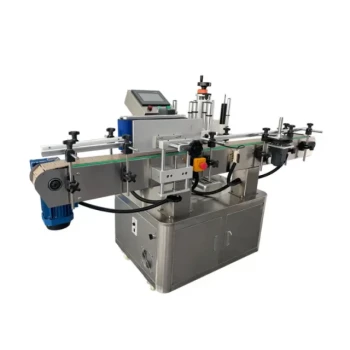
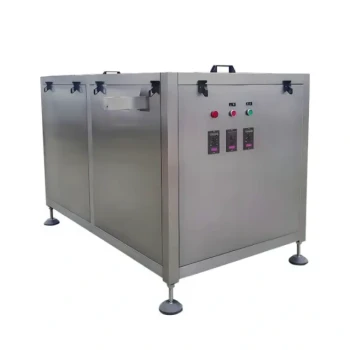
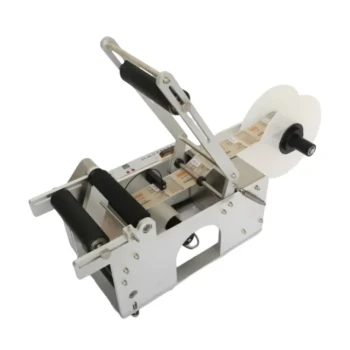
Using standardized containers enables the use of professional filling and packaging equipment. This hardware increases automation levels and hygiene standards, ensuring precise measurement during bottling. This industrial-grade packaging capability is a critical driver for value addition, moving operations away from manual, inconsistent filling methods.
Understanding the Challenges
The Cost of Standardization
While beneficial, moving to standardized packaging introduces new overhead costs. Producers must invest in specific consumable materials (bottles, caps, labels) and potentially specialized filling equipment. This shifts the business model from a low-cost, low-return structure to one requiring upfront capital for inventory and infrastructure.
Volume vs. Weight Nuances
Honey is traditionally sold by weight in some international markets, but by volume (liters) in many local markets. Relying solely on volume containers can sometimes lead to confusion regarding net weight, as honey density varies based on moisture content. Producers must ensure their volume standards align with the regulatory weight requirements of their target market to avoid legal discrepancies.
Making the Right Choice for Your Goal
To leverage standardized containers effectively, align your packaging strategy with your business objectives:
- If your primary focus is formal market entry: Prioritize containers that meet specific retailer dimensions and barrier requirements to ensure shelf stability and acceptance.
- If your primary focus is business management: Use standardized units as an internal accounting tool to track yield-per-hive and calculate precise profit margins.
Standardization is not just about packaging; it is the operational discipline that empowers a producer to demand a fair market value for their work.
Summary Table:
| Impact Factor | Role in Commercialization | Business Benefit |
|---|---|---|
| Measurement | Establishes a fixed unit (e.g., Liter, Coro) | Ensures transparent pricing and buyer trust |
| Accounting | Enables precise tracking of unit production | Accurate calculation of yields and profit margins |
| Retail Ready | Meets supermarket and formal shop specs | Access to high-end supply chains and logistics |
| Integrity | Provides barriers against air and moisture | Prevents fermentation and spoilage during transport |
| Automation | Supports filling and labeling machinery | Increases production efficiency and hygiene standards |
Scale Your Apiary Operations with HONESTBEE
Transitioning from local harvesting to professional honey commercialization requires more than just high-quality honey—it requires the right infrastructure. HONESTBEE empowers commercial apiaries and distributors with the professional tools needed to succeed. From precision honey-filling machines and hive-making hardware to high-quality beekeeping consumables, we provide the full spectrum of equipment to automate your production and standardize your output.
Ready to transform your honey production into a high-efficiency enterprise? Contact us today to explore our wholesale solutions and see how our machinery and industry expertise can drive your brand's growth.
References
- Issa YA, Logtene YM. Socio-Economic Characteristics and Techniques of the Bee-Keeping in the Area of Goundi (Chad). DOI: 10.16966/2576-6457.131
This article is also based on technical information from HonestBee Knowledge Base .
Related Products
- Hexagonal Squeeze Honey Bottle with No Drip Lid
- Automatic In-Line Round Bottle Labeling Machine
- Premium PET Squeeze Honey Bottle with Ergonomic Grip and Rotary Dispenser
- Ergonomic Squeezable Honey Bottle with Precision Twist Nozzle Cap
- Fully Automatic High Speed Centrifugal Bottle Unscrambler
People Also Ask
- What are the benefits of squeeze bottles for honey packaging? Unlock Mess-Free Convenience & Control
- How do honey bottles contribute to the preservation of honey products? Secure Quality and Commercial Value
- What are the features of honey bottles? Design for Convenience & Long-Term Preservation
- How should honey bottles be prepared before pouring honey into them? The #1 Rule for Honey Longevity
- What are the features and benefits of using honey bottles for packaging? Optimize Preservation and Consumer Experience