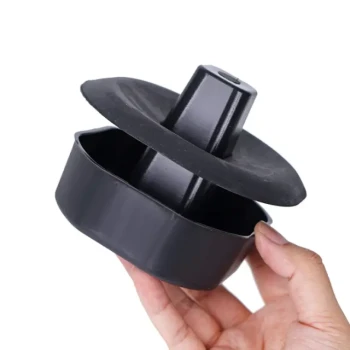
Sticky or greasy barriers function as physical blockades. They stop ants by creating a surface on the hive stand legs that is impossible to traverse. The substance either entangles the ant's legs through adhesion or provides zero traction, physically preventing them from climbing upward.
While ants are relentless, they typically rely on a continuous path from the ground to the hive. Applying a barrier to the stand legs effectively breaks this bridge, forcing ants to abandon the climb.
The Mechanics of Deterrence
Creating an Unnavigable Surface
Ants rely on friction and adhesion to scale vertical surfaces. Grease disrupts this mechanics by creating a slippery, unstable layer. When an ant attempts to climb a greased leg, it cannot gain the traction required to lift its body weight, causing it to slide back down.
Trapping via Adhesion
Specialized sticky substances work differently by using aggressive adhesion. Instead of slipping, the ant's legs sink into the material. The substance traps the ant, effectively gluing it in place and acting as a warning to other ants following the pheromone trail.
Isolating the Hive
The primary goal is to isolate the hive from the ground. By treating the legs of the stand, you convert the hive into a fortress with no entry points. This forces the ants to seek food sources elsewhere rather than expending energy on an impossible climb.
Essential Maintenance Protocols
Weekly Inspections
A barrier is only effective as long as it remains intact. You must inspect the barriers weekly to ensure they have not dried out or washed away. Weather conditions like high heat can melt grease, while rain can wash away water-soluble adhesives.
Reapplication Strategy
If the substance feels dry to the touch or appears thin, reapply immediately. A compromised barrier offers a false sense of security. Consistent reapplication prevents breaches before an infestation can establish itself inside the hive.
Understanding the Trade-offs
Vulnerability to Debris
Sticky barriers act as magnets for dust, grass clippings, and dead insects. Over time, this debris forms a "bridge" over the sticky surface, allowing ants to walk right over the trap. This is why neglected barriers often fail.
Environmental Bridging
Greasing the legs is useless if tall grass or weeds touch the hive body. Ants will bypass the treated legs entirely by climbing vegetation. You must keep the area around the hive mowed and clear to ensure the legs remain the only access point.
Making the Right Choice for Your Apiary
The effectiveness of this method depends entirely on your commitment to maintenance.
- If your primary focus is heavy ant pressure: Use a specialized sticky adhesive, as it actively traps scouts and prevents them from returning to the colony to report the food source.
- If your primary focus is cost-effective management: Use general-purpose grease, but commit to a strict weekly schedule to ensure it hasn't melted or worn thin.
Consistency is the key to success; a single breach in the barrier is all an ant colony needs to invade.
Summary Table:
| Deterrence Method | Mechanism of Action | Key Advantage | Maintenance Requirement |
|---|---|---|---|
| Grease/Lubricants | Creates a slippery, zero-traction surface. | Cost-effective and easy to apply. | High; prone to melting in heat. |
| Sticky Adhesives | Traps ants via aggressive adhesion. | Prevents scouts from returning. | Moderate; prone to debris bridging. |
| Physical Isolation | Breaks the path from ground to hive. | Turns the hive into a fortress. | Constant clearing of nearby weeds. |
Secure Your Apiary’s Success with HONESTBEE
Protecting your colony from ants is just the first step in professional apiary management. At HONESTBEE, we empower commercial apiaries and distributors with high-performance tools and equipment designed for durability and efficiency.
Whether you need specialized hive-making machinery, precision honey-filling systems, or a steady supply of essential beekeeping consumables, we provide the comprehensive wholesale solutions you need to scale your operations. From heavy hardware to honey-themed cultural merchandise, our portfolio is built to support your growth.
Ready to upgrade your beekeeping equipment?
Contact HONESTBEE today to discuss our wholesale offerings and discover how our expertise can benefit your business.
Related Products
- Metal Hive Feet Bee Hive Stand for Ant Protection
- Professional Ant-Proof Beehive Stand with Integrated Moat for Beekeeping
- High Security Emlock Strap System
- Wooden Bee Hive Frames for Beekeeping and Wholesale
- Steel Round Disc Entrance Reducer for Flexzion Bee Hive Nuc Box Gate
People Also Ask
- What are the benefits of elevating a bee hive with a stand or base? Protect Your Colony and Your Back
- How does a beehive stand protect against predators and pests? Essential Strategies for Colony Security
- How should the height of a beehive stand be determined? Find Your Ergonomic Sweet Spot
- What to stand a beehive on? The Best Foundation for a Healthy, Manageable Apiary
- How do beehive stands and ground installation methods affect beekeeping productivity in extreme climates? Maximize Yields