Synthetic queen bee pheromone lures help swarm traps imitate the chemical presence of an established colony, encouraging scout bees to investigate and select the trap as a nesting site. The scouts then communicate the location to the rest of the swarm, allowing commercial beekeepers to capture free-flying colonies and transfer them into prepared hive equipment. This provides an additional way to populate new hives or replace colony losses without splitting productive colonies or purchasing package bees.
Synthetic lures work primarily by influencing scout-bee nest-site selection. They do not command an entire swarm directly; instead, they make a suitable trap more likely to be discovered, inspected, and chosen during the swarm’s search for a new home.
How the Lures Work in a Swarm Trap
They Reproduce Natural Colony Signals
A living queen produces queen mandibular pheromone, often called queen substance, through her mandibular glands. These chemical signals help maintain colony cohesion and communicate that a queen is present.
Synthetic queen pheromone products reproduce key parts of this chemical profile. Inside a trap, the scent can make otherwise empty equipment seem more biologically familiar to exploring bees.
They Target Scout Bees First
After a colony swarms, scout bees search for possible nesting sites. They inspect cavities and other locations for characteristics such as shelter, size, accessibility, and chemical cues associated with honeybee occupancy.
A lure placed inside the trap increases the chance that scouts will investigate the equipment. Once a scout considers the location suitable, it can advertise the site to other swarm members through honeybee communication behaviors, including movement and waggle dances.
Some Products Also Mimic Orientation Odors
Commercial swarm lures may combine or use signals associated with queen pheromone and Nasonov pheromone. Worker bees naturally release Nasonov gland compounds and fan their wings to help bees locate a nest entrance and coordinate movement.
This distinction matters: queen pheromone communicates queen and colony presence, while Nasonov-type signals are more closely associated with orientation and location. Product descriptions should therefore identify whether a lure is intended to replicate queen mandibular pheromone, Nasonov pheromone, or a broader swarm-attractant blend.
How Commercial Apiaries Use the System
The Trap Provides the Physical Nest Site
The pheromone is only one part of the capture system. The swarm trap must also provide suitable hive-like equipment, a protected cavity, and an entrance that bees can locate and use.
Beekeepers typically install the lure inside the trap and position the trap where passing or migrating swarms are likely to encounter it. The lure makes the equipment more noticeable, while the structure satisfies the swarm’s need for a potential nesting location.
Captured Swarms Can Populate Empty Equipment
Once a swarm occupies the trap, the beekeeper can transfer the bees into standard hive equipment. The colony may then be managed as a new production unit, subject to inspection, feeding, disease control, and queen-quality assessment.
This gives commercial apiaries a way to turn naturally occurring swarms into usable colony inventory. It can be particularly valuable for restocking empty woodenware or supplementing purchased bees during periods of limited availability.
The Method Reduces Disruption to Existing Colonies
Swarm trapping can expand colony numbers without taking brood, bees, or resources from established hives. That allows productive colonies to remain focused on brood rearing, honey production, or preparation for winter.
However, captured swarms are not automatically equivalent to standardized package bees or nucleus colonies. Their population, queen age, genetics, health status, and productivity can vary considerably.
Why Release Design Matters
Continuous Release Supports Longer Deployment
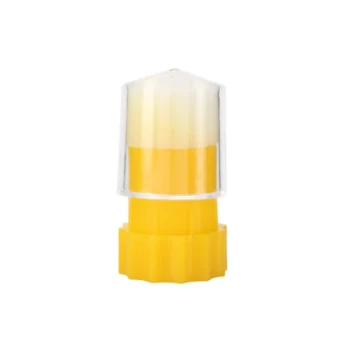
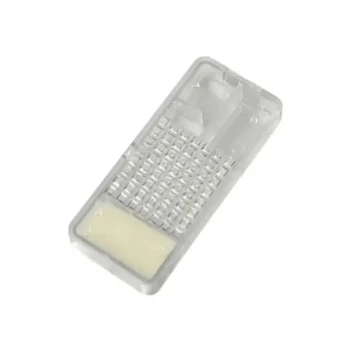
Many commercial lures use a liquid formulation held in a small vial or dispenser. The carrier releases the active compounds gradually, maintaining an odor source inside the trap over an extended deployment period.
For distributors and apiary suppliers, release duration is a practical product specification. It affects how often traps must be serviced, how reliably the product performs across a trapping season, and how easily customers can standardize field operations.
Formulation Completeness Affects Performance
Queen mandibular pheromone is a chemical blend rather than a single universal scent. A formulation designed to imitate QMP must reproduce the relevant components and ratios closely enough to create a biologically meaningful signal.
The supplementary claim that omitting any one component reduces efficacy by exactly 50% should not be treated as a universal field rule without product-specific evidence. Performance depends on formulation, concentration, release rate, trap design, colony genetics, weather, and local swarm pressure.
Placement Should Preserve the Odor Signal
The lure should be installed according to the manufacturer’s instructions, generally inside the trap and away from direct exposure to rain or excessive heat. Poor placement can shorten release life or disperse the signal outside the part of the trap where scouts are expected to inspect.
Standardized placement instructions are important for wholesalers and resellers because customers need repeatable results across multiple trapping sites.
What Determines Capture Success
Trap Location Remains Critical
A pheromone lure cannot compensate for an unsuitable location. Traps are more likely to work when placed near known flight paths, apiaries, wooded edges, or areas where swarms have previously appeared.
Local swarm timing and weather also affect results. A well-formulated lure can attract attention only when scout bees are actively searching for a nesting site.
Trap Suitability Influences Final Selection
Scouts evaluate the entire potential nest site, not just its odor. The trap’s volume, entrance size, dryness, stability, and protection from excessive exposure all contribute to whether a swarm ultimately occupies it.
For commercial operations, lure quality should therefore be evaluated together with trap compatibility. A premium consumable paired with poorly prepared equipment will produce inconsistent field results.
The Lure Supports, Rather Than Replaces, Bee Communication
The lure does not usually pull every bee into the trap from a distance like a mechanical attractant. Its more important role is to help scouts discover and recognize the trap as a credible nesting option.
The swarm’s final decision results from multiple factors: scout recruitment, site inspection, colony condition, environmental conditions, and competition from other potential nest sites.
Understanding the Trade-offs
Captured Swarms Are Biologically Variable
A swarm may contain a vigorous queen and a large population, but the beekeeper may have limited information about its origin, age, genetics, or disease exposure. Every captured swarm should be managed as an unverified biological asset until it has been inspected and established.
This variability makes swarm trapping useful for expansion, but less predictable than purchasing colonies from a controlled breeding or production program.
Lures Do Not Guarantee Occupancy
No pheromone product guarantees that a trap will receive a swarm. A lack of captures may reflect poor location, unsuitable equipment, unfavorable weather, low local swarm activity, expired product, or competing nesting sites.
Resellers should present lures as capture-enhancement consumables, not as guaranteed colony-generation products.
Different Pheromone Claims Can Be Confused
Queen mandibular pheromone and Nasonov pheromone serve related but different biological functions. Treating every “queen lure” and “swarm lure” as chemically or behaviorally identical can lead to inaccurate product positioning and poor customer expectations.
Technical product documentation should clearly state the intended signal, target use, release period, storage requirements, and compatibility with the trap system.
Health and Regulatory Controls Still Apply
A trapped swarm can carry pests or pathogens into an apiary. Commercial operators should follow local requirements for inspection, quarantine, treatment, and movement of captured colonies.
Pheromone lures influence bee behavior; they do not replace biosecurity, queen evaluation, nutrition, or colony-management practices.
Making the Right Choice for Your Goal
Select the lure and trap system based on the operating conditions, not on pheromone terminology alone.
- If your primary focus is expanding colony numbers: Use a compatible swarm trap and long-release lure in locations with documented swarm activity, then transfer and evaluate captured colonies before adding them to regular production.
- If your primary focus is replacing lost colonies: Treat trapped swarms as a supplementary source of bees and maintain a separate plan for standardized replacement colonies when timing or population size is critical.
- If your primary focus is wholesale or distribution sales: Stock clearly specified products with documented formulation, release duration, storage conditions, and trap compatibility so customers can compare performance reliably.
- If your primary focus is operational efficiency: Use consistent trap placement, inspection schedules, lure replacement intervals, and transfer procedures across the apiary.
- If your primary focus is colony health: Quarantine and inspect every captured swarm before integrating it with established apiary stock.
Used with suitable equipment and disciplined apiary procedures, synthetic pheromone lures give commercial beekeepers a practical way to improve swarm-trapping efficiency and convert naturally occurring swarms into manageable new colonies.
Summary Table:
| Aspect | Key Points |
|---|---|
| Function | Mimics queen pheromone to attract scout bees, promoting nest-site selection in traps. |
| Target | Scout bees first, then the swarm through communication. |
| Types | Queen mandibular pheromone (QMP) and Nasonov pheromone blends, each with specific roles. |
| Release | Continuous release via vials or dispensers, with duration varying by product. |
| Effectiveness | Depends on trap location, suitability, placement, and local swarm activity. |
| Benefits | Non-disruptive colony expansion, reduces need for package bees, and utilizes natural swarms. |
| Limitations | Biological variability, no guarantee of capture, and potential disease risks. |
To enhance your swarm trapping success and streamline hive population, explore HONESTBEE's premium pheromone lures and complete beekeeping equipment. As a trusted wholesaler, we offer a full spectrum of products—from traps and lures to hive machinery and consumables—backed by rapid delivery and expert support. Contact us today to discuss bulk pricing, OEM/ODM options, and how we can help you maximize apiary productivity. Get in touch with our specialists!
Related Products
- 10-Cell Silicone Beeswax Bee Queen Cups Forming Mold
- Queen Bee Artificial Insemination Instrument Equipment for Instrumental Insemination
- Professional Plastic Queen Excluder for Modern Beekeeping
- Wooden Queen Bee Excluder for Beekeeping
- Plastic Beekeeping Honey Bee Larvae Grafting Tools for Queen Rearing and Chinese Grafting
People Also Ask
- How do beeswax queen cell cups function? Optimize Queen Rearing with Biological Mimicry
- What is the biological function of beeswax queen cell cups? Boost Acceptance in Artificial Queen Rearing
- What role do specialized queen rearing tools play in developing mite-resistant honeybee stock? Master Genetic Selection
- What materials are used to make artificial queen cell cups for grafting? Beeswax vs. Plastic Guide
- What roles do specialized queen cell cups play in royal jelly production? Optimize Your Hive's Secretion and Yield