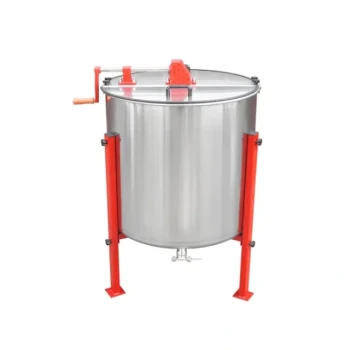
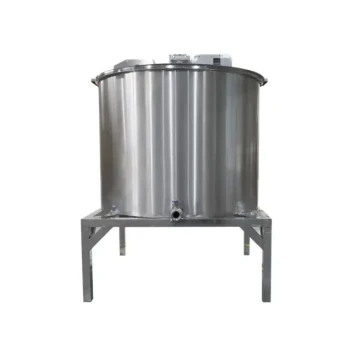
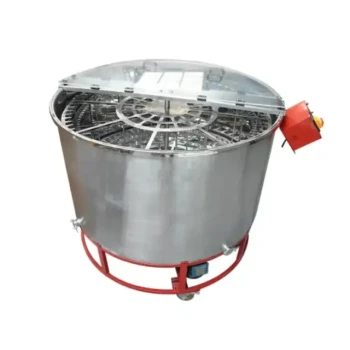
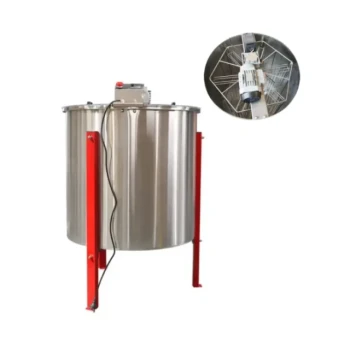
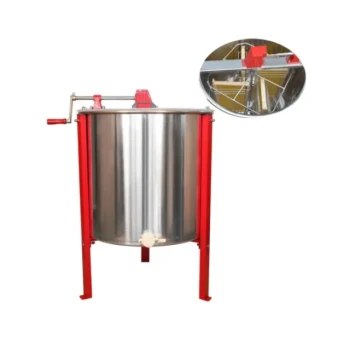
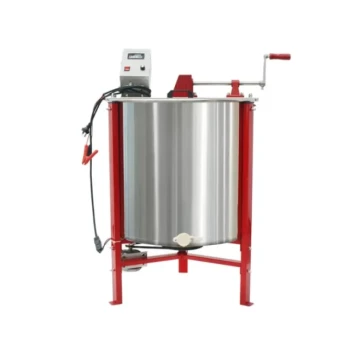
Tangential honey extractors function by positioning frames vertically with one face of the honeycomb pressed against the outer mesh basket, allowing centrifugal force to pull honey from only that outward-facing side. While this design requires you to manually stop the machine and flip the frames to extract the second side, its primary benefit is that it is exceptionally gentle on the honeycomb, minimizing the risk of structural damage or "blowouts" during spinning.
The tangential extractor presents a distinct trade-off: it sacrifices speed and workflow automation in exchange for superior protection of fragile combs, making it the preferred choice for preserving wax integrity.
The Mechanics of Tangential Extraction
Frame Positioning
Unlike radial extractors where frames sit like spokes on a wheel, tangential models position the frames flat against the drum's perimeter.
Because the comb sits flush against a mesh cage or basket, the wax structure is physically supported during the spin.
The Extraction Cycle
Since the machine acts on only one face of the comb at a time, the process is sequential rather than simultaneous.
You must extract the first side, stop the machine, physically lift and reverse the frame, and then extract the second side.
The "Three-Step" Safety Technique
To maximize the protective benefits of this design, experts recommend a specific three-step spinning process.
First, spin the first side slowly and partially to reduce the weight of the honey without breaking the comb.
Next, flip the frame and spin the second side fully at normal speed.
Finally, flip the frame back to the first side to complete the extraction.
Why This Method Protects Your Comb
Eliminating Comb Breakage
The primary advantage of tangential extraction is the physical support provided by the metal mesh basket.
Because the frames lie flat against the cage, the centrifugal force pushes the wax into the support structure rather than pulling it apart.
Preserving Energy for the Colony
By keeping the comb intact, you can return the empty frames immediately to the hive.
This allows bees to refill the existing cells rather than consuming extra nectar and energy to rebuild destroyed wax, significantly accelerating honey production.
Understanding the Trade-offs
Increased Labor and Time
The necessity of stopping, flipping, and restarting the machine makes this method significantly more labor-intensive.
Compared to radial extractors, which spin both sides simultaneously, a tangential workflow will take roughly twice as long to process the same number of frames.
Limited Capacity
Tangential extractors are generally designed for smaller operations.
Most models, whether hand-crank or electric, are built to hold between 2 and 9 frames, whereas radial models often accommodate 20 or more.
Making the Right Choice for Your Apiary
The decision between tangential and radial extraction ultimately depends on the scale of your operation and the age of your equipment.
- If your primary focus is keeping costs low: Tangential extractors are typically less expensive and smaller, making them ideal for beginners or hobbyists with limited storage.
- If your primary focus is protecting fragile comb: The tangential design offers the best support for new, soft wax or older, delicate combs that might collapse in a radial spinner.
- If your primary focus is efficiency: A radial extractor is likely a better investment, as it eliminates the manual labor of flipping frames and processes larger batches simultaneously.
For the small-scale beekeeper prioritizing wax preservation over speed, the tangential extractor remains the industry standard.
Summary Table:
| Feature | Tangential Honey Extractor Details |
|---|---|
| Mechanism | Frames sit flat against the basket; centrifugal force pulls honey from one side at a time. |
| Primary Benefit | Exceptionally gentle on honeycomb; prevents comb blowouts and structural damage. |
| Extraction Process | Sequential (Manual flipping required to extract both sides of the comb). |
| Capacity | Typically 2–9 frames; ideal for hobbyists or small-scale commercial operations. |
| Labor Intensity | Higher due to the "Three-Step" safety spinning and manual frame rotation. |
| Best Used For | New/soft wax, delicate combs, and minimizing wax rebuilding costs. |
Maximize Your Honey Harvest with HONESTBEE Professional Equipment
Preserving your beeswax is critical for colony efficiency. At HONESTBEE, we empower commercial apiaries and distributors with high-performance beekeeping tools and machinery designed for long-term durability. Whether you need specialized tangential extractors that protect your investment or automated honey-filling machines to scale your production, our comprehensive wholesale portfolio has you covered.
Ready to upgrade your apiary’s efficiency? Contact us today to explore our full spectrum of hardware and industry consumables. Let us provide the professional-grade solutions your beekeeping business deserves.
Related Products
- Electric 4 Frame Tangential Honey Extractor
- Commercial Electric 12 Frame Honey Extractor Spinner Motorized Honey Extractor
- Stainless Steel Manual 8 Frame Radial Honey Extractor Machine for Beehives
- Manual Hand Crank 4 Frame Honey Extractor Centrifuge for Beekeeping
- 6 Frame Manual Stainless Steel Honey Extractor Beekeeping Equipment
People Also Ask
- What are the characteristics of electric honey extractors? Boost Your Apiary Efficiency with Automated Technology
- What are the disadvantages of using an electric honey extractor? Weighing Cost, Power, and Comb Safety
- What are the advantages of an electric honey extractor? Boost Efficiency and Scale Your Honey Production
- What are the advantages of electric honey extractors? Boost Harvest Speed & Efficiency
- What are the technical advantages of electric honey extractors? Maximize Yield and Protect Your Bee Colony