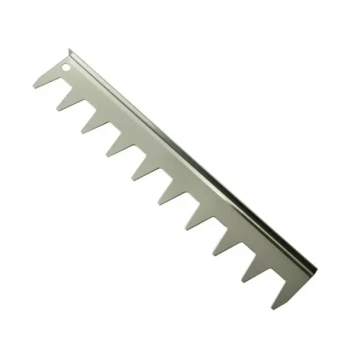
Vertical partition boards function as the critical architectural control system within three-tier beehives, fundamentally altering how a colony is managed for mass production. By physically isolating the lower brood chamber—where the queen lays eggs and larvae develop—from the upper tiers designated for honey storage, these boards create distinct functional zones. This separation allows apiarists to harvest the upper tiers without disturbing the reproductive center of the colony, preventing injury to the queen and ensuring the colony remains viable for future production cycles.
The vertical partition transforms a beehive from a simple shelter into a zoned production facility. By segregating the brood from the honey supers, it enables high-volume harvesting that simultaneously prioritizes product purity and long-term colony health.
The Mechanics of Zoned Production
Separation of Church and State
The primary function of the vertical partition is to create a physical boundary that facilitates "zoning."
The lower tier is reserved exclusively for the biological maintenance of the colony. This is where the queen resides and where new bees are raised.
Protecting the Genetic Resource
According to industry standards, protecting the queen is paramount for commercial continuity.
The partition ensures that during the chaotic process of removing heavy honey frames from the upper tiers, the queen remains safely isolated below. This eliminates the risk of accidentally removing or crushing the queen, which would otherwise halt colony growth and honey production.
Operational Continuity
In a non-partitioned hive, harvesting can disrupt the colony's internal structure, requiring a recovery period.
With vertical partitions, the colony's core population in the lower tier remains largely undisturbed during harvest. This allows the bees to immediately resume foraging and nectar collection, maximizing the yield-to-energy input ratio.
Driving Commercial Sustainability
Eliminating Destructive Harvesting
Historically, honey harvesting often involved destroying parts of the nest or killing bees to access the comb.
Vertical partitions enable a non-destructive process. Beekeepers can remove only the surplus honey stored in the upper "supers" without damaging the brood nest, significantly reducing bee mortality and preserving the colony structure.
Efficiency Through Standardization
Commercial scalability relies on uniformity. The use of partitions works in tandem with standardized movable frames.
This hardware uniformity simplifies routine inspections and disease prevention tasks. It reduces manual labor intensity, as workers know exactly where to look for the queen (bottom) and where to harvest (top), streamlining the workflow across thousands of hives.
Mechanized Compatibility
The zoning created by partitions supports the use of industrial extraction machinery.
Because the upper frames are free of brood (larvae), they can be moved directly to centrifugal extractors. This seamless integration between hive architecture and processing machinery is essential for transitioning from small-scale beekeeping to industrial operations.
Understanding the Trade-offs
increased Management Precision
While partitions simplify harvesting, they require precise management of the hive's internal space.
If the partition restricts worker bee movement too severely, it can cause congestion and reduce nectar storage rates. Beekeepers must monitor the "traffic flow" through the partition to ensure it does not become a bottleneck.
Hardware Investment
Implementing three-tier systems with vertical partitions requires a higher upfront investment in specialized hardware compared to primitive hives.
Commercial apiaries must weigh the initial cost of these standardized components against the long-term gains in labor reduction and yield stability.
Making the Right Choice for Your Operation
For commercial producers, the vertical partition is less about "keeping bees" and more about managing a biological resource efficiently.
- If your primary focus is Maximum Yield: Prioritize partitions that allow maximum worker bee flow to the upper tiers while strictly confining the queen to the bottom.
- If your primary focus is Colony Longevity: Use the partition to minimize harvest stress, ensuring the brood chamber remains a protected sanctuary during extraction cycles.
- If your primary focus is Labor Reduction: Leverage the zoning to reduce inspection times, as you rarely need to dismantle the deep brood chamber during honey flows.
By converting the chaotic nature of a bee colony into a structured, multi-tier system, vertical partitions provide the stability required for sustainable, industrial-scale agriculture.
Summary Table:
| Feature | Function in 3-Tier Hives | Impact on Commercial Sustainability |
|---|---|---|
| Zoned Architecture | Separates brood chamber from honey supers | Enables non-destructive harvesting and preserves colony health. |
| Queen Isolation | Prevents queen from entering upper tiers | Eliminates queen mortality risk during high-volume honey extraction. |
| Operational Flow | Creates functional production zones | Simplifies inspections and reduces manual labor across large apiaries. |
| Hardware Uniformity | Standardizes movable frame placement | Facilitates seamless integration with industrial honey-filling machines. |
Scaling Your Commercial Apiary?
Unlock industrial-level efficiency with HONESTBEE. We specialize in providing commercial apiaries and distributors with high-performance beekeeping tools, specialized hardware like hive-making and honey-filling machines, and essential consumables.
Whether you need to standardize your hive architecture or upgrade your processing equipment, our comprehensive wholesale offerings are designed to maximize your yield and protect your colonies.
Ready to optimize your production? Contact us today to learn how our hardware solutions can transform your beekeeping business.
References
- Richard Jones. A Short History of Beekeeping in the Ukraine. DOI: 10.1080/0005772x.2013.11417518
This article is also based on technical information from HonestBee Knowledge Base .
Related Products
- Langstroth Solid Bottom Board for Beekeeping
- Solid Bottom Board Australian Pine Wood Langstroth Bottom Board for Wholesale
- Professional Galvanized Steel Frame Rest for Beehives
- Stainless Steel 9 Frame Hive Spacer Durable Precise for Commercial Beekeeping
- Styrofoam Mini Mating Nuc Box with Frames Feeder Styrofoam Bee Hives 3 Frame Nuc Box
People Also Ask
- What are the functions of solid bottom boards for a beehive? Essential Thermal Protection and Winter Survival Tips
- What is the purpose of a solid bottom board for bee hives? Enhance Hive Health and Winter Survival
- How does climate influence the choice between a solid and screened bottom board? Optimize Your Hive for Local Weather
- What is the primary function of a bottom board in a modern modified beehive system? Essential Foundation Guide
- What are the characteristics of a solid bottom board for a beehive? Boost Colony Health and Thermal Insulation