Precision measurement and standardized extraction are the dual pillars of accurate yield assessment. Weighing methods quantify production by strictly comparing frame weights before and after extraction, while mechanical equipment ensures a uniform separation process through centrifugal force. Together, these tools isolate variables to determine exactly how secondary collection activities—such as harvesting venom or royal jelly—affect the colony's final honey output.
The Core Insight By combining the mathematical precision of differential weighing with the mechanical consistency of automated extractors, beekeepers can eliminate human variability from yield data. This provides the objective evidence needed to calculate the "quantitative relationship" between the stress of collection processes and the actual reduction or change in honey production.
The Role of Precision Weighing
Establishing a Baseline via Differential Weighing
To evaluate yield accurately, you must move beyond estimating volume. Weighing methods quantify production by recording the weight of hive frames immediately before extraction and comparing it to their weight immediately after.
Calculating True Yield
By calculating the difference between the total weight and the weight of the empty comb, the actual honey mass is precisely determined. This eliminates variables such as wax weight or frame construction differences.
Providing an Economic Basis
In commercial beekeeping, this quantitative data serves as the direct basis for economic evaluation. It allows operators to monitor colony strength and optimize feeding strategies based on exact output rather than visual estimates.
The Role of Mechanical Extraction
Standardization through Centrifugal Force
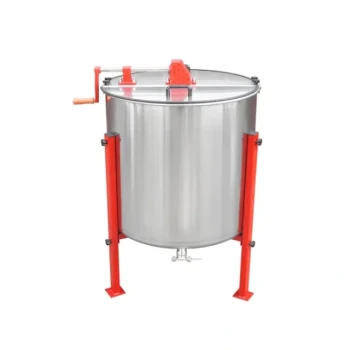
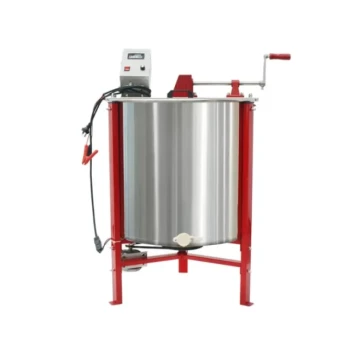
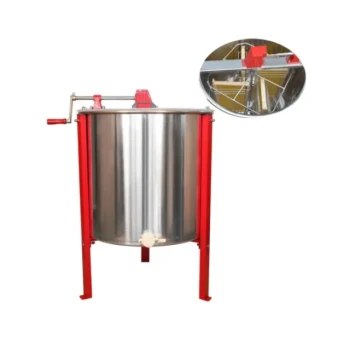
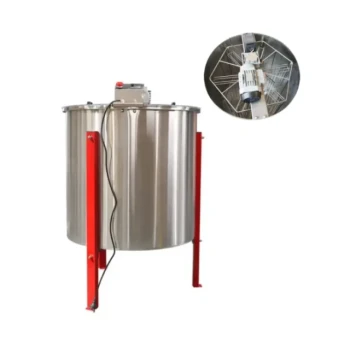
Mechanical extraction equipment uses centrifugal force to separate honey from the comb. Unlike manual methods, which can vary in intensity, mechanical extractors apply a consistent force to every frame.
Ensuring Complete Extraction
Automated extractors, particularly radial models, ensure that honey production data is based on "complete extraction." By removing honey efficiently and uniformly, the equipment ensures that the resulting data represents the colony's full potential, not the extractor's technique.
Preserving Physical Structure
High-efficiency radial extractors separate honey without damaging the wax comb's physical structure. This allows for repeatable testing on the same frames, ensuring that subsequent data collection remains consistent over time.
Connecting Data to Collection Processes
Quantifying Interference
Colonies are often subjected to "interference" during the collection of other products, such as bee venom or royal jelly. This diverts colony energy and can impact honey stores.
revealing the Quantitative Relationship
The combination of weighing and mechanical extraction reveals the specific quantitative relationship between these collection activities and honey yield. Because the extraction process is standardized, any drop in yield can be attributed to the collection interference rather than harvest inefficiencies.
Understanding the Trade-offs
Equipment Cost vs. Data Value
While mechanical extraction and precision weighing provide superior data, they represent a significant capital investment compared to manual methods. Small-scale operations must weigh the cost of automation against the need for granular data.
Maintenance and Complexity
Automated extractors require regular maintenance to ensure the "standardized" force remains constant. If the equipment is not calibrated correctly, it can introduce the very variability you are trying to eliminate.
Making the Right Choice for Your Goal
To apply these methods effectively, align your approach with your specific operational objectives:
- If your primary focus is Scientific Analysis: Prioritize the differential weighing method (pre- vs. post-extraction) to isolate the exact impact of variables like venom collection on colony productivity.
- If your primary focus is Commercial Efficiency: Prioritize high-efficiency mechanical extractors to maximize yield per hive and use the weight data to drive economic decisions and feeding schedules.
Ultimately, objective evaluation requires removing the human variable from the harvest; only when extraction is standardized can the impact of biological collection processes be truly measured.
Summary Table:
| Feature | Weighing Methods | Mechanical Extraction Equipment |
|---|---|---|
| Core Function | Quantifies mass via differential weighing | Separates honey using centrifugal force |
| Data Benefit | Eliminates variables like wax/frame weight | Ensures uniform, complete extraction |
| Yield Impact | Provides baseline for economic evaluation | Removes human variability from data |
| Key Advantage | Measures exact production mass | Preserves comb structure for reuse |
Maximize Your Colony Yield with HONESTBEE Professional Solutions
Precision in measurement and efficiency in extraction are the hallmarks of a profitable commercial apiary. At HONESTBEE, we empower commercial beekeepers and distributors with the tools needed to turn data into growth.
Our comprehensive wholesale portfolio includes:
- Advanced Machinery: High-efficiency honey-filling and specialized hive-making machines.
- Precision Equipment: Professional-grade radial extractors and beekeeping tools designed for standardization.
- Industry Consumables: A wide array of essential supplies and honey-themed cultural merchandise.
Whether you are scaling a commercial operation or supplying the industry, HONESTBEE provides the specialized hardware and expertise to optimize your honey production and evaluate collection impacts with scientific accuracy.
Ready to upgrade your extraction workflow? Contact us today to explore our wholesale machinery and equipment solutions!
References
- Naglaa A. Ghazala, Ahmed A. Taha. INFLUENCE OF BEEVENOM COLLECTION ON SOME HONEYBEE PRODUCTS. DOI: 10.21608/jppp.2014.87979
This article is also based on technical information from HonestBee Knowledge Base .
Related Products
- Commercial Electric 12 Frame Honey Extractor Spinner Motorized Honey Extractor
- 6 Frame Manual Stainless Steel Honey Extractor Beekeeping Equipment
- Stainless Steel 3 Frame Manual Honey Extractor Spinner for Bee Honey Extraction
- HONESTBEE 2 Frame Manual Acrylic Honey Extractor Beekeeping Equipment
- Electric 8 Frame Honey Spinner Extractor Equipment for Beekeeping
People Also Ask
- Who are commercial honey extractors designed for? Scaling Your Industrial Beekeeping Success
- What is a commercial honey extractor? The Essential High-Volume Solution for Large Apiaries
- How is honey extracted commercially? Maximize Your Apiary's Efficiency and Honey Yield
- What are commercial honey extractors used for? Boost Your Apiary's Efficiency & Profitability
- What are the advantages of motorized extractors? Boost Honey Production and Save Time