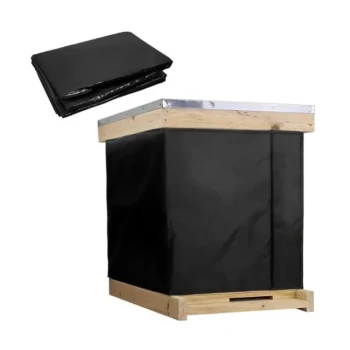
A beehive cover is a critical environmental control system that protects a colony by simultaneously retaining heat and actively venting moisture. It prevents condensation by utilizing top openings to allow warm, humid air generated by the bees to escape the hive before it contacts cold surfaces. This prevents the moisture from turning into freezing water droplets that would otherwise drip back onto the colony, causing a fatal chill.
The Core Reality Cold air alone rarely kills a healthy honey bee colony; cold water does. The beehive cover acts as a dehumidifier, prioritizing the removal of metabolic moisture to ensure the bees remain dry and capable of maintaining their winter cluster temperature.
The Mechanics of Hive Climate Control
The Source of the Moisture
Honey bees are active living organisms that generate significant heat and humidity through metabolism, especially during winter.
As the colony consumes honey to stay warm, they exhale water vapor which rises to the top of the hive.
The Danger of the "Cold Lid"
Without a specialized cover, this rising warm air hits the cold inner surface of the hive roof.
Because cold surfaces draw heat out of the air, the vapor instantly condenses into liquid water droplets.
If these droplets grow large enough, they rain down onto the bee cluster, freezing the bees and causing rapid colony loss.
How the Cover Solves the Problem
A properly functioning beehive cover utilizes top openings to facilitate continuous airflow.
These openings act as an exhaust valve, allowing the moist, warm air to exit the hive structure entirely.
By venting this air before it hits a freezing surface, the cover breaks the cycle of condensation formation.
Understanding the Trade-offs
Ventilation vs. Heat Retention
The primary challenge in hive design is balancing the need for fresh air with the need for warmth.
If a cover vents too aggressively, it may create drafts that strip away the colony's hard-earned heat, forcing them to consume more honey stores to survive.
However, if the cover prioritizes heat retention too strictly without ventilation, it becomes a moisture trap that leads to the deadly condensation described above.
The effective cover finds the middle ground: it retains enough heat to assist the cluster but sacrifices some warmth to ensure the hive remains dry.
Making the Right Choice for Your Goal
To ensure your colony survives the winter, you must prioritize dryness over absolute warmth.
- If your primary focus is avoiding winter kill: Prioritize covers with clear top ventilation or upper entrances to ensure moisture has an escape route.
- If your primary focus is resource conservation: Ensure the cover is insulated to retain heat, but never seal off the top ventilation completely.
Ultimately, a dry hive is a surviving hive.
Summary Table:
| Feature | Function in Climate Control | Impact on Colony Survival |
|---|---|---|
| Top Ventilation | Exhausts warm, humid air before it condenses | Prevents cold water from dripping on bees |
| Insulation Property | Retains cluster heat while managing airflow | Reduces honey consumption for thermoregulation |
| Environmental Seal | Blocks external rain and snow ingress | Maintains a stable internal hive microclimate |
| Breathable Design | Balances moisture removal and heat retention | Eliminates the 'Cold Lid' effect and mold growth |
Maximize Your Colony Survival Rate with HONESTBEE
Don't let moisture compromise your apiary's productivity. At HONESTBEE, we specialize in supporting commercial apiaries and distributors with high-performance beekeeping equipment designed for professional results. From precision-engineered beehive covers that master climate control to advanced hive-making and honey-filling machinery, we provide the full spectrum of tools your business needs to thrive.
Partner with HONESTBEE today for:
- Comprehensive Wholesale Solutions: Full range of beekeeping hardware and industry consumables.
- Expert Engineering: Durable machinery and specialized tools for large-scale operations.
- Industry Expertise: Cultural merchandise and equipment tailored to your specific market.
Contact our specialists now to secure your wholesale supply and enhance your apiary’s efficiency!
Related Products
- Telescopic Beehive Outer Cover Lid Roof with Galvanised Sheeting for Langstroth Hive and Beehive Outer Cover
- Inner Beehive Cover for Beekeeping Bee Hive Inner Cover
- Professional Insulated Winter Hive Wrap for Beekeeping
- Metal Bee Hive Stand Bee Box Stand for Beekeeping
- Metal Hive Feet Bee Hive Stand for Ant Protection
People Also Ask
- What is a telescoping outer cover and what are its advantages? Maximize Hive Protection in Harsh Climates
- What is the function of an outer telescoping cover on a beehive? Ultimate Weather Protection for Your Colony
- What is the purpose of the outer telescoping cover in a beehive? The Key to Weatherproofing Your Hive
- What are the benefits of the telescoping outer cover? Essential Protection for Hive Health & Longevity
- How should a telescoping outer cover be removed? Expert Techniques for Smooth Beekeeping Operations