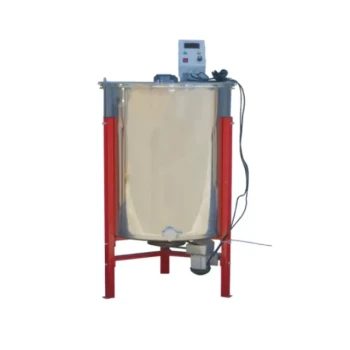
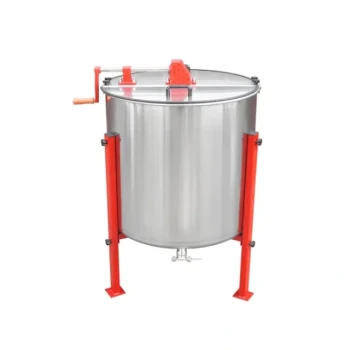
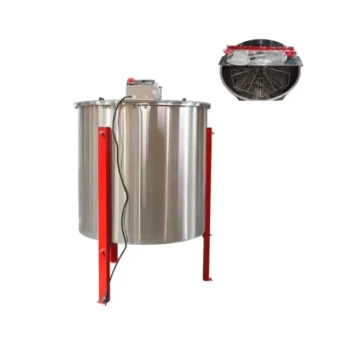
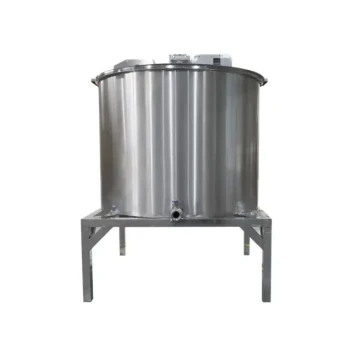
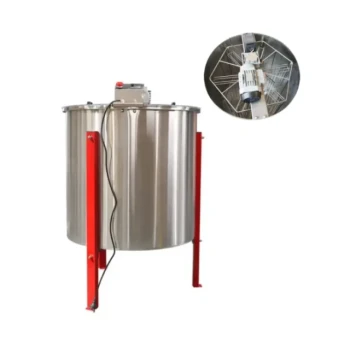
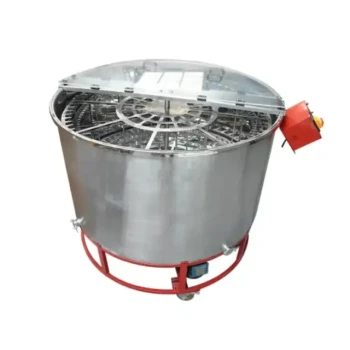
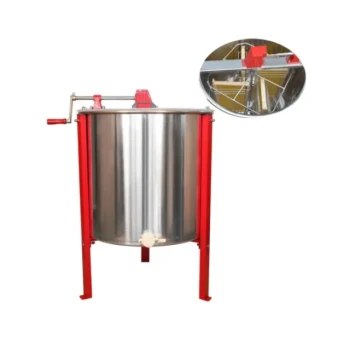
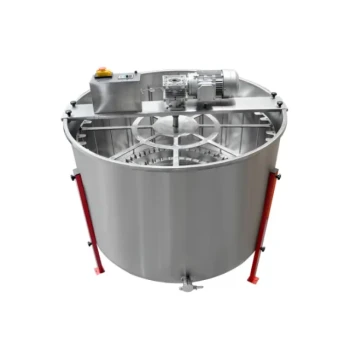
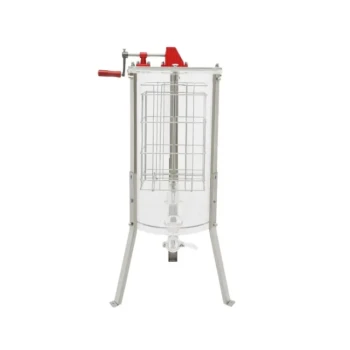
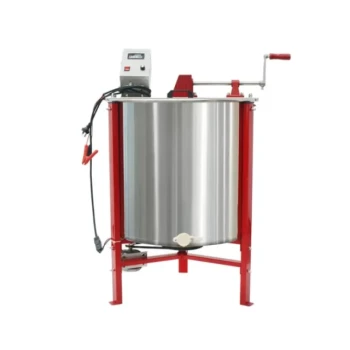
Centrifugal Honey Extractors dramatically increase efficiency by utilizing high-speed rotational force to separate honey from the comb without physical destruction. Unlike traditional pressing methods that crush and ruin the wax infrastructure, this technique preserves the honeycomb frames entirely.
Core Insight: The true efficiency of a centrifugal extractor is not just in the speed of harvesting, but in the preservation of the comb. By returning intact frames to the hive, you allow bees to bypass the energy-intensive process of rebuilding wax, enabling them to focus immediately on refilling the cells with nectar.
The Mechanics of Extraction vs. Pressing
Non-Destructive Separation
Traditional pressing methods rely on squeezing or crushing the hive structure to release honey. This effectively destroys the comb, forcing the beekeeper to harvest wax debris alongside the honey.
Utilizing Centrifugal Force
In contrast, a centrifugal extractor spins the frames at high speeds. This generates sufficient force to expel the honey outwards while keeping the delicate structural integrity of the wax honeycomb completely intact.
The Biological Multiplier Effect
Eliminating the Reconstruction Phase
The most critical efficiency gain occurs after the harvest. Because the combs are not destroyed, they can be returned to the beehive for immediate reuse.
Redirecting Metabolic Energy
Bees consume significant amounts of energy and honey resources to secrete wax and build new combs. By eliminating the need for reconstruction, the colony's energy is redirected toward gathering nectar.
Increased Cycle Frequency
This conservation of bee energy shortens the turnaround time between harvests. Consequently, the total annual honey yield increases significantly because the colony spends more time producing honey and less time building infrastructure.
Quality and Purity Advantages
Preventing Contamination
Traditional pressing often releases impurities, larval fluids, or excessive wax debris into the final product. Centrifugal extraction separates the honey cleanly.
Preserving Active Ingredients
Because the process does not require heating or crushing, it preserves the transparency and natural active ingredients of the honey, ensuring it meets higher market standards for purity.
Understanding the Trade-offs
Equipment Complexity and Cost
While pressing is a low-tech, low-cost method requiring minimal equipment, centrifugal extractors are mechanized. They require a higher initial investment and maintenance of moving parts (motors or hand-cranks) compared to simple press filtration.
Storage Space Requirements
Centrifugal extractors are typically larger and bulkier than pressing equipment. For hobbyists with extremely limited space or very few hives, the spatial footprint of the machine may be a consideration.
Making the Right Choice for Your Goal
To determine if this efficiency aligns with your operation, consider your primary objectives:
- If your primary focus is maximum yield: Invest in a centrifugal extractor to preserve combs and minimize the "downtime" bees spend rebuilding wax.
- If your primary focus is purity and presentation: Use centrifugal extraction to avoid the cloudiness and impurities associated with crushed-comb pressing methods.
By preserving the bees' hard work rather than destroying it, you transform the hive from a construction site back into a production line.
Summary Table:
| Feature | Centrifugal Extraction | Traditional Pressing |
|---|---|---|
| Comb Condition | Preserved & Reusable | Destroyed/Crushed |
| Bee Energy Use | Focused on Nectar Collection | Wasted on Wax Reconstruction |
| Honey Purity | High (Clean separation) | Lower (Contains wax & debris) |
| Yield Frequency | Faster cycles, higher volume | Slower, one-time production |
| Equipment Cost | Higher Initial Investment | Low-tech/Low-cost |
Scale Your Honey Production with HONESTBEE
Are you ready to transition from manual labor to industrial efficiency? HONESTBEE specializes in empowering commercial apiaries and distributors with the high-performance tools needed to dominate the market.
Our comprehensive wholesale range includes:
- Advanced Extraction Machinery: From high-speed centrifugal extractors to automated honey-filling lines.
- Hardware & Tools: Specialized hive-making machines and durable beekeeping equipment.
- Consumables & Merchandise: A full spectrum of essential supplies and honey-themed cultural products.
By choosing HONESTBEE, you don't just buy equipment—you gain a partner dedicated to maximizing your colony's productivity and your business's ROI. Contact our wholesale specialists today to discuss custom equipment solutions tailored to your operation!
References
- Dinku Negash, Amare Argaw. Demonstration and participatory evaluation of apiculture technologies in Sidama national regional state, Ethiopia. DOI: 10.56781/ijsrls.2022.1.1.0021
This article is also based on technical information from HonestBee Knowledge Base .
Related Products
- electric honey extractor honey centrifuge 3 frame honey extractor stainless steel honey frame extractor
- Manual Hand Crank 4 Frame Honey Extractor Centrifuge for Beekeeping
- Professional 4 Frame Self Reversing Electric Honey Extractor for Beekeeping
- 24 Frame Honey Extractor Commercial Radial Honey Frame Extraction Machine
- Electric 4 Frame Tangential Honey Extractor
People Also Ask
- What are the characteristics of electric honey extractors? Boost Your Apiary Efficiency with Automated Technology
- What are the disadvantages of using an electric honey extractor? Weighing Cost, Power, and Comb Safety
- What are the advantages of an electric honey extractor? Boost Efficiency and Scale Your Honey Production
- What are the technical advantages of electric honey extractors? Maximize Yield and Protect Your Bee Colony
- How does an electric honey extractor affect the quality of honey? Preserve Flavor & Purity with Precision Extraction