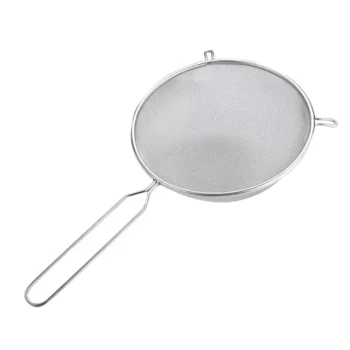
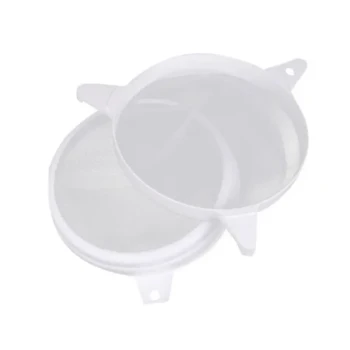
The primary mechanism for customization in honey filtering machines is the use of interchangeable filters with varying mesh sizes. By selecting specific screen densities, producers can precisely control the balance between product clarity and the retention of natural particulate matter, effectively tailoring the final product to meet specific market standards.
Honey filtration is not a one-size-fits-all process; it is a strategic choice between visual perfection and biological integrity. By adjusting filtration levels, producers can tailor their output to range from raw, enzyme-rich artisan products to crystal-clear, shelf-stable commercial honey.
The Mechanics of Customization
Variable Mesh Densities
The core feature allowing for customization is the ability to swap filter screens. Beekeepers can choose coarse screens to allow pollen and heavy enzymes to pass through, or ultra-fine screens to strip out almost all particulate matter.
Multi-Stage Precision
Advanced industrial machines often utilize a multi-stage process. The honey passes through progressively finer screens. This step-down approach ensures that large debris (like wax or bee parts) is removed first, preventing the finer mesh from clogging and ensuring a consistent flow rate.
Controlled Temperature Integration
While mesh size controls what passes through, temperature controls how it passes. Many machines heat the honey slightly to liquefy crystals and lower viscosity. This allows for finer filtration without the excessive pressure that might otherwise be required, preserving the honey's texture.
Impact on Product Quality and Value
Enhancing Visual Appeal
For the commercial market, clarity is often equated with quality. Filtering machines remove wax residues, larvae fragments, and microscopic crystals. This results in a "polished" product with high transparency, which is often required for high-end retail and export markets.
Managing Crystallization
Honey naturally crystallizes over time due to suspended particles acting as nucleation sites. By filtering out these micro-particles, the machine significantly delays crystallization. This ensures the product remains liquid and visually appealing on the shelf for longer periods.
Standardization and Hygiene
Manual squeezing methods are inconsistent and pose contamination risks. Mechanical filtration creates a standardized product that meets international food safety standards. It ensures that every batch meets the same physicochemical indicators, which is critical for medium to large-scale operations.
Understanding the Trade-offs
Clarity vs. "Raw" Status
There is an inverse relationship between clarity and the definition of "raw" honey. Aggressive filtration (very fine mesh) produces clear honey but may remove beneficial pollen. If your target market values "raw" honey, you must use a coarser mesh to ensure pollen retention.
The Risk of Over-Processing
While machines are designed to preserve nutrients, improper use can degrade quality. If the integrated heating system is set too high in an attempt to speed up filtration through a fine mesh, it can destroy natural enzymes and flavor profiles.
Making the Right Choice for Your Goal
To maximize the value of your honey, you must align your filtration strategy with your target consumer.
- If your primary focus is Mass Market Retail: Use fine mesh screens to maximize clarity and shelf stability, preventing crystallization that average consumers often mistake for spoilage.
- If your primary focus is Health & Wellness Markets: Use coarser mesh screens to remove only physical debris (wax/bee parts) while retaining pollen and enzymes to label the product as "raw."
The machine does not just clean the honey; it defines the product's identity.
Summary Table:
| Customization Feature | Control Mechanism | Target Outcome |
|---|---|---|
| Filtration Density | Interchangeable Mesh Screens | Balances visual clarity vs. pollen retention |
| Processing Stages | Multi-stage Step-down | Efficient debris removal without mesh clogging |
| Temperature Control | Integrated Heating | Optimizes viscosity for smooth, high-speed flow |
| Crystallization Rate | Micro-particle Removal | Delays natural granulation for longer shelf life |
| Product Identity | Coarse vs. Fine Filtering | Defines honey as 'Raw/Artisan' or 'Commercial/Polished' |
Elevate Your Honey Production with HONESTBEE
At HONESTBEE, we specialize in empowering commercial apiaries and distributors with high-performance beekeeping machinery and tools. Whether you need to produce crystal-clear commercial honey or enzyme-rich raw products, our advanced honey filtering machines and honey-filling systems provide the precision your brand demands.
From industrial-grade hardware to essential consumables and honey-themed cultural merchandise, we offer a comprehensive wholesale portfolio designed to scale your business. Our expertise ensures your honey meets international food safety standards while maintaining the perfect texture and quality.
Ready to enhance your processing efficiency? Contact us today to discover how our wholesale solutions can grow your apiary operation!
Related Products
- Professional Stainless Steel Honey Filtering Machine with Water Bath Heating for Beekeeping
- Electric Double Wall Honey Filtering Machine Purifier Equipment for Honey Processing Plant
- Automatic Honey Filling and Filtering Machine for Beekeeping Bottle Filling
- Honey Concentrating and Filtering Dehumidifier Machine 2T Capacity for Honey
- 0.5T Capacity Honey Dehumidifier Dryer with Vacuum Heating and Thickening Filtering Machine
People Also Ask
- Why is filtering honey an important step in honey processing? Ensure Purity, Clarity & Marketability
- Is it necessary to filter honey after extraction? A Guide to Straining vs. Raw Honey
- What is the best way to filter honey? A Guide to Quality, Clarity, and Raw Preservation
- Why do people filter honey? For Clarity, Stability, and Consumer Appeal
- What are the benefits of using honey filters? Achieve Purity, Efficiency, and Market Appeal