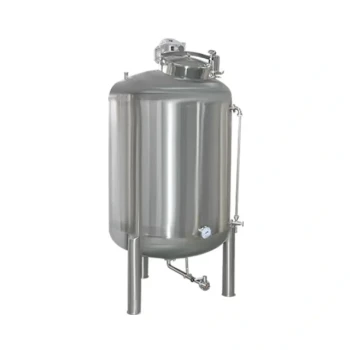
A Honey Settling Tank effectively improves sensory quality by utilizing gravity to physically separate impurities from the liquid honey. This process removes visual imperfections like wax particles and air bubbles, resulting in a clear, transparent product with a smooth consistency.
By facilitating the natural buoyancy of debris and air bubbles, settling tanks transform cloudy, raw extraction into the crystal-clear, high-purity product required for commercial grading.
The Mechanism of Purification
Gravity Sedimentation
The primary function of a settling tank, often called a maturator, is to allow the honey to enter a stationary phase. During this rest period, gravity acts on the mixture.
Because honey is dense, lighter impurities such as wax particles, pollen grains, and tiny air bubbles become buoyant. These impurities slowly rise to the surface, forming a foam or scum layer that operators can easily skim off.
Thermal Assistance
Viscosity—the thickness of the honey—is the main barrier to effective settling. Many modern settling tanks are equipped with heating elements to gently warm the honey.
Heat reduces viscosity, making the honey more fluid. This acceleration allows impurities and trapped air to rise to the surface much faster, ensuring a cleaner product in less time.
Enhancing Visual and Textural Appeal
Achieving Commercial Transparency
The presence of micro-bubbles and fine suspended solids creates a "cloudy" appearance in raw honey. The settling process removes these obstructions, resulting in the high transparency and clarity required for commercial standards.
Improving Texture and Mouthfeel
Raw extraction often introduces larval fragments and wax debris that can make honey feel gritty or inconsistent. By filtering out these physical contaminants, the settling tank ensures a uniform, smooth texture.
This physical clarification directly impacts the grading evaluation and final selling price, as consumers and buyers associate clarity with purity.
Common Pitfalls to Avoid
Material Reactivity and Off-Flavors
The construction material of the tank is critical for sensory preservation. Honey is naturally acidic.
If the tank is made of reactive metals (like tin) without a protective lining, the acid can react with the container. This chemical reaction frequently leads to metallic off-flavors and undesirable color changes in the final product.
Hygiene and Spoilage
Settling takes time, and improper sanitation can ruin the batch. If the tank is not thoroughly cleaned between batches, residual honey can harbor microbial activity.
This can lead to spoilage or fermentation, which introduces sour, yeast-like flavors that destroy the honey's sensory profile.
Making the Right Choice for Your Goal
To maximize the quality of your final product, match your processing method to your market requirements.
- If your primary focus is Commercial Retail: Prioritize a heated settling tank to achieve maximum transparency and brilliance, as shelf appeal drives consumer confidence.
- If your primary focus is Flavor Preservation: Ensure your tank is made of food-grade stainless steel or lined material to prevent acidic reactions that cause metallic off-flavors.
Ultimately, the settling tank acts as the final polish, bridging the gap between raw extraction and a shelf-ready commodity.
Summary Table:
| Feature | Impact on Sensory Quality | Benefit to Final Product |
|---|---|---|
| Gravity Sedimentation | Removes wax, pollen, and debris | Increases transparency and visual purity |
| Air Bubble Removal | Eliminates micro-bubbles/foam | Creates a clear, crystal-like appearance |
| Thermal Assistance | Reduces viscosity for faster settling | Ensures smooth, grit-free mouthfeel |
| Material Integrity | Prevents acidic reactions | Preserves natural flavor and prevents off-tastes |
| Hygienic Design | Minimizes microbial risk | Prevents fermentation and flavor spoilage |
Elevate Your Honey Quality with HONESTBEE
For commercial apiaries and honey distributors, the final polish of your product determines its market value. At HONESTBEE, we provide professional-grade beekeeping machinery and tools designed to meet the highest industry standards. From food-grade honey settling tanks and filling machines to specialized hive-making equipment and essential consumables, we offer a comprehensive wholesale portfolio tailored to your growth.
Ready to scale your production? Partner with us for reliable equipment that ensures every drop of your honey is shelf-ready and superior in quality. Contact HONESTBEE today for wholesale solutions!
References
- Sahin Aydin, Serhat Solmaz. An Ontology for Apiculture Practices (Onto4API): Towards Semantic Interoperability and Knowledge Sharing in the Apiculture Community. DOI: 10.18615/anadolu.1749470
This article is also based on technical information from HonestBee Knowledge Base .
Related Products
- Stainless Steel Honey Storage and Settling Tank with Double Strainer
- Stainless Steel Honey Storage Tank with Lid for Honey
- Heavy Duty Stainless Steel Honey Processing Machine Decrystallizing Tank
- Professional Honey Storage Tank with Agitation System
- Stainless Steel Heated Honey Tank Warming Heating Tank
People Also Ask
- What economic role do honey storage tanks play? Boost Your Revenue Through Strategic Inventory Management
- What roles do industrial honey storage tanks and filtration meshes play in processing? Ensure Purity & Consistency
- What is the purpose of a honey storage tank? Streamline Your Honey Processing for Quality & Efficiency
- What role do settling tanks play in honey production? Achieve Pure, High-Clarity Honey Naturally
- Why are large settling tanks used in the honey clarification process? Achieve Natural Purity & Batch Consistency