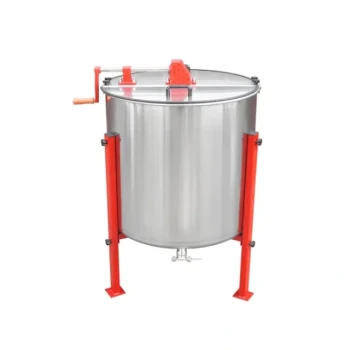
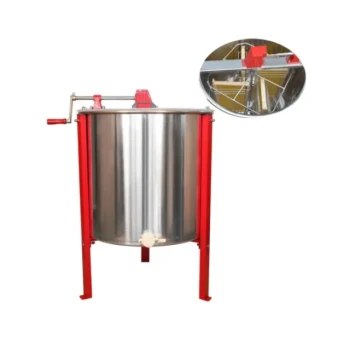
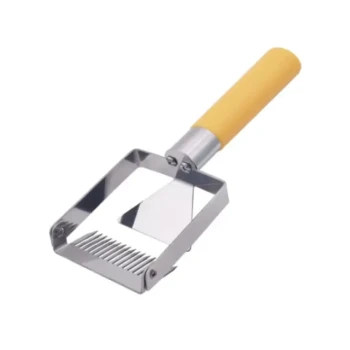
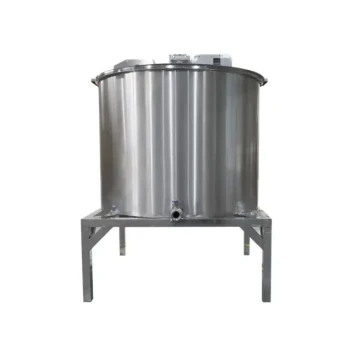
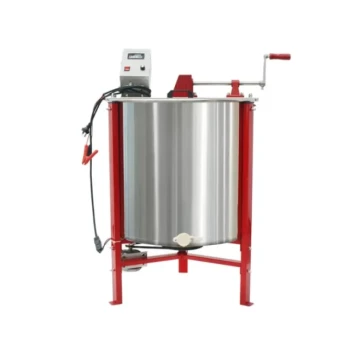
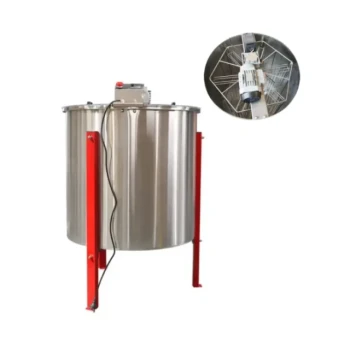
A manual honey harvester serves as a critical diagnostic tool for beekeeping operations to quantify the return on investment of supplemental feeds. By utilizing centrifugal force to extract honey without damaging the structural integrity of the honeycomb frames, it allows for the precise, independent weighing of yields from different experimental groups to determine if specific feeding regimens translate into tangible production gains.
Manual extractors provide the empirical evidence required to validate supplemental feeding programs, ensuring that the transition from nutritional supplements to honey production is accurately measured and verified for commercial scalability.
The Mechanics of Performance Measurement
Centrifugal Force and Yield Isolation
A manual honey harvester uses centrifugal force to separate mature honey from the combs within supers. This process is essential for research and evaluation because it ensures that honey yields from different experimental groups are collected independently.
By isolating the harvest of a specific group, beekeepers can directly weigh the output. This provides the primary evidence needed to determine if a specific supplemental feed effectively increases honey production compared to a control group.
Maintaining Frame Integrity for Repeatable Trials
The manual extraction process is designed to protect the beeswax frame structure. Because the frames remain intact, they can be immediately returned to the hive for reuse by the colony.
This preservation is vital for long-term feeding studies. It ensures that the bees' energy is focused on processing new nectar or supplements rather than rebuilding the structural "infrastructure" of the hive.
Validating Supplemental Feeding Through Data
Quantifying the Feed-to-Honey Conversion
Supplemental feeding is often used to maintain hive weight or stimulate growth when natural nectar is scarce. The manual harvester acts as the final "metering" device that proves whether that feed was a cost-effective investment.
By comparing the total honey production between groups receiving supplements and those that do not, operations can scientifically verify the contribution of specific formulas. This data-driven approach is essential for commercial beekeepers who must justify the expense of large-scale feeding.
Integrating Specialized Monitoring Equipment
To achieve the most accurate evaluation of supplemental feed, the harvester is often used alongside other monitoring tools. Pollen traps, for example, can limit natural intake to ensure the data reflects the impact of the artificial supplement rather than local flora.
When combined with high-precision filling and metering equipment, the manual harvester becomes part of a comprehensive "one-stop" system for yield management. This full-spectrum approach allows for the discovery of the most productive legume-based or protein-rich feeding formulas.
Understanding the Trade-offs
Manual Labor vs. Operational Scale
While manual extractors are excellent for isolating experimental batches, they are inherently more labor-intensive than electric models. This makes them ideal for controlled trials and smaller high-precision batches but less efficient for massive, non-experimental harvests.
Material Selection and Hygiene
The use of food-grade stainless steel is non-negotiable for professional evaluation. Lower-quality materials can corrode or contaminate the honey, skewing the weight data and compromising the purity of the yield being measured.
Making the Right Choice for Your Goal
How to Apply This to Your Portfolio
As a distributor or wholesaler, understanding how these tools interact allows you to offer more than just hardware; you offer a solution for productivity.
- If your primary focus is supporting research-driven beekeeping: Prioritize stainless steel manual extractors that emphasize frame preservation to ensure long-term trial consistency.
- If your primary focus is providing a comprehensive feeding solution: Market the harvester alongside supplemental feeds and pollen traps as a "verification kit" for commercial yield testing.
- If your primary focus is rapid fulfillment for seasonal demands: Leverage our ultra-fast delivery and deep inventory to ensure your customers have extraction equipment ready the moment their feeding trials conclude.
By positioning the manual harvester as a validation tool for nutrition, you empower your clients to make data-backed decisions that drive hive productivity and business growth.
Summary Table:
| Feature | Benefit for Evaluation | Impact on Commercial ROI |
|---|---|---|
| Centrifugal Extraction | Isolates yields from specific test groups | Accurate feed-to-honey conversion data |
| Frame Preservation | Keeps beeswax structures intact for reuse | Lower energy costs and repeatable trials |
| Manual Control | Allows for high-precision, small-batch testing | Validates formula effectiveness before scaling |
| Material Purity | Food-grade stainless steel prevents contamination | Ensures integrity of yield weight and data |
Scale Your Inventory with HONESTBEE’s One-Stop Sourcing Solutions
Empower your clients with the data they need to drive hive productivity. HONESTBEE specializes in supporting distributors and B2B resellers with a comprehensive, full-spectrum portfolio of beekeeping tools, specialized machinery—like honey-filling and hive-making equipment—and essential consumables.
Why partner with us?
- Comprehensive Wholesale Offering: From hardware to cultural merchandise, get everything in one place.
- Fast-Track Fulfillment: Leverage our ultra-fast delivery and rapid response times to meet seasonal demands.
- Expertise & Reliability: Benefit from deep industry knowledge and premium trading services designed to maximize your profit margins.
Ready to enhance your product lineup with high-performance equipment? Contact us today to explore our wholesale catalog!
References
- Wagh AA, Karry Su. Effect of supplementary diets on Apis mellifera colonies. DOI: 10.33545/26174693.2024.v8.i10so.2711
This article is also based on technical information from HonestBee Knowledge Base .
Related Products
- 6 Frame Manual Stainless Steel Honey Extractor Beekeeping Equipment
- HONESTBEE 4 Frame Manual Self Reversing Honey Extractor for Beekeeping
- HONESTBEE 3-Frame Manual Acrylic Honey Extractor
- Stainless Steel 3 Frame Manual Honey Extractor Spinner for Bee Honey Extraction
- HONESTBEE 2 Frame Manual Acrylic Honey Extractor Beekeeping Equipment
People Also Ask
- How do you manually extract honey? Choose the Best Method for Your Hive
- What is a manual honey extractor? The Essential Guide to Cost-Effective Beekeeping for Beginners
- Why are manual extractors popular among beginner beekeepers? A Guide to Starting Simple & Saving Money
- What are the disadvantages of a manual honey extractor? Overcome Efficiency Bottlenecks in Your Apiary
- Which type of honey extractor is generally more durable? Focus on Material & Build Quality for Longevity