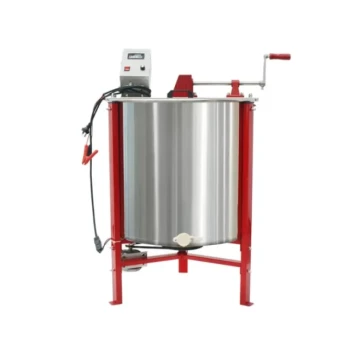
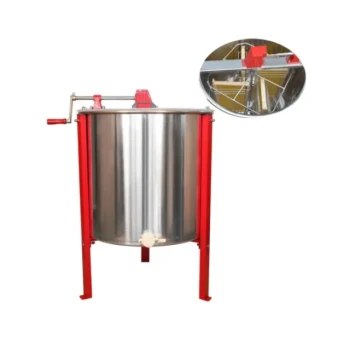
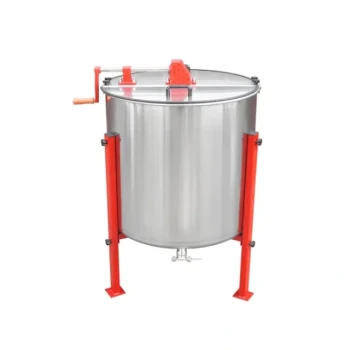
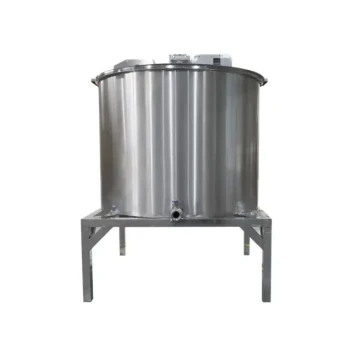
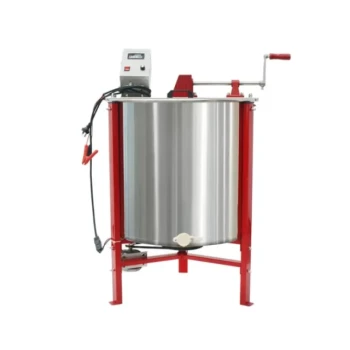
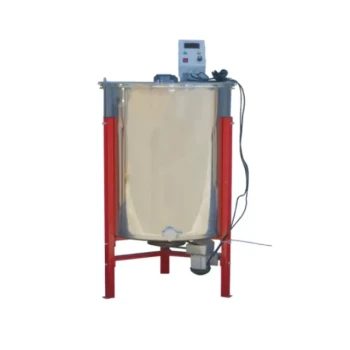
A mechanized honey extractor serves as the economic engine of modern beekeeping by utilizing centrifugal force to separate honey from the comb without damaging the wax structure. This preservation is critical because it allows beekeepers to return intact honeycombs to the hive for immediate reuse, fundamentally shifting the colony's energy expenditure from infrastructure building to resource gathering.
The Core Efficiency Principle The economic value of an extractor lies in "biological conservation." By preserving the wax comb, you eliminate the massive energy cost bees incur to rebuild it, directly converting that saved energy into higher honey yields and shorter production cycles.
The Mechanics of Preservation
Centrifugal Force Technology
The extractor operates by spinning honeycomb frames at high speeds. This generates centrifugal force that pulls the liquid honey out of the cells.
Structural Integrity
Unlike traditional harvesting methods that rely on crushing or squeezing the comb, this process leaves the delicate wax structure physically intact. The frame remains ready for immediate re-inhabitation by the colony.
The Economic Impact: Wax vs. Honey
Reducing Biological Overhead
Bees must consume a significant amount of honey to produce a small amount of beeswax. When a comb is destroyed during harvesting, the colony must consume its own stores to rebuild that infrastructure.
Converting Energy to Profit
By returning empty, intact combs to the hive, you remove the need for wax secretion. The bees can bypass the reconstruction phase and immediately begin filling the cells with nectar, maximizing the volume of saleable product.
Shortening Production Cycles
Because the bees do not need to spend time rebuilding the nest, the interval between harvests is significantly reduced. This allows professional operations to achieve multiple harvests in a single season, drastically increasing total annual yield.
Industrial Scalability and Hygiene
Achieving Volume
For medium to large-scale operations, mechanized (electric) extractors are essential for throughput. They allow for the rapid processing of high volumes of frames that manual methods cannot match.
Enhancing Product Purity
Traditional crushing methods often introduce impurities, such as larvae or wax particles, into the honey. Centrifugal extraction separates the liquid cleanly, resulting in a higher quality, more hygienic product that requires less filtration.
Understanding the Trade-offs
Capital Investment vs. Scale
While mechanized extractors are efficient, they represent a higher upfront cost compared to manual methods. For very small or hobbyist operations, the cost of a high-capacity electric extractor may not be justified by the increase in yield.
Maintenance Requirements
Mechanized equipment introduces moving parts and motors that require maintenance. Operators must balance the efficiency gains with the need for reliable power sources and potential repair costs.
Making the Right Choice for Your Goal
To maximize the economic efficiency of your operation, consider the following regarding extraction equipment:
- If your primary focus is Maximum Commercial Yield: Invest in a high-capacity electric centrifugal extractor to minimize hive downtime and maximize the number of harvests per season.
- If your primary focus is Budget Management for Small Apiaries: A manual centrifugal extractor will still provide the critical benefit of comb preservation without the high capital cost of an electric motor.
Ultimately, the extractor is not just a harvesting tool; it is a resource management device that compounds your yield by preserving the labor of your bees.
Summary Table:
| Feature | Impact on Efficiency | Economic Benefit |
|---|---|---|
| Centrifugal Force | Separates honey while keeping wax combs intact. | Saves bees energy on reconstruction. |
| Comb Preservation | Allows immediate reuse of honeycomb frames. | Shorter intervals between harvests. |
| High Throughput | Processes large volumes of frames rapidly. | Scalable for commercial operations. |
| Hygienic Extraction | Separates liquid cleanly with fewer impurities. | Higher product purity and less filtration. |
| Electric Motor | Reduces manual labor and increases speed. | Lower labor costs per kg of honey. |
Elevate Your Honey Production with HONESTBEE
Maximize your apiary's profitability by leveraging the industry's most efficient extraction technology. At HONESTBEE, we specialize in empowering commercial apiaries and distributors with high-performance mechanized honey extractors, honey-filling machines, and comprehensive hive-making equipment. Whether you are scaling a professional operation or supplying the market, our wholesale range of beekeeping tools and essential consumables ensures you achieve maximum yield with superior hygiene.
Ready to optimize your harvest and reduce downtime? Contact us today to explore our full spectrum of specialized hardware and custom machinery designed for your success.
References
- Nicholaus Musimu Kuboja, Fredy Kilima. Adoption and impacts of improved beehive technologies in the miombo woodland of Tanzania. DOI: 10.1080/20421338.2020.1815943
This article is also based on technical information from HonestBee Knowledge Base .
Related Products
- Commercial Electric 12 Frame Honey Extractor Spinner Motorized Honey Extractor
- Stainless Steel 3 Frame Manual Honey Extractor Spinner for Bee Honey Extraction
- Stainless Steel Manual 8 Frame Radial Honey Extractor Machine for Beehives
- 2 Frame Stainless Steel Manual Honey Spinner Extractor for Beekeeping
- HONESTBEE 6 Frame Three Use Electric Honey Extractor for Beekeeping
People Also Ask
- Who are commercial honey extractors designed for? Scaling Your Industrial Beekeeping Success
- What is a commercial honey extractor? The Essential High-Volume Solution for Large Apiaries
- How is honey extracted commercially? Maximize Your Apiary's Efficiency and Honey Yield
- What are commercial honey extractors used for? Boost Your Apiary's Efficiency & Profitability
- What are the advantages of motorized extractors? Boost Honey Production and Save Time