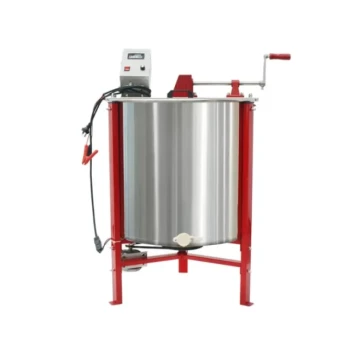
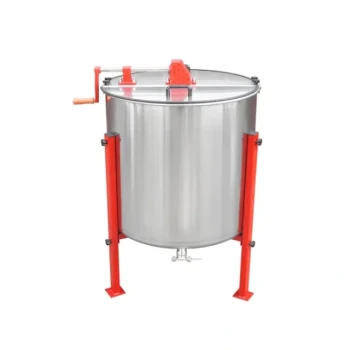
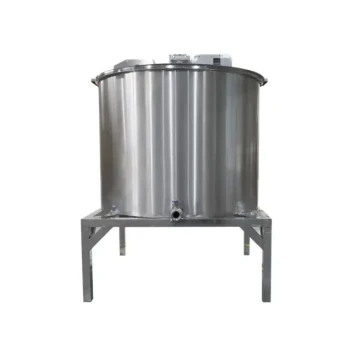
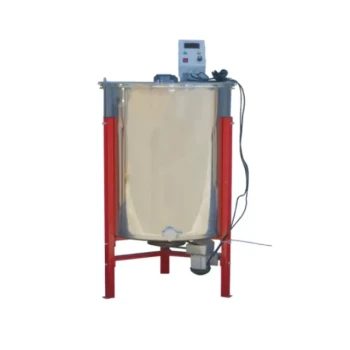
A mechanized honey extractor functions by utilizing centrifugal force to separate liquid honey from the honeycomb structure. Rather than crushing the comb to release its contents, the device spins the frames at high speeds, forcing the honey out of the cells while leaving the delicate wax architecture completely intact.
The true value of this technology lies in resource conservation. By preserving the honeycomb, you eliminate the need for bees to rebuild their nests, allowing the colony to redirect massive amounts of energy from wax secretion to honey production.
The Mechanics of Extraction
Utilizing Centrifugal Force
The core mechanism is simple physics. The extractor spins the honey frames, creating centrifugal force that pulls the honey outward.
This force overcomes the surface tension holding the honey inside the cells. The honey creates a clean separation from the wax, hitting the walls of the extractor and draining to the bottom for collection.
Preservation of Structural Integrity
Unlike traditional manual methods that often involve crushing or squeezing the comb, a mechanized extractor is non-destructive.
The physical structure of the beeswax remains undamaged throughout the process. This structural preservation is the fundamental prerequisite for the efficiency gains discussed below.
The Impact on Hive Efficiency
Eliminating the "Rebuild" Phase
When you harvest honey by crushing the comb, the bees must rebuild the entire structure before they can store honey again.
Using an extractor allows you to return empty, intact honeycombs directly to the beehive. The bees can immediately begin cleaning and refilling these cells, effectively skipping the reconstruction phase of the cycle.
Energy Conservation
Wax production is biologically expensive. Worker bees consume significant amounts of honey and energy to secrete the wax needed to build combs.
By recycling the combs, you save the bees from this energy-intensive process. This prevents the colony from consuming excessive honey stores for construction, directly improving the net yield of your harvest.
Shortening the Production Cycle
Because the bees are not bogged down by construction duties, the turnaround time for filling a frame is drastically reduced.
This optimization significantly shortens the overall production cycle, allowing for more frequent harvests within a single season compared to destructive harvesting methods.
Understanding the Trade-offs
The Requirement of Uncapping
The extractor cannot pull honey through the wax caps that bees place over filled cells.
You must manually or mechanically uncap the combs before placing them in the extractor. Attempting to extract capped frames will result in zero yield and potential balance issues during rotation.
Speed Control is Critical
While high speed is necessary for extraction, excessive speed can damage the very combs you are trying to save.
If the centrifugal force is too high, it can blow out the wax foundation. Stable rotation speed control is essential to balance extraction efficiency with comb preservation.
Making the Right Choice for Your Goal
To maximize the benefits of a mechanized extractor, align your usage with your specific production goals:
- If your primary focus is increasing yield: Prioritize returning wet, extracted combs to the hive immediately, as this stimulates the bees to refill them without wasting resources on wax secretion.
- If your primary focus is process efficiency: Ensure your extractor has variable speed controls to process different viscosities of honey without damaging the comb structure, minimizing downtime for repairs.
By shifting the workload from construction to collection, a mechanized extractor transforms the biological energy of the hive into tangible production gains.
Summary Table:
| Feature | Mechanical Extraction Benefit | Impact on Productivity |
|---|---|---|
| Mechanism | Centrifugal Force | Separates honey without destroying the wax structure. |
| Comb Integrity | Non-Destructive | Allows frames to be reused immediately by the colony. |
| Bee Energy | Conservation | Bees focus on collection rather than wax secretion. |
| Cycle Time | Rapid Refilling | Shortens the time between harvests significantly. |
| Yield Control | Variable Speed | Minimizes wax blowouts while maximizing honey recovery. |
Scale Your Apiary Success with HONESTBEE
Maximize your honey production and protect your colony's resources with high-performance extraction technology. HONESTBEE specializes in supporting commercial apiaries and distributors with a robust selection of professional beekeeping machinery, including precision honey-filling machines and automated extractors.
From essential hardware to industrial-grade consumables, our wholesale offerings are designed to streamline your operations and enhance your market value. Experience the benefits of a more efficient harvest—contact our expert team today to find the perfect equipment for your business.
References
- Gebremichael Belets, G Berhanu. Analysis of access to apiculture supporting services by smallholder farmers in northern Ethiopia. DOI: 10.5897/jdae2014.0565
This article is also based on technical information from HonestBee Knowledge Base .
Related Products
- Commercial Electric 12 Frame Honey Extractor Spinner Motorized Honey Extractor
- Stainless Steel 3 Frame Manual Honey Extractor Spinner for Bee Honey Extraction
- Stainless Steel Manual 8 Frame Radial Honey Extractor Machine for Beehives
- 2 Frame Stainless Steel Manual Honey Spinner Extractor for Beekeeping
- HONESTBEE 6 Frame Three Use Electric Honey Extractor for Beekeeping
People Also Ask
- Who are commercial honey extractors designed for? Scaling Your Industrial Beekeeping Success
- What is a commercial honey extractor? The Essential High-Volume Solution for Large Apiaries
- How is honey extracted commercially? Maximize Your Apiary's Efficiency and Honey Yield
- What are commercial honey extractors used for? Boost Your Apiary's Efficiency & Profitability
- What are the advantages of motorized extractors? Boost Honey Production and Save Time