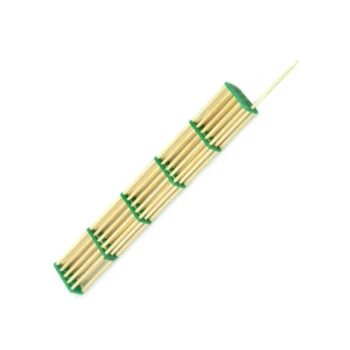
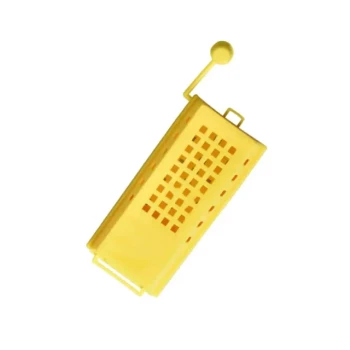
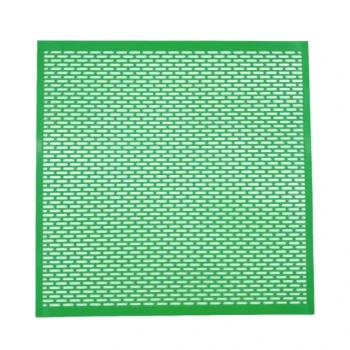
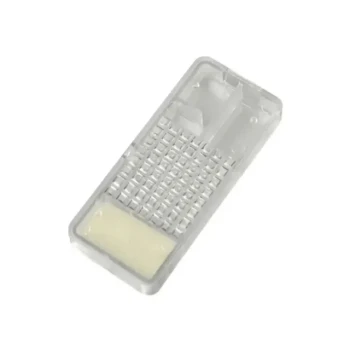
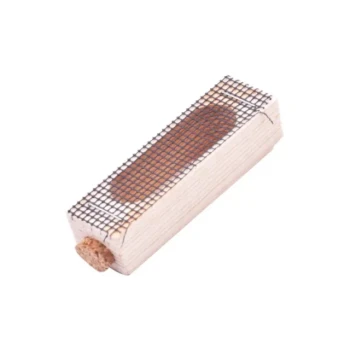
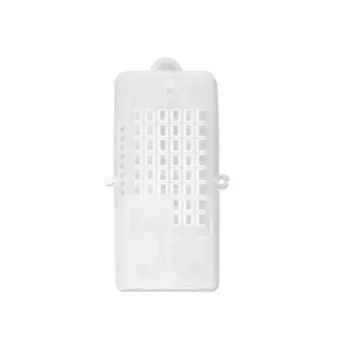
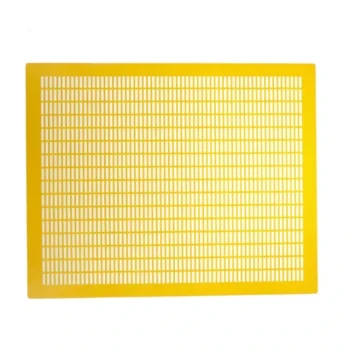
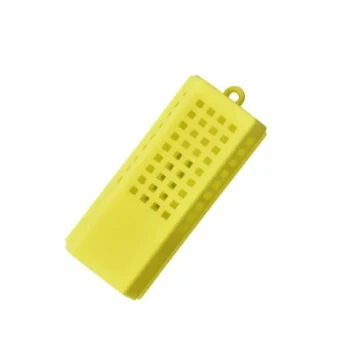
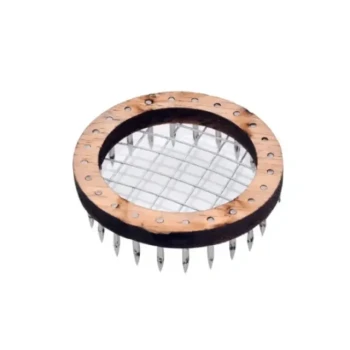
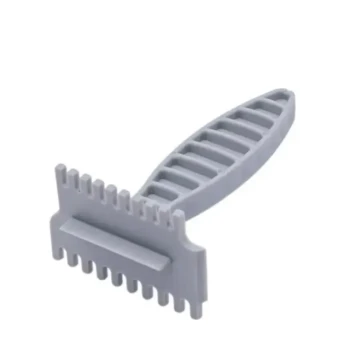
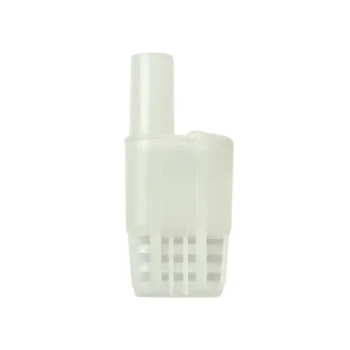
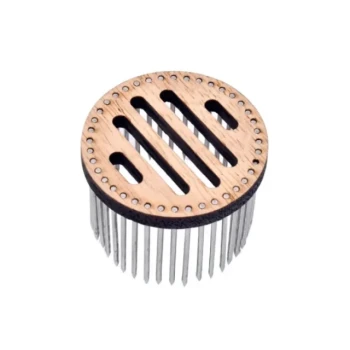
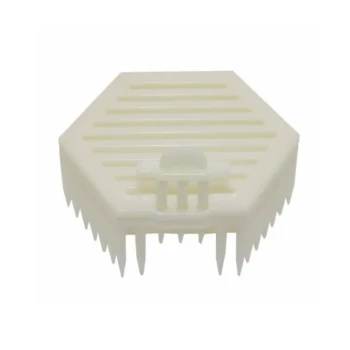
Spatiotemporal confinement. A queen excluder cage functions by physically restricting the queen bee to a specific honeycomb for a strictly defined period, most commonly between 5 and 48 hours. By isolating the queen to this single frame, researchers compel her to lay eggs within a narrow temporal window, ensuring that the resulting larvae are of a uniform age.
The Core Objective In honeybee research, even minor variations in larval age can skew data regarding disease susceptibility and chemical composition. The queen excluder cage acts as a calibration tool, creating a "zero-point" for development to eliminate experimental bias and ensure reproducible results.
The Mechanism of Synchronization
Physical Restriction
The device uses a wire mesh or grid barrier with precise dimensions. This allows worker bees to pass through to tend to the queen and comb, but restricts the larger queen to a specific area.
Controlled Egg-Laying Windows
By confining the queen to an empty comb, she is forced to lay eggs immediately in that location. The synchronization is defined by the duration of this confinement.
Determining Larval Age
Once the restriction period ends (e.g., 48 hours), the queen is released or moved. Because all eggs on that frame were laid during the confinement window, the larvae that hatch are developmentally synchronized to within that specific timeframe.
Why Synchronization is Critical
Eliminating Pathogen Bias
Larval age significantly impacts the immune system. As noted in chalkbrood research, susceptibility to pathogens varies as the larva grows. Synchronization prevents age-related resistance from acting as a confounding variable in infection studies.
Standardizing Chemical Analysis
Biological markers change rapidly during development. For accurate proteomics or Royal Jelly analysis, researchers require larvae that are metabolically identical. This ensures that observed differences are due to the experiment, not the age of the sample.
Accurate Sensitivity Testing
When testing environmental stressors, such as pesticides or parasites, the dose-response relationship is often age-dependent. A synchronized batch ensures that every subject in the test group is at the exact same developmental stage.
Understanding the Trade-offs
Precision vs. Yield
There is an inverse relationship between the strictness of the synchronization and the quantity of eggs obtained. A 5-hour window yields highly precise biological data (ideal for proteomics) but fewer eggs. A 48-hour window yields more larvae but introduces a wider age variance (acceptable for general pathogen studies).
Disruption of Colony Routine
Isolating the queen is an intervention that disrupts the natural flow of the hive. While necessary for science, the physical restriction creates an artificial environment that must be accounted for when interpreting behavioral data.
Making the Right Choice for Your Goal
The specific duration of confinement should be selected based on the sensitivity of the biological variable you are measuring.
- If your primary focus is pathogen susceptibility (e.g., Chalkbrood): Utilize a 48-hour restriction window to obtain a large batch of larvae while maintaining sufficient age uniformity for infection trials.
- If your primary focus is molecular analysis (e.g., Proteomics/BEP): Utilize a shorter 5-hour restriction window to ensure the highest possible temporal precision, as protein profiles change rapidly.
- If your primary focus is glandular secretion analysis (e.g., Royal Jelly): Utilize a 24-hour restriction window to balance sample size with the need for developmental consistency across the colony.
Precision in the beginning guarantees validity in the end.
Summary Table:
| Research Goal | Confinement Window | Primary Benefit |
|---|---|---|
| Molecular Analysis | 5 Hours | Highest temporal precision for proteomics and protein profiling |
| Glandular Secretion | 24 Hours | Optimal balance between sample size and developmental consistency |
| Pathogen Studies | 48 Hours | Large batch yields with sufficient uniformity for infection trials |
Elevate Your Apiary's Precision with HONESTBEE
At HONESTBEE, we understand that whether you are a commercial apiary or a specialist distributor, your success depends on high-quality, reliable equipment. Our comprehensive wholesale range includes everything from precision queen excluder cages and hive-making machines to advanced honey-filling equipment and specialized industry consumables.
We empower our partners to achieve scientific accuracy and operational efficiency. Let us supply the professional-grade tools and honey-themed cultural merchandise you need to grow your business.
Ready to scale your beekeeping operations? Contact our expert team today to discuss our full spectrum of wholesale machinery and equipment.
References
- Beata Panasiuk, Paweł Węgrzynowicz. Susceptibility of Bee Larvae to Chalkbrood in Relation to Hygienic Behaviour of Worker Bees in Colonies of Chosen Races of Honeybee (Apis Mellifera ). DOI: 10.2478/jas-2014-0012
This article is also based on technical information from HonestBee Knowledge Base .
Related Products
- Professional Bamboo Queen Isolation Cage
- Professional Queen Catcher and Introduction Queen Cage
- Premium Wood Framed Metal Wire Queen Bee Excluder
- Durable Galvanized Steel Spring Queen Bee Cage
- Professional Queen Cage with Sliding Gate and Feeder Plug
People Also Ask
- Why are specialized queen bee cages used for the banking of mated queen bees? Maximize Commercial Apiary Storage Efficiency
- What is the mechanism of action for using temporary queen bee cages? Master Successful Queen Introduction
- How does the side ventilation design of a queen bee cage impact the safety of the queen during long-distance transport?
- What should you do if the queen is still in the cage and the worker bees have not accepted her? Protect Your Colony from Queen Rejection
- What technical precaution must be taken regarding the mesh or grill side of a queen bee cage? Ensure Queen Survival