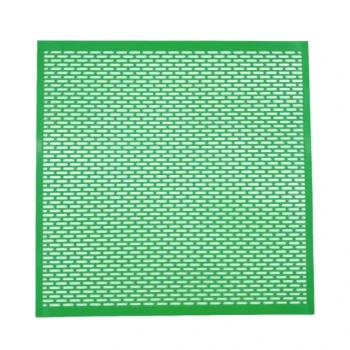
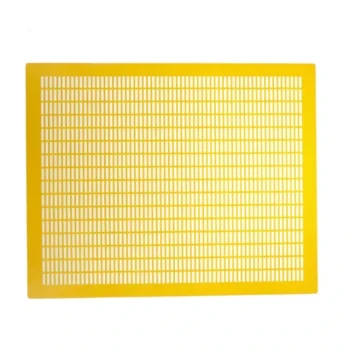
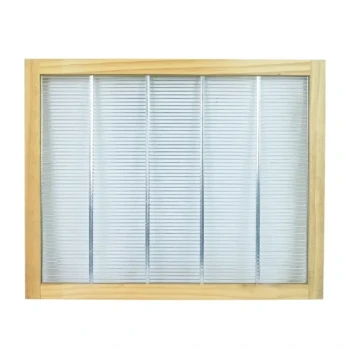
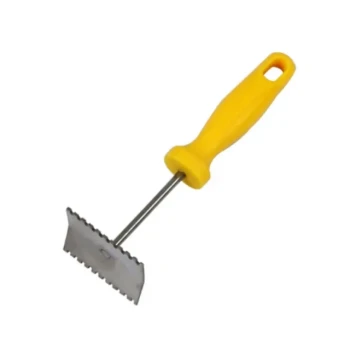
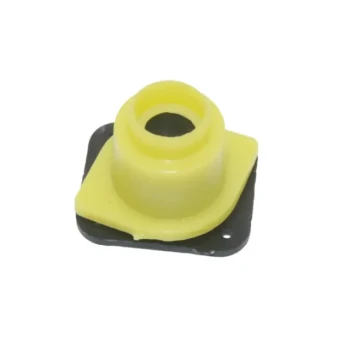
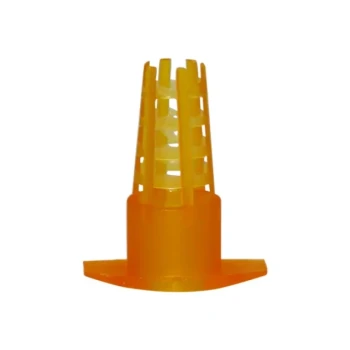
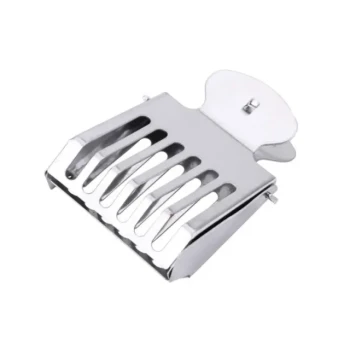
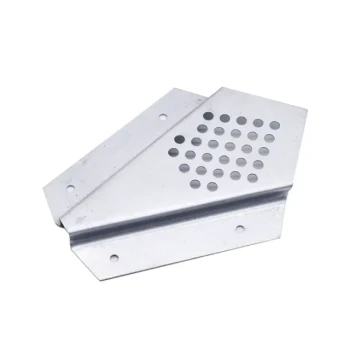
A queen excluder is a specialized physical barrier used to restrict the queen bee to specific areas of the hive. It operates on a simple size differential, allowing smaller worker bees to pass through the grid while blocking the larger queen from entering the upper "honey supers."
By confining the queen to the lower brood chamber, the excluder ensures that honey harvested for human consumption is completely free of eggs and larvae. This separation is vital for maintaining honey purity and enabling efficient, large-scale mechanical extraction.
Ensuring Product Purity
The primary motivation for using an excluder is to guarantee the quality of the final product.
preventing Biological Contamination
If a queen enters the honey supers, she will lay eggs in the available cells. Without an excluder, harvesting honey would mean extracting frames that contain bee larvae and eggs.
This biological matter would contaminate the honey during processing. An excluder acts as a filtration device at the source, ensuring the supers contain only pure honey.
Maintaining Clean Wax
Brood rearing changes the composition of the honeycomb. When larvae hatch, they leave behind cocoons and waste that darken the wax.
Darkened brood comb is highly attractive to pests, specifically wax moths. By keeping the supers free of brood, the wax remains clean, light, and less susceptible to pest damage during winter storage.
Streamlining the Extraction Process
For commercial operations, speed and mechanical efficiency are non-negotiable.
Facilitating Centrifugal Extraction
Commercial honey is harvested using centrifuges that spin frames at high speeds. If brood were present in these frames, the force would eject fluids from the larvae into the honey.
Filtering out this debris is difficult and time-consuming. The excluder eliminates this variable, allowing for rapid mechanical processing without the risk of contaminating the batch.
Protecting the Queen
Honey harvesting is a disruptive process. If the queen is roaming freely in the upper supers during harvest, there is a high risk she may be accidentally removed or injured.
Injuring the queen can devastate the colony's future productivity. The excluder keeps her safely isolated in the lower brood nest, far from the harvesting machinery.
Understanding the Trade-offs
While highly effective for purity, the use of queen excluders is a subject of debate in the beekeeping community.
The "Honey Barrier" Potential
Some beekeepers argue that the excluder acts as a psychological or physical deterrent to worker bees.
If the workers are reluctant to squeeze through the grid, they may store honey in the brood nest instead of the supers. This condition, known as being "honey bound," can reduce the overall yield.
Drone Entrapment
Male bees (drones) are larger than workers and cannot pass through the excluder.
If drones are hatched above the excluder or trapped there, they cannot exit the hive to defecate or mate. This can lead to increased stress within the hive and additional cleaning labor for the worker bees.
Making the Right Choice for Your Goal
Whether you employ an excluder depends on the scale of your operation and your processing capabilities.
- If your primary focus is commercial scale and speed: Rely on queen excluders to maximize extraction efficiency and guarantee a product free of biological impurities.
- If your primary focus is minimal intervention: You may choose to skip the excluder to encourage natural movement, accepting that you must visually inspect every frame for brood before harvest.
Use the excluder as a tool to separate the biological nursery of the hive from the commercial pantry.
Summary Table:
| Feature | Benefit for Commercial Beekeeping | Impact on Quality |
|---|---|---|
| Brood Containment | Keeps eggs and larvae out of honey supers | Guarantees pure, debris-free honey |
| Queen Safety | Protects the queen from harvesting machinery | Ensures colony longevity and stability |
| Comb Preservation | Prevents wax darkening and cocoons in supers | Produces clean, premium light-colored wax |
| Process Efficiency | Enables rapid centrifugal extraction | Reduces filtration time and labor costs |
| Pest Control | Reduces attraction for wax moths | Lowers risk of infestation during storage |
Maximize Your Harvest Purity with HONESTBEE
At HONESTBEE, we understand that for commercial apiaries and distributors, efficiency and product purity are the keys to profitability. Whether you are scaling your operation or supplying a region, we provide the full spectrum of professional beekeeping tools, from precision-engineered queen excluders to industrial-grade honey-filling and hive-making machines.
Why partner with HONESTBEE?
- Wholesale Excellence: Comprehensive inventory of essential industry consumables.
- Industrial Solutions: High-capacity machinery designed for large-scale mechanical extraction.
- Market Growth: Unique honey-themed cultural merchandise to expand your brand appeal.
Ready to streamline your honey production? Contact us today to explore our wholesale offerings and see how our hardware can enhance your apiary’s performance!
References
- Dariusz Teper, W. Skowronek. Exploitation of Rape Flow by Bee Colonies in Stationary and Migratory Apiary. DOI: 10.2478/jas-2013-0010
This article is also based on technical information from HonestBee Knowledge Base .
Related Products
- High Performance Plastic Queen Excluder for Beekeeping and Apiary Management
- Professional Plastic Queen Excluder for Modern Beekeeping
- Lightweight Durable Plastic Queen Excluder Scraper for Beekeeping
- Metal Queen Bee Excluder for Beekeeping
- Premium Wood Framed Metal Wire Queen Bee Excluder
People Also Ask
- What are the characteristics of a plastic queen excluder? Key Benefits for Cost-Effective Beekeeping
- What are the operational and cost advantages of using plastic queen excluders over metal or wire excluders in commercial hive management? Discover how they reduce labor, prevent wing damage, and lower total costs.
- What types of queen excluders are available for beekeepers? Choose the Right Tool for Your Hive
- Why are standardized hive frames and queen excluders essential for maintaining honey purity and quality? Scale Your Purity
- Do plastic queen excluders work? A Cost-Effective Solution for Modern Apiaries