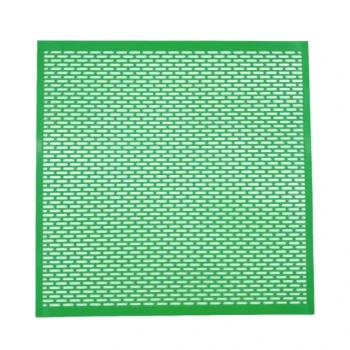
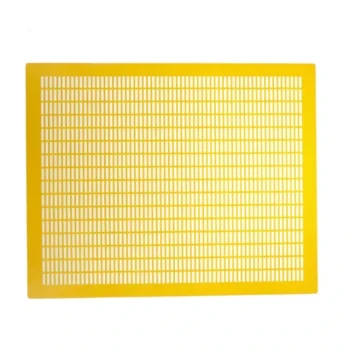
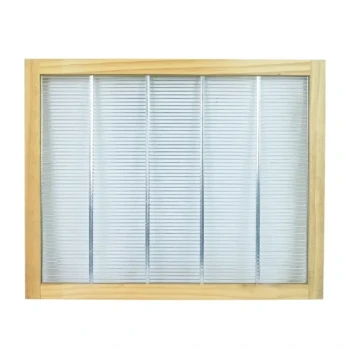
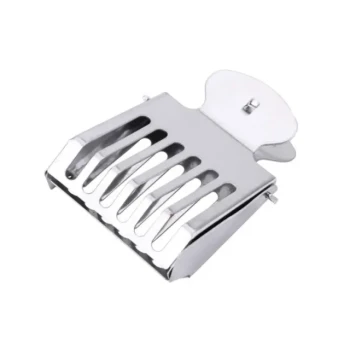
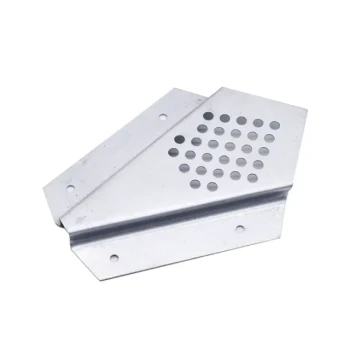
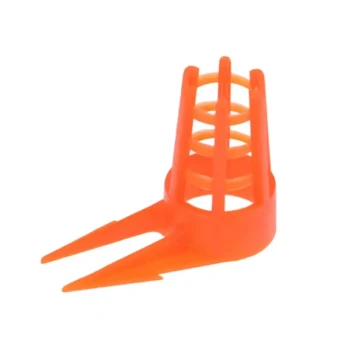
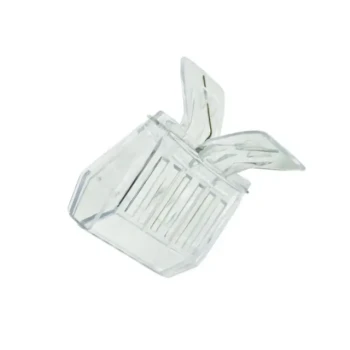
A Queen Excluder is a precision management tool driven by biological constraints. It functions as a specialized grid placed horizontally between the hive's brood nest and its honey storage areas. By utilizing specific gap dimensions—typically between 4.1 and 4.4 millimeters—it allows smaller worker bees to pass through freely while physically blocking the larger queen (specifically her thorax) from entering the upper levels of the hive.
By confining the queen to specific lower chambers, the excluder acts as a definitive boundary that guarantees honey supers remain pure storage zones, free of eggs, larvae, or pupae.
The Mechanics of Hive Zoning
Exploiting Caste Differences
The device operates on a simple principle: morphological filtration. The grid openings are engineered to be larger than a worker bee but smaller than a queen bee.
Because the queen possesses a significantly larger thorax than the workers, she is physically unable to squeeze through the mesh. This restricts her movement without impeding the flow of the workforce responsible for storing resources.
Vertical Spatial Definition
In a multi-story management system, the excluder creates a strict vertical limit for the brood nest.
The area below the excluder becomes the dedicated nursery (brood chamber) where the queen lays eggs. The area above the excluder is preserved exclusively for honey and pollen storage (honey supers).
Ensuring Harvest Purity
The primary technical goal of this separation is quality control.
If a queen enters the upper boxes, she will lay eggs in the frames meant for harvest. An excluder prevents this cross-contamination, ensuring that extracted honey meets commercial standards and is not tainted by biological matter from the brood cycle.
Installation and Maintenance Principles
Correct Placement
The excluder acts as a ceiling for the brood box and a floor for the honey super.
To install it, you must remove the honey supers and place the grid directly on top of the highest brood chamber. It is critical that the device sits completely flat and tight; any warping or misalignment creates gaps that a queen can exploit to bypass the barrier.
Flow Management
While the workers can pass through, the grid must be maintained to ensure they do pass through efficiently.
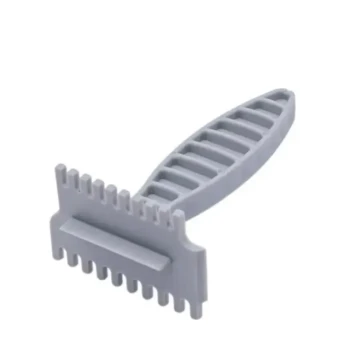
Beekeepers must monitor the grid for blockages, such as burr comb or propolis buildup. If the precise 4.1mm to 4.4mm gaps become obstructed, worker movement slows, hampering the hive's ability to store honey in the supers.
Understanding the Trade-offs
Necessity vs. Redundancy
While effective, the excluder is not universally required for every hive configuration.
In systems utilizing multiple deep hive bodies for the brood nest, the queen may naturally stay in the lower regions where space is ample. In these scenarios, the physical restriction of an excluder may be unnecessary.
Maintenance Overhead
Adding an excluder introduces an additional variable to hive management.
It requires regular inspection to ensure it remains passable for workers. A neglected excluder can become a bottleneck, reducing the efficiency of the colony's foraging and storage operations.
Making the Right Choice for Your Goal
Deciding when to deploy a Queen Excluder depends on your specific objectives for the harvest and the hive configuration.
- If your primary focus is Commercial-Grade Honey: You must use an excluder to guarantee that your extraction frames are 100% free of larvae and pupae.
- If your primary focus is Colony Efficiency: Monitor the grid frequently for blockages to ensure the barrier does not inadvertently slow down your worker bees.
- If your primary focus is Management Simplicity: Evaluate if your hive has multiple brood bodies, as natural behavior may keep the queen lower down without the need for hardware.
The Queen Excluder is not just a barrier; it is a filter that prioritizes resource quality by enforcing structural order within the colony.
Summary Table:
| Feature | Specification/Detail | Function/Impact |
|---|---|---|
| Gap Dimension | 4.1mm - 4.4mm | Blocks the queen's thorax while allowing workers through |
| Placement | Between brood nest and honey supers | Creates a vertical boundary for eggs vs. honey storage |
| Primary Goal | Quality Control & Purity | Prevents larvae and pupae from contaminating honey frames |
| Material Maintenance | Flat, tight fit; clear of propolis | Prevents queen bypass and ensures smooth worker flow |
Maximize Your Honey Yield with HONESTBEE Professional Equipment
At HONESTBEE, we understand that commercial apiary success depends on precision and quality. Our high-grade queen excluders and comprehensive range of beekeeping tools are designed to streamline your management and ensure a contaminant-free harvest.
Whether you are a commercial apiary looking for hive-making machinery or a distributor seeking a reliable wholesale partner for honey-filling machines and essential consumables, we provide the industrial-strength solutions you need.
Ready to elevate your beekeeping operations? Contact our expert team today to discuss our full spectrum of wholesale hardware and honey-themed cultural merchandise!
References
- Sisay Fikru, Gebremedhin Gebresilassie. Assessment of Beekeeping Practices (Absconding, Bee Forage and Bee Diseases and Pests) in Jigjiga Zone, Somali Regional State of Ethiopia. DOI: 10.4172/2375-446x.1000135
This article is also based on technical information from HonestBee Knowledge Base .
Related Products
- High Performance Plastic Queen Excluder for Beekeeping and Apiary Management
- Professional Plastic Queen Excluder for Modern Beekeeping
- Lightweight Durable Plastic Queen Excluder Scraper for Beekeeping
- Metal Queen Bee Excluder for Beekeeping
- Premium Wood Framed Metal Wire Queen Bee Excluder
People Also Ask
- What are the characteristics of a plastic queen excluder? Key Benefits for Cost-Effective Beekeeping
- What are the operational and cost advantages of using plastic queen excluders over metal or wire excluders in commercial hive management? Discover how they reduce labor, prevent wing damage, and lower total costs.
- What types of queen excluders are available for beekeepers? Choose the Right Tool for Your Hive
- Why are standardized hive frames and queen excluders essential for maintaining honey purity and quality? Scale Your Purity
- Do plastic queen excluders work? A Cost-Effective Solution for Modern Apiaries