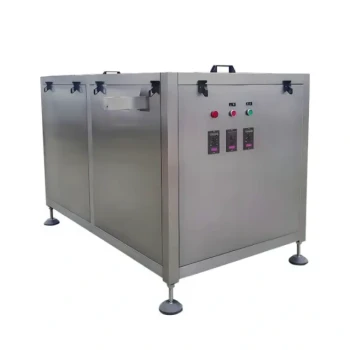
A rotational viscometer serves as a critical quality control instrument by quantifying the rheological characteristics of honey through the measurement of resistance at specific temperatures and rotational speeds. This data allows producers to assess the textural consistency of the product, which is a direct reflection of its internal composition and a determining factor for both consumer satisfaction and processing efficiency.
The Core Insight While chemical analysis determines what is in the honey, a rotational viscometer determines how the honey behaves. It translates complex variables—such as moisture content, carbohydrate composition, and colloidal concentration—into a single, actionable metric essential for defining sensory profiles and calibrating industrial filling machinery.
The Mechanics of Quality Assessment
Quantifying Flow Resistance
A rotational viscometer operates by immersing a specific rotor into the honey sample.
As the rotor spins, the instrument measures the torque required to maintain a set speed. This resistance value provides a precise, numerical definition of the honey's viscosity, moving beyond subjective descriptions like "thick" or "runny."
The Importance of Temperature Control
Honey is a non-Newtonian fluid in many contexts, meaning its viscosity changes drastically with temperature fluctuations.
By measuring resistance at specific, controlled temperatures, the viscometer ensures data consistency. This standardization is necessary to compare different batches accurately against quality benchmarks.
Interpreting Composition Through Viscosity
Indirect Moisture Detection
The flow resistance of honey is heavily influenced by its water content.
While not a direct substitute for a refractometer (which measures moisture via light refraction), the viscometer provides an indirect verification. A lower-than-expected viscosity reading often signals high moisture content, triggering the need for further testing to prevent fermentation risks.
Assessing Carbohydrate and Colloidal Structure
The balance of sugars (carbohydrates) and the presence of colloidal substances (proteins and wax) define the internal structure of honey.
The rotational viscometer detects variations in these concentrations based on how the fluid resists shear stress. This helps in identifying the density and structural integrity of the honey, distinguishing between different botanical sources or processing levels.
Application in Production and Branding
Defining the Sensory Profile
For the consumer, quality is often synonymous with texture and mouthfeel.
Producers use viscosity data to ensure that the honey meets the tactile expectations of the target market. Whether the goal is a spreadable creamed honey or a fluid pourable honey, the viscometer ensures the texture matches the brand promise.
Optimizing Industrial Filling Parameters
On the production line, consistency is key to efficiency.
Viscosity measurements define the parameters for industrial filling processes. Knowing the exact flow rate allows engineers to calibrate pumps and nozzles, preventing machine jams, under-filling, or excessive dripping during packaging.
Understanding the Trade-offs
Context vs. Chemistry
It is important to recognize that a rotational viscometer measures physical behavior, not chemical identity.
It cannot replace a conductivity meter for identifying the geographical origin or determining if honey is blossom vs. honeydew. Similarly, while it reflects stability, it does not measure acidity dynamics like a pH meter, which is required to spot potential contamination or biochemical instability.
Specificity of Equipment
Using the incorrect rotor or speed settings can yield misleading data.
The primary reference notes that using specific rotors is essential for consistency when measuring high-viscosity fluids. Failure to match the hardware to the fluid type will result in data that does not accurately reflect the honey's true quality.
Making the Right Choice for Your Goal
To integrate a rotational viscometer effectively into your quality assurance strategy, consider your primary objective:
- If your primary focus is Industrial Efficiency: Use viscosity data to calibrate filling speeds and temperature settings to prevent bottlenecks in packaging lines.
- If your primary focus is Consumer Consistency: Use the instrument to standardize texture and mouthfeel, ensuring every jar delivers the same sensory experience.
- If your primary focus is Comprehensive Quality Control: Use the viscometer to verify physical texture, but pair it with a refractometer and pH meter to validate chemical stability and legal compliance.
By quantifying the physical behavior of honey, the rotational viscometer transforms subjective texture into an objective engineering standard.
Summary Table:
| Metric Category | Quality Impact | Key Benefit |
|---|---|---|
| Flow Resistance | Quantifies honey thickness | Replaces subjective descriptions with objective numerical data |
| Temp Control | Standardizes measurements | Ensures data consistency across different batches and environments |
| Moisture Check | Indirectly detects water content | Flags potential fermentation risks through lower-than-expected viscosity |
| Sensory Profile | Defines mouthfeel and texture | Guarantees the consumer receives a product matching the brand promise |
| Production Line | Calibrates filling machinery | Prevents equipment jams and ensures precise filling volumes |
Elevate Your Honey Quality with HONESTBEE Professional Solutions
Consistency is the hallmark of a premium honey brand. At HONESTBEE, we empower commercial apiaries and honey distributors with the advanced machinery and tools needed to transform raw harvest into market-ready gold. From specialized honey-filling machines that rely on precise viscosity data to industrial-grade processing hardware, our comprehensive wholesale catalog covers your entire production lifecycle.
Ready to scale your operations? Contact us today to discuss how our specialized equipment and honey-themed cultural merchandise can enhance your brand's value and operational efficiency.
References
- Sri Melia, Doni Supandil. Profile of stingless bee honey and microbiota produced in West Sumatra, Indonesia, by several species (Apidae, Meliponinae). DOI: 10.14202/vetworld.2024.785-795
This article is also based on technical information from HonestBee Knowledge Base .
Related Products
- Precision Honey Refractometer Instrument for Quality Assessment
- Solar Beeswax Melter Easy Solar Wax Melter for Beeswax
- Heavy-Duty Ergonomic Grip Galvanized Pollen Shovel
- Digital Honey Refractometer for Precision Measurement of Optimal Honey Quality
- Professional Plastic Honey Dipper for Easy Honey Drizzling
People Also Ask
- How do professional scientific instruments contribute to honey quality testing? Ensure Purity and Market Compliance
- What temperature considerations are important when using a honey refractometer? Expert Tips for Precise Readings
- What is the appropriate Brix scale for a refractometer used to measure honey? Find the Perfect Range for Your Hive
- How is honey applied to the refractometer? Ensure Accurate Moisture Content Measurement
- What is the role of a honey refractometer in harvesting? Prevent Fermentation & Ensure Quality