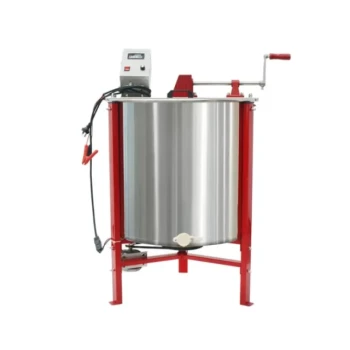
Yes, using a honey extractor on foundationless frames is feasible, provided you proceed with extreme caution. Because these frames lack the structural reinforcement of wire or plastic foundation, the wax comb is significantly more fragile. To succeed, you must operate the extractor at very low speeds to prevent the centrifugal force from shattering the comb.
The Bottom Line: While mechanical extraction is an option, the risk of destroying the comb is high. Unless you are strictly committed to preserving the drawn wax for reuse, the "crush and strain" method is often more practical and cost-effective for foundationless frames.
The Mechanics of Extraction vs. Frame Strength
The Vulnerability of Natural Wax
Standard frames typically rely on embedded wires or plastic sheets to anchor the honeycomb. Foundationless frames, however, rely solely on the bees' natural attachment points. This makes the comb prone to detaching or breaking under physical stress.
Managing Centrifugal Force
Extractors operate by spinning frames rapidly to fling honey out against the barrel walls. On a foundationless frame, this outward force is often strong enough to rip the comb apart. The physics of the machine work against the delicate structure of natural wax.
Best Practices for Mechanical Extraction
Uncapping the Cells
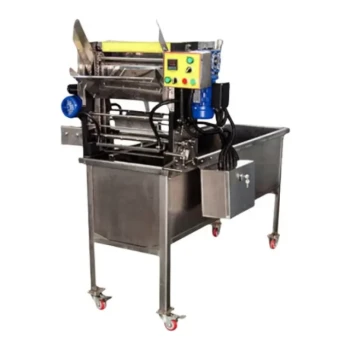
Before extraction, you must remove the wax cappings using a heated knife or uncapping roller. Ensure this is done gently to maintain as much structural integrity as possible before the spin.
The "Low Speed" Rule
You must spin the extractor at a much lower speed than you would for reinforced frames. The goal is to gently coax the honey out rather than force it, which prevents the "blowout" phenomenon where the wax collapses.
Proper Load Balancing
Always place frames symmetrically within the extractor basket or barrel. An unbalanced load causes vibration, which introduces additional stress to the delicate wax and can damage the equipment.
Understanding the Trade-offs
The "Crush and Strain" Alternative
Because protecting the comb is difficult, the crush-and-strain method is widely considered the superior alternative for foundationless setups. This involves manually breaking the comb and filtering it, eliminating the need for expensive machinery.
Equipment Cost vs. Utility
Honey extractors represent a significant financial investment. Since foundationless beekeeping allows for simple manual harvesting, the cost of an extractor may be unnecessary.
Preservation vs. Renewal
The primary benefit of using an extractor is saving the drawn comb so the bees can refill it immediately. However, if the comb breaks during extraction—a common occurrence with foundationless frames—you lose this benefit while still incurring the cleanup time.
Making the Right Choice for Your Goal
To determine the best method for your apiary, consider your end goals:
- If your primary focus is preserving drawn comb: Use a radial or tangential extractor at the lowest effective speed to minimize the risk of wax breakage.
- If your primary focus is low cost and simplicity: Utilize the crush-and-strain method to harvest honey without the risk of equipment costs or mechanical failure.
Choose the method that balances your budget with your tolerance for potential comb damage.
Summary Table:
| Feature | Foundationless Frames | Reinforced Frames (Wired/Plastic) |
|---|---|---|
| Structural Strength | Low (Natural Wax Only) | High (Embedded Support) |
| Extraction Speed | Extremely Low | Moderate to High |
| Risk of Blowout | High | Low |
| Best Method | Crush & Strain or Low-Speed Radial | Tangential or Radial Extraction |
| Comb Reusability | Challenging to Preserve | High Preservation Rate |
Scaling Your Apiary Operations with HONESTBEE
Whether you are managing delicate foundationless frames or high-output commercial setups, HONESTBEE provides the professional-grade equipment needed to optimize your harvest. As a premier partner for commercial apiaries and distributors, we supply a comprehensive range of beekeeping machinery, specialized hardware, and essential consumables—from precision honey-filling machines to durable hive-making equipment.
Don't let equipment limitations slow your growth. Let HONESTBEE empower your business with reliable wholesale solutions and industry expertise.
Contact our team today to discuss your wholesale needs
Related Products
- electric honey extractor honey centrifuge 3 frame honey extractor stainless steel honey frame extractor
- Stainless Steel Manual 8 Frame Radial Honey Extractor Machine for Beehives
- Commercial 48-Frame Stainless Steel Honey Extractor
- HONESTBEE 8 Frame Electric and Manual Three Use Honey Extractor
- Stainless Steel 3 Frame Manual Honey Extractor Spinner for Bee Honey Extraction
People Also Ask
- What are the characteristics of electric honey extractors? Boost Your Apiary Efficiency with Automated Technology
- What are the disadvantages of using an electric honey extractor? Weighing Cost, Power, and Comb Safety
- What are the advantages of an electric honey extractor? Boost Efficiency and Scale Your Honey Production
- What are the technical advantages of electric honey extractors? Maximize Yield and Protect Your Bee Colony
- How does an electric honey extractor affect the quality of honey? Preserve Flavor & Purity with Precision Extraction