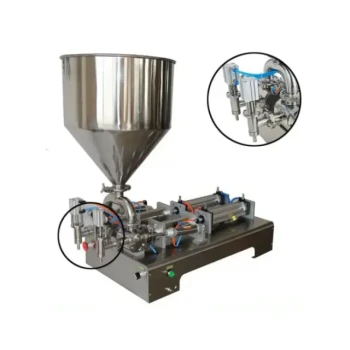
Automated honey filling machinery serves as the primary firewall between raw product and shelf-ready safety. It ensures purity and compliance by utilizing fully enclosed piping systems and precision metering technology to eliminate the variables of manual handling. By mechanically isolating the honey from external air and human contact, these systems prevent secondary microbial contamination and guarantee that the volume delivered matches the legal requirements on the label.
By shifting from manual to closed-loop automated processing, producers move beyond simple efficiency to establish a verifiable sanitary chain of custody. This technology does not just speed up production; it locks in the biological integrity of the honey while strictly adhering to international food safety and labeling regulations.
The Mechanics of Contamination Prevention
Enclosed Piping Systems
The most critical feature of automated machinery is the use of fully enclosed piping systems. Unlike open-vat manual filling, which exposes honey to the environment, these systems keep the product strictly contained from the storage tank to the final nozzle. This physical barrier prevents airborne particulates and environmental pathogens from settling into the product.
Mitigating Moisture Absorption
Honey is naturally hygroscopic, meaning it readily absorbs moisture from the surrounding air. Automated systems utilize hermetic sealing technologies and closed loops to minimize air exposure time. This prevents fermentation risks caused by rising water content, a common compliance failure point in humid processing environments.
Eliminating Human Contact
Manual filling introduces the risk of cross-contamination from skin, clothing, or respiratory droplets. Automation replaces human operators with sanitary stainless steel components. This removal of direct human interaction is often a prerequisite for meeting Hazard Analysis and Critical Control Points (HACCP) standards in large-scale apiaries.
Regulatory Compliance and Accuracy
Precision Metering and Label Integrity
Regulatory bodies enforce strict "Weights and Measures" standards regarding the accuracy of labeled product volumes. Automated machines use precision metering controls to dispense exact quantities, ensuring every unit complies with the declared net weight. This prevents legal liabilities associated with under-filling and the financial waste of over-filling (overflow).
Managing Maximum Residue Limits (MRL)
Advanced automated lines facilitate strict batch management and traceability. By controlling blending and filtration with high precision, processors can isolate specific batches to screen for antibiotics or pesticides. This granular control is essential for meeting Maximum Residue Limit (MRL) standards required for international export.
Filtration and Foreign Material Control
Automated lines are frequently integrated with multi-stage filtration systems. These systems mechanically remove physical impurities—such as wax particles or bee parts—introduced during extraction. This ensures the physical purity required by food safety codes without stripping the honey of its pollen or beneficial enzymes.
Preserving Product Quality
Maintaining Sensory Characteristics
Heat and oxidation are the enemies of honey quality. High-standard machinery is designed to fill containers quickly without excessive heating or aeration. This preservation of the honey's sensory profile, including color and biological activity, helps maintain consistency between the apiary’s harvest and the consumer's experience.
Prevention of Cross-Contamination
In facilities that process different floral varieties, automation allows for rigorous Clean-in-Place (CIP) protocols between runs. This prevents the flavor profile or chemical composition of a strong monofloral honey from contaminating a delicate varietal, ensuring truth-in-labeling compliance.
Understanding the Trade-offs
Maintenance as a Critical Control Point
While automation removes human error during filling, it introduces a new risk: machinery sanitation. If the internal piping or metering valves are not properly cleaned, they become a hidden source of systemic contamination that affects every single unit. Rigorous maintenance schedules are not optional; they are a compliance requirement.
Complexity of Crystallization
Honey naturally crystallizes, which can clog precision valves and sensors. Automated systems require temperature control features or pre-processing steps to keep the honey flowable. Failure to manage viscosity can lead to equipment jams, inconsistent fill levels, and potential downtime that negates efficiency gains.
Making the Right Choice for Your Goal
When selecting automated filling technology, align the machine's capabilities with your specific compliance targets:
- If your primary focus is Retail Compliance: Prioritize machines with certified precision metering to ensure zero deviations in weight and volume labeling.
- If your primary focus is Export/Pharma Standards: Invest in systems offering closed-loop traceability and advanced filtration to rigorously meet MRL and biological purity standards.
- If your primary focus is Shelf-Life Extension: Look for equipment emphasizing hermetic sealing and vacuum filling to minimize oxidation and moisture uptake.
Automation transforms honey production from a traditional craft into a scientifically controlled process, securing your reputation by ensuring that what ends up in the jar is exactly what is promised on the label.
Summary Table:
| Feature | Mechanism for Purity & Compliance | Primary Benefit |
|---|---|---|
| Enclosed Piping | Creates a physical barrier from storage to nozzle | Prevents airborne pathogens & microbial contamination |
| Precision Metering | Advanced sensors and weight-control valves | Ensures legal weight accuracy & eliminates under-filling |
| Hermetic Sealing | Minimizes air exposure and moisture uptake | Prevents fermentation and maintains honey viscosity |
| Batch Traceability | Granular control over blending and filtration | Facilitates MRL compliance for international export |
| CIP Protocols | Automated Clean-in-Place sanitation cycles | Prevents cross-contamination between honey varieties |
Elevate Your Apiary’s Production Standards with HONESTBEE
Transitioning to automated honey processing is a vital step for commercial apiaries and distributors looking to secure their reputation and scale globally. At HONESTBEE, we specialize in providing high-precision honey-filling machines and comprehensive equipment solutions designed to meet the most rigorous food safety and regulatory standards.
Whether you need specialized honey-making machinery or essential consumables for your distribution network, our wholesale offerings empower you to maintain biological integrity while maximizing efficiency. Contact us today to discover how our tailored beekeeping solutions can optimize your production chain.
References
- Peter Hristov, Boyko Neov. Honey bee colony losses: Why are honey bees disappearing?. DOI: 10.13102/sociobiology.v68i1.5851
This article is also based on technical information from HonestBee Knowledge Base .
Related Products
- Fully Automatic Honey Filling Packaging Machine for Processing Line
- Automatic Honey Filling and Filtering Machine for Beekeeping Bottle Filling
- Precision Durable Efficient HONESTBEE Rotary Honey Filling Machine
- Semi Automatic Small Honey Bottle Filling Machine Honey Filler
- Precision Automated Packaging Turntable Honey Spoon Filling Sealing Packing Machine
People Also Ask
- Why are fully automatic honey filling and packaging lines essential? Boost Your Honey's Market Value and Quality
- What is a fully-automatic honey filler? Streamline Your Production with High-Precision Automation
- How do automated honey filling and packaging machines affect profitability? Boost Margins with HONESTBEE Technology
- How do automated honey filling and packaging machines contribute to the market value of honey products? Maximize Your ROI
- How do industrial-grade automated honey filling and packaging machines mitigate the risk of physical contamination?