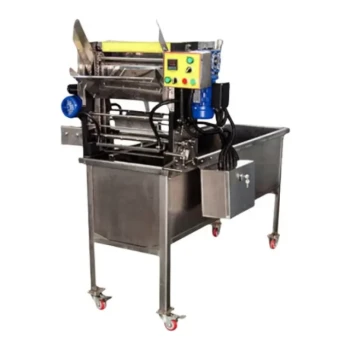
Automatic honey filling machinery fundamentally shifts consumer perception from artisanal variability to industrial reliability. By utilizing high-precision quantitative filling technology, these systems ensure consistent net weight across all units while rigorously preventing secondary contamination. This combination of exact volume control and sterile processing directly signals to the consumer that the product is professional, hygienic, and compliant with regulatory standards.
The Core Takeaway Automation bridges the gap between production efficiency and consumer trust. It transforms honey packaging from a simple container into a guarantee of safety and standardization, leveraging closed-system technology to protect the product’s biological purity and visual integrity.
The Foundation of Consumer Trust: Consistency
Consumers equate consistency with professionalism. Automatic filling machinery eliminates the human error inherent in manual packaging, creating a uniform product experience that builds brand loyalty.
High-Precision Quantitative Filling
The primary driver of quality perception is weight accuracy. Automatic machines utilize precise volumetric measurement or weighing sensors to ensure the net content of every bottle is identical.
This adherence to strict parameters assures the consumer they are receiving exactly what they paid for. It satisfies legal metrology requirements and eliminates the variation that often leads to consumer skepticism.
Standardization of Visual Appeal
Beyond weight, automation standardizes the look of the final product. High repeatability in positioning ensures labels and caps are applied uniformly across thousands of units.
This mechanical consistency projects an image of a well-regulated, modern operation. It suggests that if the brand cares about the precision of the packaging, they likely care about the quality of the honey inside.
Technical Safeguards for Hygiene and Safety
While consistency draws the eye, safety ensures the sale. Automated systems employ specific technologies to protect the biological integrity of the honey, addressing deep-seated consumer concerns about food safety.
Preventing Secondary Contamination
The most critical safety advantage is the prevention of secondary contamination. Manual filling exposes honey to human contact and open-air environments where contaminants thrive.
Automated machinery isolates the honey during the transfer from bulk storage to retail packaging. By removing direct human interaction, the risk of introducing foreign pathogens or debris is virtually eliminated.
Closed-System Protection
Honey is hygroscopic, meaning it readily absorbs moisture from the air. Automated machines often operate as closed systems, reducing the time honey is exposed to the atmosphere.
This prevents moisture absorption, which can lead to fermentation or spoilage. It also preserves the honey's natural enzyme activity and flavor profile, directly impacting the consumer's sensory experience of quality.
Advanced Sanitation Protocols
Industrial-grade machines often integrate Cleaning-in-Place (CIP) and Sterilization-in-Place (SIP) functions. These automated cycles clean and sterilize the piping and filling nozzles without disassembly.
This ensures that the equipment itself does not become a vector for cross-contamination. It allows producers to maintain a sterile environment that meets the rigorous hygiene standards of modern commercial distribution.
Enhancing Shelf Appeal and Usability
The physical condition of the bottle on the shelf is the first interaction a consumer has with the product. Automation solves common physical defects associated with honey packaging.
Eliminating Residue with Anti-Drip Mechanisms
Honey is viscous and difficult to handle cleanly. Manual filling often results in drips or sticky residue on the bottle exterior.
Automated systems integrate specific anti-drip mechanisms that cut the flow of honey precisely. This ensures the external packaging remains spotless, preventing the "sticky bottle" phenomenon that deters customers.
Reliable Sealing Technology
Precision sealing equipment provides airtight closures that are superior to manual capping. This prevents leakage during transportation and storage.
A secure, intact seal is a primary visual indicator of safety for consumers. It assures them that the product has not been tampered with or compromised before it reached their pantry.
Understanding the Trade-offs
While automation offers significant advantages, it introduces new operational complexities that must be managed to maintain quality perception.
The Maintenance Imperative
The hygiene benefits of automation rely entirely on the proper function of CIP and SIP systems. If these automated cleaning cycles are neglected or calibrated incorrectly, the machine can become a hidden source of contamination.
Complexity vs. Flexibility
High-precision machinery is optimized for standardization. Switching between different bottle shapes or honey types often requires complex retooling or calibration.
For producers offering "raw" or unfiltered honey, the pumping mechanisms must be carefully selected. Improperly calibrated high-speed pumps can introduce heat or shear forces that might degrade the natural texture consumers expect from artisanal products.
Making the Right Choice for Your Goals
To leverage automation effectively, you must align the machinery's capabilities with your specific market position.
- If your primary focus is Regulatory Compliance: Prioritize machines with integrated weighing sensors and CIP/SIP capabilities to ensure metrology standards and biological safety are automatically documented.
- If your primary focus is Premium Branding: Focus on equipment with advanced anti-drip and precision sealing mechanisms to ensure flawless shelf presentation and airtight protection of the honey's flavor profile.
- If your primary focus is Market Scalability: Invest in high-speed quantitative filling technology that guarantees weight consistency to build trust across large-scale retail distribution channels.
Ultimately, automated machinery is not just a production tool; it is a quality assurance device that visibly demonstrates your commitment to purity and professionalism.
Summary Table:
| Feature | Consumer Perception Impact | Technical Benefit |
|---|---|---|
| Quantitative Filling | Professionalism & Trust | Eliminates weight variation and ensures metrology compliance. |
| Closed-System Design | Purity & Freshness | Prevents secondary contamination and moisture absorption. |
| Anti-Drip Mechanisms | Quality & Cleanliness | Keeps bottle exteriors spotless and prevents sticky residue. |
| CIP/SIP Integration | Safety Assurance | Automated sterilization ensures a pathogen-free filling environment. |
| Precision Sealing | Security & Integrity | Guarantees airtight closures and prevents transport leakage. |
Scale Your Apiary Operations with HONESTBEE
Transitioning from manual processes to industrial reliability is essential for modern commercial apiaries and distributors. HONESTBEE provides the comprehensive wholesale solutions you need to guarantee product purity and professional packaging quality.
Our specialized portfolio includes:
- High-Precision Honey Filling Machines to ensure weight consistency.
- Advanced Hive-Making & Processing Machinery for operational efficiency.
- Full-Spectrum Beekeeping Tools & Consumables to support your entire supply chain.
Ready to enhance your brand's shelf appeal and operational safety? Partner with a supplier that understands the honey industry from hive to bottle.
Contact HONESTBEE Today for a Wholesale Consultation
References
- Kristina Brščić, Danijela Poljuha. An empirical examination of consumer preferences for honey in Croatia. DOI: 10.1080/00036846.2017.1352079
This article is also based on technical information from HonestBee Knowledge Base .
Related Products
- Fully Automatic Honey Filling Packaging Machine for Processing Line
- Automatic Honey Filling and Filtering Machine for Beekeeping Bottle Filling
- Semi Automatic Small Honey Bottle Filling Machine Honey Filler
- Precision Durable Efficient HONESTBEE Rotary Honey Filling Machine
- Automatic Single-Dose Snap & Squeeze Honey Sachets Packing Machine
People Also Ask
- Why are fully automatic honey filling and packaging lines essential? Boost Your Honey's Market Value and Quality
- What is a fully-automatic honey filler? Streamline Your Production with High-Precision Automation
- How do automated honey filling and packaging machines affect profitability? Boost Margins with HONESTBEE Technology
- How do automated honey filling and packaging machines contribute to the market value of honey products? Maximize Your ROI
- How do industrial-grade automated honey filling and packaging machines mitigate the risk of physical contamination?