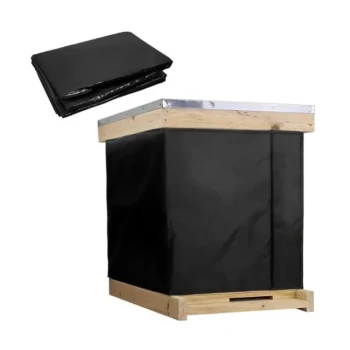
Colony size and strength are the primary determinants for whether a beehive requires supplemental insulation. While a populous, robust colony generates sufficient metabolic heat to regulate its own internal environment, smaller or weakened colonies lack the biological mass to do so, making insulation a critical tool for their survival.
The core challenge of wintering bees is not just staying warm, but staying mobile. Insulation compensates for a lack of population density, ensuring small colonies remain active enough to physically move to their food sources.
The Thermal Dynamics of the Colony
The Self-Regulating Strong Colony
A large, healthy colony acts as a highly efficient thermal engine. Because they possess a high population density, these colonies can generate significant metabolic heat within their winter cluster.
This biological heat allows them to manage the internal temperature and humidity of the hive independently. In most climates, a strong colony requires little to no human intervention regarding temperature control.
The Vulnerability of Weak Colonies
In contrast, small or weakened colonies suffer from a lack of thermal mass. They simply do not have enough bees to generate heat faster than it is lost to the cold environment.
Without the buffer of a large population, the cluster temperature drops rapidly. This inability to self-regulate makes them highly susceptible to external weather fluctuations.
The Function of Insulation
Compensating for Low Density
For these smaller colonies, insulation acts as a prosthetic for the missing population. By retaining the limited heat the bees generate, insulation artificially stabilizes the hive environment.
This allows a smaller cluster to maintain a survival temperature that they could not achieve through metabolic effort alone.
The Critical Link to Food Access
The most dangerous consequence of cold is not freezing, but starvation. The primary reference highlights that bees must remain active enough to reach their food stores.
If a cluster gets too cold, the bees become torpid and cannot break formation to move toward honey stored just inches away. Insulation keeps the ambient temperature high enough for the cluster to remain mobile and feed.
Understanding the Trade-offs
Resource Allocation
It is important to recognize that insulation is not a universal requirement for every hive. Applying heavy insulation to a massive, thriving colony may be an unnecessary expenditure of time and resources.
Reliance vs. Resilience
The goal is to support the bees, not to replace their natural resilience. Strong colonies have evolved to manage their environment; intervening when it is not required yields diminishing returns.
However, for a weak colony, the trade-off is stark: without the artificial aid of insulation, the colony will likely fail to maintain the humidity and temperature required for survival.
Making the Right Choice for Your Goal
Before winterizing, assess the population density of each individual hive to determine its specific needs.
- If your primary focus is a Strong Colony: Rely on the bees' natural ability to generate heat and manage humidity, as they are typically self-sufficient even in cold climates.
- If your primary focus is a Weak or Small Colony: Apply supplemental insulation immediately to help the cluster retain heat and maintain the mobility required to access food.
Ultimately, insulation serves as a lifeline for the weak, bridging the gap between their limited energy and the demands of winter.
Summary Table:
| Colony Strength | Population Density | Heat Generation | Insulation Need | Survival Focus |
|---|---|---|---|---|
| Strong Colony | High | Significant/Self-regulating | Minimal to None | Natural resilience & humidity control |
| Weak Colony | Low | Insufficient | Critical / Required | Thermal retention & food accessibility |
Scale Your Apiary Success with HONESTBEE
Maximize your winter survival rates and operational efficiency with professional-grade solutions. HONESTBEE caters to commercial apiaries and distributors with a comprehensive wholesale offering of everything from specialized hive-making and honey-filling machinery to essential beekeeping tools and industry consumables. Whether you are managing a large-scale honey production line or supplying local beekeepers, our hardware and cultural merchandise are designed to deliver durability and value.
Ready to optimize your inventory or upgrade your production? Contact us today to discuss our wholesale opportunities and see how HONESTBEE can support your growth in the global beekeeping market.
Related Products
- Professional Insulated Plastic Bee Hives
- Professional Insulated Winter Hive Wrap for Beekeeping
- Inner Beehive Cover for Beekeeping Bee Hive Inner Cover
- Stainless Steel Round Beehive Air Vents for Ventilation
- Metal Hive Feet Bee Hive Stand for Ant Protection
People Also Ask
- What are the advantages of plastic bee hives? Boost Efficiency & Durability for Your Apiary
- Are plastic bee hives any good? Unlock Durability & Efficiency for Your Apiary
- How do plastic bee hives compare to wooden hives in handling? Reduce Strain & Boost Efficiency
- Are plastic bee hives good? Durable, Low-Maintenance Hives for Modern Apiaries
- What are the disadvantages of plastic beehives? Key Operational and Environmental Risks Exposed