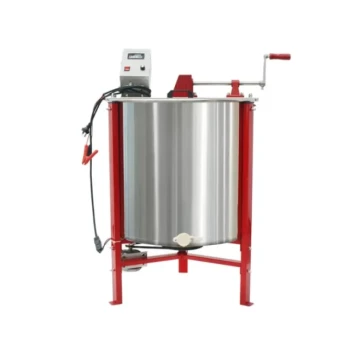
Honeybee comb-building behavior determines the machinery an apiary can use. Bees that build multiple parallel combs inside standardized frames are compatible with mechanical uncapping, centrifugal extraction, filtering, and automated filling. Bees that produce delicate premium comb honey, oversized exposed combs, or species-specific nest structures require different harvesting tools, handling methods, and often more manual processing.
The key equipment decision is not simply how much honey a colony produces, but how and where the bees build their comb. Standardized frame comb supports efficient automation, while fragile, irregular, or exposed comb requires specialized cutting, support, and gentle handling equipment to preserve product quality.
How Comb Architecture Determines Equipment Compatibility
Standardized comb supports mechanized harvesting
European honey bees, particularly Apis mellifera, commonly build multiple parallel combs in cavity hives. When these combs are held in standardized movable frames, they can be transferred efficiently through honey supers, uncapping systems, centrifugal extractors, filters, pumps, and filling lines.
This configuration is the most suitable for high-volume commercial processing because the equipment receives consistently sized frames and predictable honey loads.
Irregular comb limits standard machinery
Species such as Apis dorsata and Apis florea typically construct a single exposed comb rather than multiple framed combs inside a box hive. Their comb cannot be placed directly into standard frame-based extraction systems without substantial adaptation.
Harvesting may therefore depend on manual comb collection, cutting, draining, or pressing. A distributor serving these operations should not assume that a conventional extractor or automated frame line will be suitable.
Hive design influences downstream machinery
Cavity-nesting bees such as Apis cerana require hive bodies and internal dimensions that match their nesting behavior. Incorrect dimensions can increase colony stress and contribute to absconding, reducing the amount of comb available for efficient harvest.
Precisely manufactured hive boxes, frames, and foundation components are therefore part of the machinery decision. The goal is to create a consistent comb structure before the honey reaches the processing line.
Why Comb Quality Changes the Harvesting Method
Premium white comb requires preservation, not aggressive extraction
Some honeybee ecotypes produce clean, white comb that can command a premium as comb honey. Cutting, crushing, excessive vibration, or rough handling can damage the appearance and structural integrity that create this premium value.
These operations need professional hive manipulation tools, comb-cutting devices, and protective handling equipment. The machinery should separate marketable comb honey from comb intended for liquid extraction.
Comb honey and liquid honey require different workflows
Comb honey is sold with its original wax structure, while extracted honey is separated from the comb and transferred through processing equipment. Treating both products as if they follow the same workflow can reduce value or cause unnecessary product damage.
A practical processing setup may include:
- Comb-cutting equipment for uniform portions.
- Gentle draining or uncapping tools for preserving wax structure.
- Frame-based extractors for comb intended for liquid honey.
- Food-grade filters, pumps, and filling machines for the extracted product.
- Separate handling areas to reduce cross-contamination and protect presentation quality.
Deep or heavy comb requires stronger support
Large combs can become heavy when filled with honey. The supplementary reference describes Apis dorsata combs as exceptionally large, with distinct honey, pollen, brood, and drone or queen cell zones.
For operations handling unusually deep or heavy comb, equipment selection must account for reinforced supports, wider handling clearances, and reduced mechanical stress. Standard frames or extractor baskets may be unsuitable if they cannot prevent sagging, bending, or breakage.
Selecting the Right Harvesting Machinery
Choose extractors according to the comb format
Centrifugal extractors work best when honeycomb is held in compatible, rigid frames. For commercial Apis mellifera operations, automated extractors can improve throughput and consistency when frame dimensions and honey viscosity are predictable.
For irregular or non-frame comb, a business may need manual cutting, draining, or pressing equipment instead. The correct choice depends on whether the product is sold as intact comb honey or converted into liquid honey.
Match throughput to the harvest window
Honey must be harvested and processed promptly. Delays caused by unavailable extractors, fillers, or critical accessories can increase deterioration risks and reduce product quality during peak harvest periods.
Distributors and wholesalers should therefore evaluate not only machine capacity, but also availability, replacement parts, delivery speed, and order fulfillment reliability. A technically suitable machine is of limited value if it arrives after the harvest window.
Consider honey viscosity and gentle movement
Honey viscosity affects pumping, filtering, extraction, and filling performance. Processing machinery should be selected for the expected viscosity range and should use gentle, low-shear transfer methods where possible.
This is especially important when the operation also handles other hive products or wants to preserve sensitive compounds affected by excessive heat, oxidation, or contamination.
Designing a Hygienic Processing Line
Use food-grade contact materials
Honey is stored in the bee’s honey stomach without being digested and is later regurgitated for processing inside the colony. Maintaining its purity after harvest requires equipment made from food-grade, non-reactive, easy-to-clean materials.
Contact surfaces, tanks, filters, pumps, and filling components should be designed to minimize chemical leaching, residue retention, and microbial contamination.
Control heat and oxidation
Honey and other hive products contain sensitive compounds, including flavonoids, phenolics, terpenes, proteins, and peptides. Excessive heat or unnecessary exposure to air can reduce product quality.
Processing lines should therefore provide precise thermal management, controlled transfer, and clean filling conditions rather than relying on aggressive heating or high-shear pumping.
Separate delicate products from bulk processing
An apiary producing comb honey, liquid honey, pollen, propolis, or royal jelly may need different equipment priorities for each product. Comb honey requires appearance protection, while liquid honey emphasizes extraction efficiency, filtration, and filling consistency.
A modular product portfolio is often more practical than a single oversized machine. It allows the operator to add cutting, extraction, filtration, or filling capacity as product demand develops.
Understanding the Trade-offs
Automation improves efficiency but requires standardization
Automated machinery can reduce labor and improve throughput, but it depends on consistent frame dimensions, comb placement, honey load, and operating procedures. Equipment designed for standardized Apis mellifera frames may perform poorly with irregular comb.
The trade-off is clear: greater automation requires greater upstream control over hive design, frame production, colony management, and harvest preparation.
Manual handling protects irregular comb but increases labor
Manual cutting and collection are better suited to exposed, fragile, or unusually shaped comb. However, these methods generally require more labor, careful sanitation, and slower throughput.
They may still be commercially justified when the comb itself is the premium product or when the bee species cannot be managed in standard framed hives.
High capacity does not guarantee better quality
A larger extractor or faster filler is not automatically the best investment. If the machine damages comb, overheats honey, introduces contamination, or cannot accommodate the actual frame format, its nominal capacity will not translate into profitable output.
Equipment should be evaluated against product quality, comb structure, cleaning requirements, and seasonal utilization, not capacity alone.
Over-standardizing the hive can harm colony performance
Hive components should be precisely manufactured, but precision must serve the biology of the bee. Using unsuitable dimensions for species such as Apis cerana may increase stress and reduce colony retention.
The correct approach is species-compatible standardization: consistent components designed around the bee’s natural nesting behavior.
Making the Right Choice for Your Goal
The most reliable equipment strategy begins by identifying the bee species, comb format, product mix, and expected harvest volume.
- If your primary focus is high-volume liquid honey: Use standardized movable-frame hives with compatible uncapping, centrifugal extraction, filtration, pumping, and filling equipment.
- If your primary focus is premium comb honey: Prioritize gentle hive tools, precise comb-cutting equipment, protective handling, and hygienic packaging over maximum extraction speed.
- If your primary focus is species such as Apis cerana: Source precisely dimensioned hive bodies, frames, and foundation components that support colony retention and consistent comb development.
- If your primary focus is exposed or irregular comb: Plan for manual collection, draining, pressing, or customized support systems rather than relying on standard frame-based machinery.
- If your primary focus is reliable commercial fulfillment: Work with suppliers that can provide a full equipment range, rapid technical response, replacement accessories, and fast delivery before the harvest season.
The best machinery is the machinery that respects how the bees build while matching how the market values the resulting honey.
Summary Table:
| Comb Type | Harvesting Machinery | Processing Machinery | Suitable For |
|---|---|---|---|
| Standard frame comb (Apis mellifera) | Frame uncapper, centrifugal extractor | Filters, pumps, filling machines | High-volume liquid honey |
| Premium comb honey | Comb cutter, gentle handling tools | Draining racks, packaging | Comb honey sales |
| Exposed/irregular comb (Apis dorsata, florea) | Manual collection, cutting, pressing | Draining containers, press | Specialty products |
| Species-specific (Apis cerana) | Precisely dimensioned hives, frames | Gentle extractors, filters | Niche local markets |
HONESTBEE — Your Partner for the Complete Beekeeping Supply Chain
From frame extractors to honey filling lines, we offer a full portfolio of harvesting and processing machinery designed to respect comb architecture and maximize product quality. Whether you're a commercial apiary, distributor, or B2B reseller, our rapid response, OEM/ODM support, certifications, and ultra-fast delivery ensure your operation runs smoothly and profitably. Contact us today to discuss your specific requires and let our experts help you select the right equipment for your harvest!
Related Products
- Electric Double Wall Honey Filtering Machine Purifier Equipment for Honey Processing Plant
- Honey Concentrating and Filtering Dehumidifier Machine 2T Capacity for Honey
- Fully Automatic Honey Filling Packaging Machine for Processing Line
- Double Wall Honey Heating Stirring Homogenizer Mixing Machine with Various Capacity
- High Quality Honey Dehumidifier Dryer Thickening Machine for Beekeeping
People Also Ask
- What is the process of filtering honey? A Guide to Clean, Pure, and Market-Ready Honey
- What types of equipment are used in honey filtering? Build an Efficient System for Pure, Marketable Honey
- What is the overall importance of using the right equipment in honey filtering? Boost Quality & Marketability
- What steps are involved in maintaining honey filtering equipment? A Guide to Protecting Your Honey Quality
- What is a potential concern associated with filtering honey? Balancing Clarity and Pollen Preservation